Autonomic / Misc

Autonomic / Misc

Anatomy Β· 15 cards

Autonomic Nervous System :: Overview
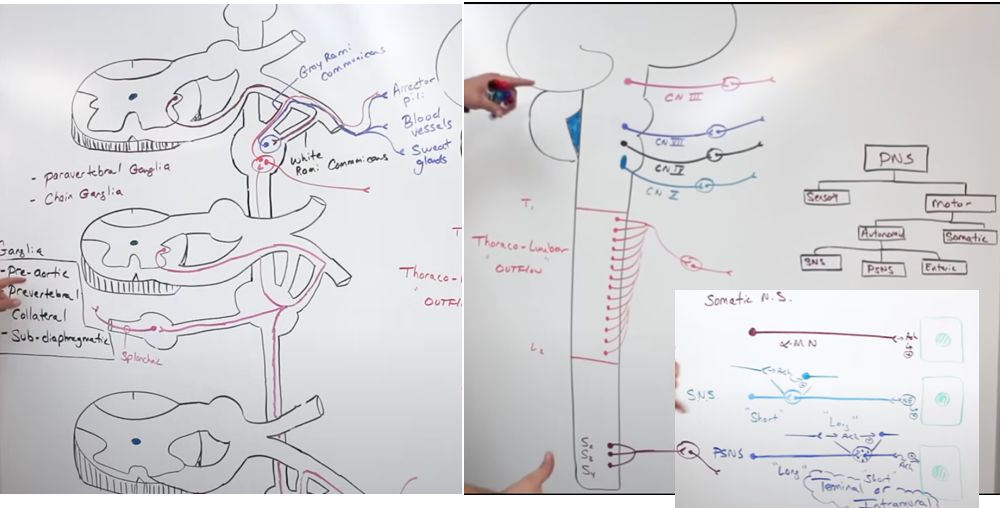
  • The motor nervous system divides into somatic[…] (voluntary) and autonomic[…] (involuntary) β€” with autonomic further split into sympathetic, parasympathetic, and enteric[…].
  • Somatic motor uses 1[…] neuron (Ξ± motor neuron from anterior gray horn β†’ muscle, NT = ACh[…] on nicotinic).
  • Autonomic uses 2[…] neurons in series: preganglionic[…] (cell body in CNS) β†’ ganglion β†’ postganglionic[…] (cell body in PNS ganglion) β†’ target.
  • Preganglionic neurons in BOTH SNS and PSNS release ACh[…] onto nicotinic receptors at the ganglion.
  • Postganglionic neurons: SNS releases norepinephrine[…] on adrenergic receptors (sweat glands are an EXCEPTION β€” sympathetic but use ACh); PSNS releases ACh[…] on muscarinic receptors.
Sympathetic Nervous System Outflow

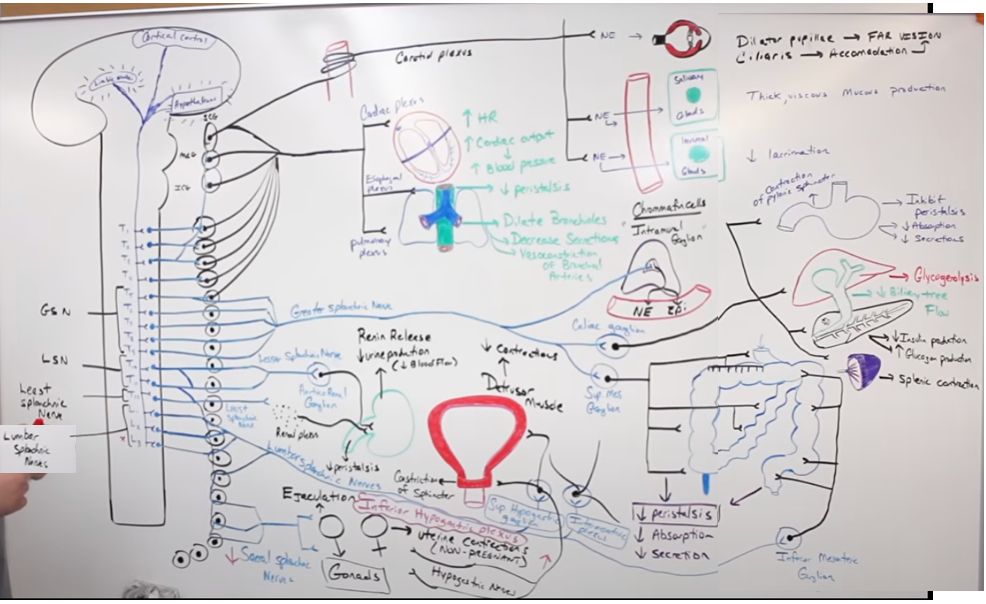
  • Central control: hypothalamus[…] (especially posterior hypothalamic[…] nucleus) + limbic nuclei + cortical input.
  • Preganglionic cell bodies sit in the lateral gray horn[…] of spinal levels T1-L2[…] ("thoracolumbar" outflow).
  • Standard path: preganglionic neuron exits via ventral root β†’ ventral ramus β†’ white ramus communicans[…] β†’ enters the paravertebral sympathetic chain ganglia[…]. From there it can:
    • 1. Synapse at that level β†’ postganglionic exits via gray ramus communicans[…] β†’ joins spinal nerve β†’ skin/vessels/sweat glands.
    • 2. Ascend or descend within the chain before synapsing (head + neck reach via the superior cervical ganglion[…]).
    • 3. Pass THROUGH the chain without synapsing β†’ form splanchnic nerves[…] β†’ synapse at prevertebral ganglia (celiac, SMA, IMA) β†’ supply abdominal/pelvic viscera.
Sympathetic :: Cervical Outflow and Eye/Head Effects
  • T1-T3 preganglionics ascend (without synapsing) to the superior cervical ganglion[…] β†’ postganglionic fibers swirl around the ICA[…] as the carotid plexus β†’ reach head/eye structures.
  • Eye effects:
    • Dilator pupillae[…] β†’ pupil dilation for far vision (mydriasis).
    • Superior tarsal (MΓΌller's) muscle[…] β†’ keeps the upper eyelid elevated.
  • Glands: vasoconstriction of salivary[…] blood vessels β†’ thick/viscous saliva; reduced lacrimation[…].
  • Skin: diaphoresis[…] via sympathetic sweat glands (uses ACh on muscarinic β€” unique exception).
  • Horner syndrome[…] = loss of ipsilateral cervical sympathetic outflow β†’ miosis, partial ptosis, anhidrosis.
Sympathetic :: Visceral and Adrenal Outflow
  • Splanchnic[…] nerves arise from preganglionics that pass through the paravertebral chain without synapsing:
  • Greater splanchnic (T5-T9)[…] β†’ celiac ganglion β†’ foregut (stomach, duodenum, liver, gallbladder, pancreas).
    • Lesser splanchnic (T10-T11)[…] β†’ SMA ganglion β†’ midgut.
    • Least splanchnic (T12)[…] and lumbar splanchnics (L1-L2)[…] β†’ IMA + hypogastric β†’ hindgut, pelvic organs.
  • Adrenal medulla[…] is a unique sympathetic target: preganglionic fibers from T5-T11 synapse DIRECTLY on chromaffin cells (no postganglionic neuron). Chromaffin cells release epinephrine (~80%) and norepinephrine (~20%)[…] into the bloodstream. Fight-or-flight effects: tachycardia, bronchodilation, mydriasis, glycogenolysis/lipolysis, decreased GI motility.
Parasympathetic Nervous System :: Cranial Outflow

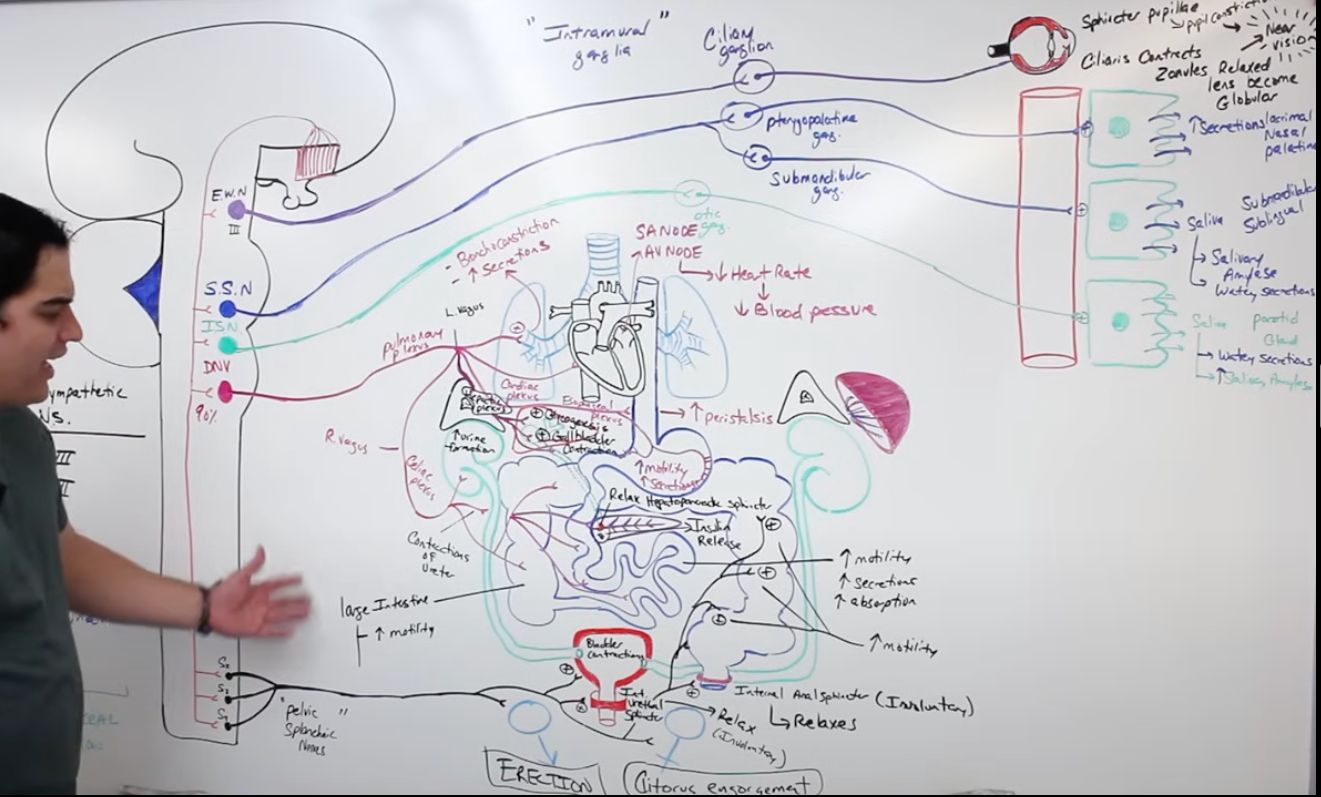
  • PSNS outflow is craniosacral[…] β€” through CN III, VII, IX, X and S2-S4
  • Central control: starts from the hypothalamus[…] (anterior[…] hypothalamic nucleus) β†’ preganglionic PS nuclei throughout the brainstem[…]
    • CN III (Edinger-Westphal[…] nucleus) β†’ ciliary ganglion β†’ ciliaris muscle (accommodation for near vision)[…] and sphincter pupillae (pupil constriction)[…]
    • CN VII (superior salivatory[…] nucleus) β†’ pterygopalatine ganglion (via greater petrosal)[…] β†’ lacrimal, nasal, and palatine glands; β†’ submandibular ganglion (via chorda tympani)[…] β†’ submandibular and sublingual glands.
    • CN IX (inferior salivatory[…] nucleus) β†’ otic ganglion (via lesser petrosal) β†’ parotid gland.
    • CN X (dorsal motor nucleus of CN X[…]) β†’ terminal ganglia near or in target organs β†’ heart (slows HR), lungs (bronchoconstriction), GI tract through the splenic flexure[…], and other thoracoabdominal viscera.
Parasympathetic :: Sacral Outflow

Sacral PSNS preganglionics arise from the lateral gray matter at S2-S4[…].

They exit via the ventral roots β†’ form the pelvic splanchnic nerves[…] β†’ synapse on terminal ganglia in the walls of pelvic viscera.

Targets:
- Distal colon[…] (from splenic flexure onward) and rectum β†’ promote peristalsis and defecation.
- Bladder detrusor[…] β†’ contracts; sphincters relax β†’ micturition.
- Genitalia[…] β†’ erection ("point") via parasympathetic; ejaculation ("shoot") via sympathetic.

Sacral PSNS is the source of bowel/bladder dysfunction in conus medullaris and cauda equina[…] lesions.
CN I Olfactory :: Pathway

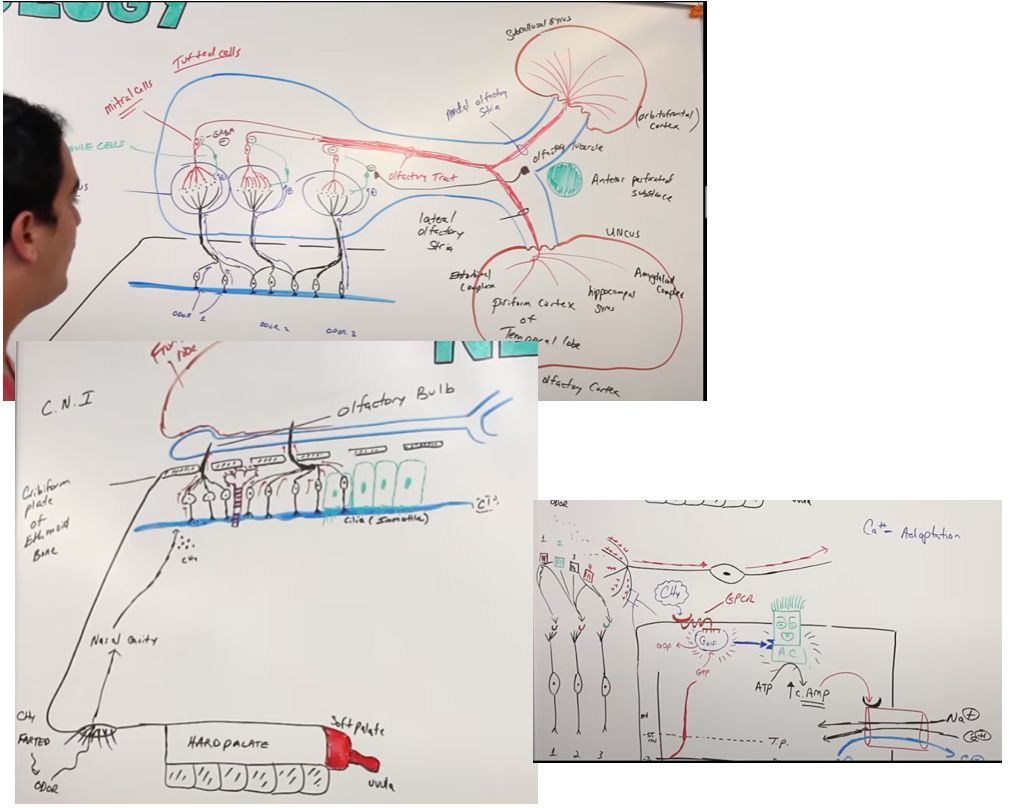
Odor particles enter the external nares β†’ nasal cavity β†’ mucus layer (humidifies, traps, dissolves). Odors activate immotile cilia[…] of olfactory receptor neurons at the roof of the nasal cavity.

Olfactory nerve axons (~20 bundles) pass through the cribriform plate[…] of the ethmoid bone.

They synapse in the olfactory bulb[…] (inferior to the frontal lobe) on mitral cells[…] within glomeruli.

Mitral cell axons travel down the olfactory tract[…] and split into two striae:
- Lateral[…] olfactory striae β†’ primary olfactory cortex of the temporal[…] lobe, plus hippocampus, entorhinal cortex, and amygdala.
- Medial[…] olfactory striae β†’ subcallosal gyrus and orbitofrontal cortex of the frontal lobe.

Notable: CN I is the only sensory pathway that does NOT relay through the thalamus[…] before reaching cortex.
Brachial Plexus :: Structure

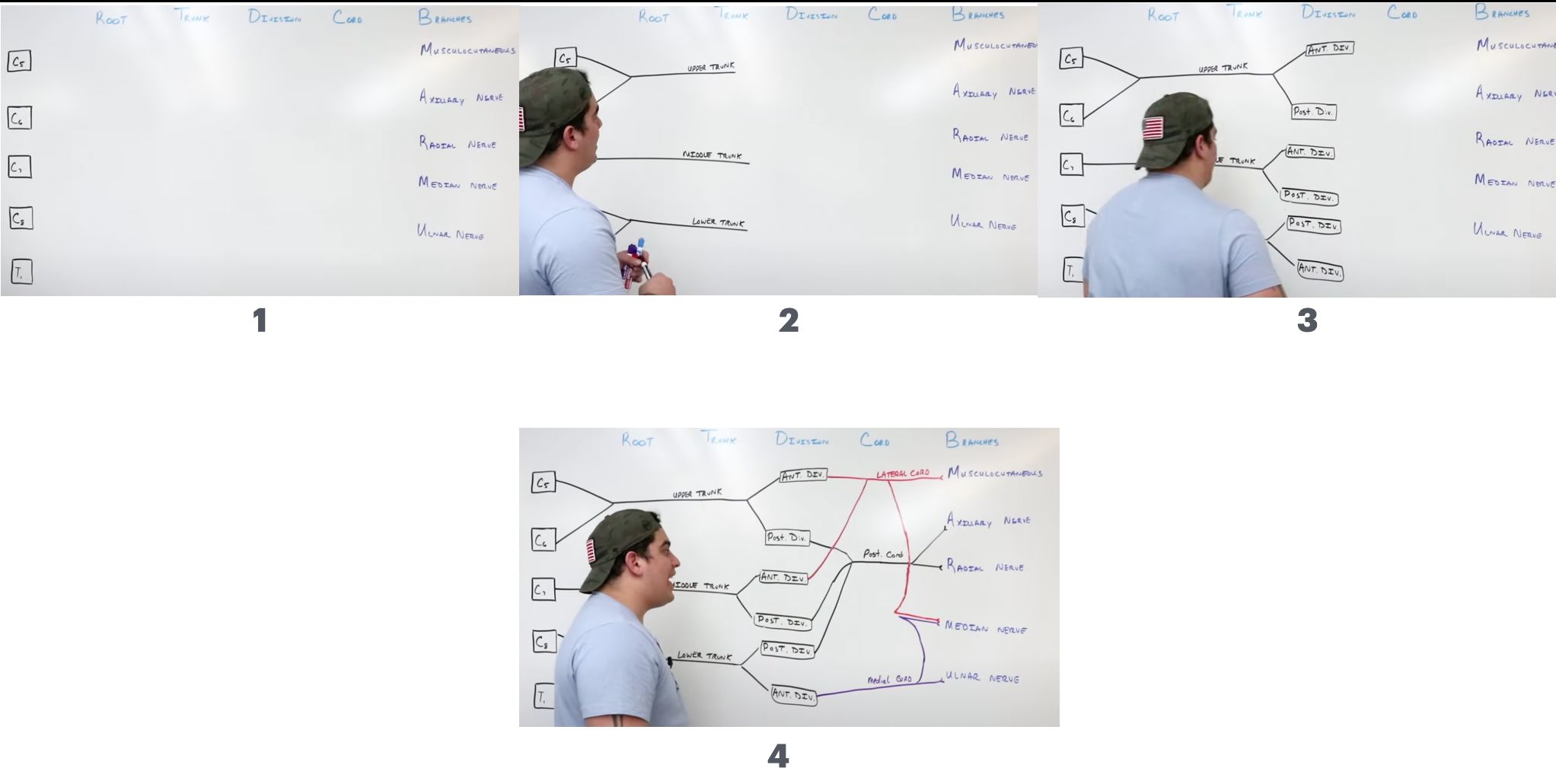
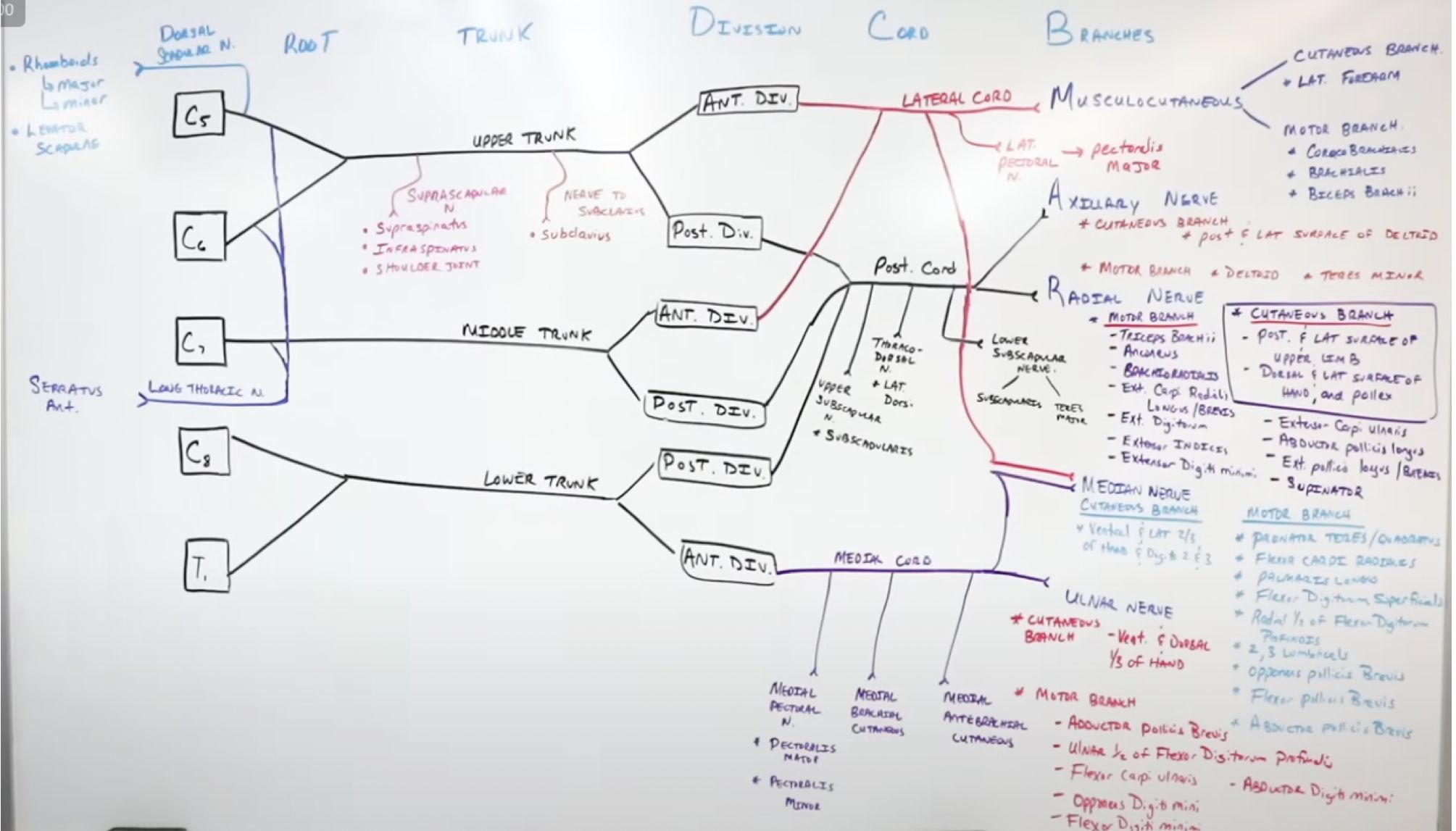
  • Mnemonic: "Remember To Drink Cold Beer[…]" β†’ Roots β†’ Trunks β†’ Divisions β†’ Cords β†’ Branches[…]
  • Mnemonic for terminal branches: "MARMU[…]" β†’ Musculocutaneous, Axillary, Radial, Median, Ulnar
  • Roots: C5-T1[…]
  • Trunks: C5-C6 form the upper trunk[…]; C7 alone forms the middle trunk[…]; C8-T1 form the lower trunk[…]
  • Divisions: each trunk splits into anterior and posterior
  • Cords:
    • All posterior[…] divisions combine β†’ posterior cord[…]
    • Anterior[…] divisions of upper + middle trunks β†’ lateral cord[…]
    • Anterior division of lower trunk β†’ medial cord[…]
Brachial Plexus :: Terminal Branches and Lesions

Terminal branches and their nerve roots:
  • Musculocutaneous[…] (C5-C7) from lateral cord β†’ biceps, brachialis, coracobrachialis (elbow flexion); sensation to lateral forearm.
  • Axillary[…] (C5-C6) from posterior cord β†’ deltoid, teres minor; sensation over the deltoid ("regimental badge").
  • Radial[…] (C5-T1) from posterior cord β†’ triceps + all extensor compartment muscles; sensation to posterior arm/forearm and dorsum of hand.
  • Median[…] (C5-T1) from lateral + medial cords β†’ forearm flexors + thenar muscles; sensation to lateral palm.
  • Ulnar[…] (C8-T1) from medial cord β†’ hypothenar + interossei + medial 2 lumbricals; sensation to medial 1.5 digits.
Classic injury patterns:
  • Erb-Duchenne palsy (C5-C6, upper trunk)[…]: "waiter's tip" β€” arm adducted, internally rotated, forearm pronated.
  • Klumpke palsy (C8-T1, lower trunk)[…]: "claw hand" β€” intrinsic hand muscle paralysis; if T1 sympathetics involved, ipsilateral Horner.
  • Radial nerve[…] (Saturday night palsy): wrist drop.
  • Median nerve at the wrist (carpal tunnel): thenar weakness and lateral palm numbness.
Lumbar Plexus :: Branches

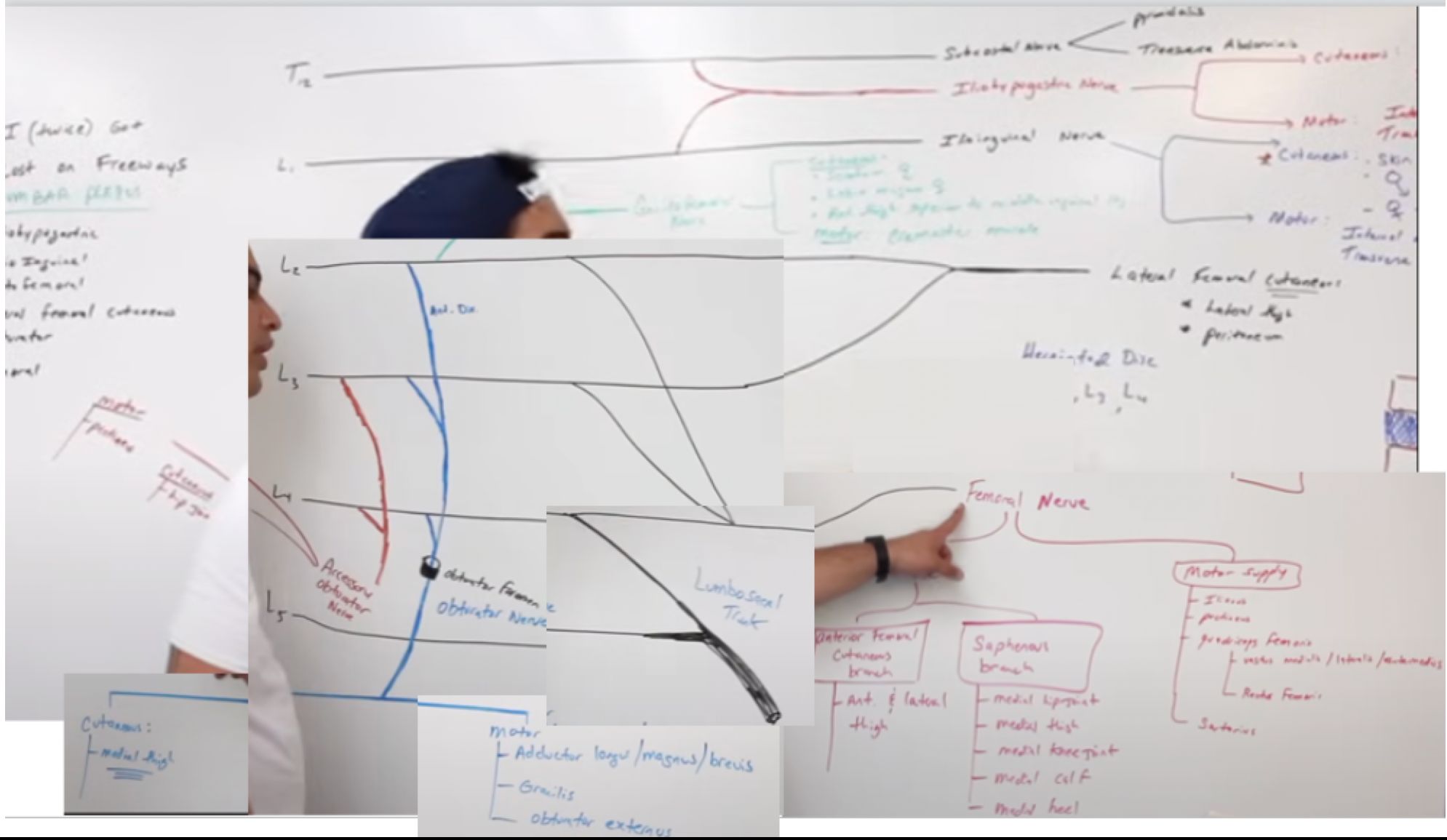
Roots: T12-L4[…] (some classifications include L5).

Mnemonic: "I Get Lost On Freeways[…]" (or expanded "Shoot, I Get Lost On Freeways Lately").

Branches:
- T12: Subcostal[…] β†’ core stabilization + abdominal compression.
- T12-L1: Iliohypogastric[…] β†’ skin of pubis + lateral buttocks, transverse abdominis + internal oblique.
- L1: Ilioinguinal[…] β†’ skin of scrotum/labia + proximal medial thigh.
- L1-L2: Genitofemoral[…] β†’ cremaster muscle (testicular elevation), skin of anterior thigh and scrotum/labia.
- L2-L3: Lateral femoral cutaneous[…] β†’ lateral thigh skin (entrapped in meralgia paresthetica[…]).
- L2-L4: Femoral[…] β†’ quadriceps (knee extension); sensation to anterior thigh + medial leg (via saphenous branch).
- L2-L4: Obturator[…] β†’ thigh adductors; sensation to medial thigh.
Sacral Plexus :: Branches

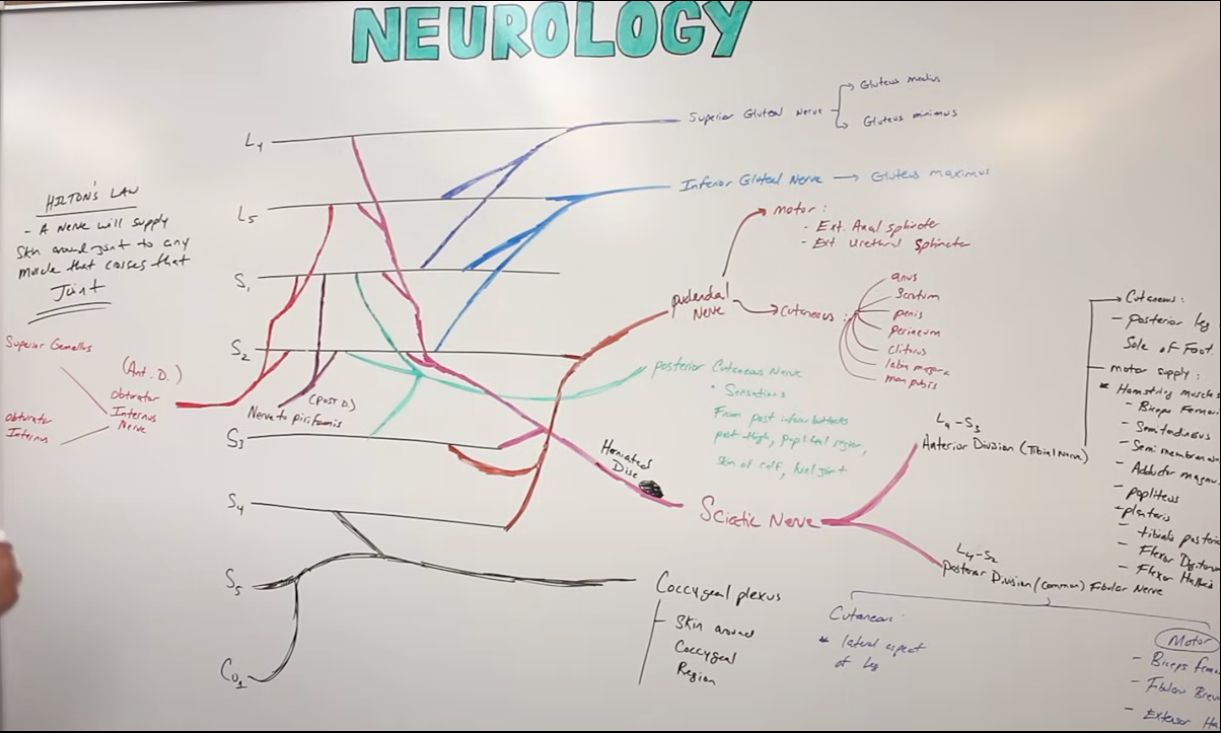
Roots: L4-Co1[…].

Key branches:
- L4-S1: Superior gluteal[…] β†’ gluteus medius + minimus (hip abduction); injury β†’ Trendelenburg gait.
- L5-S2: Inferior gluteal[…] β†’ gluteus maximus (hip extension + external rotation).
- S1-S3: Posterior femoral cutaneous[…] β†’ skin of posterior buttocks/thigh/calf.

Sciatic nerve (L4-S3) splits at the knee into:
- Tibial[…] division (L5-S3): hamstrings + triceps surae + foot plantarflexors and toe flexors; sensation to posterior leg + sole of foot.
- Common fibular (peroneal)[…] division (L4-S2): foot dorsiflexors + evertors; sensation to anterolateral leg + dorsum of foot. Injury β†’ foot drop[…].

Pudendal nerve (S2-S4)[…] β†’ external urethral and anal sphincters, perineal sensation; blocked for vaginal delivery.
Acute Disseminated Encephalomyelitis (ADEM) :: Pathophysiology

Etiology: postinfectious or postvaccination autoimmune demyelination, often after (3) MMR viruses, Mycoplasma pneumonia, or Strep B-hemolyticus[…].

Unlike MS, ADEM typically affects younger[…] patients (often children).

Pathophysiology:
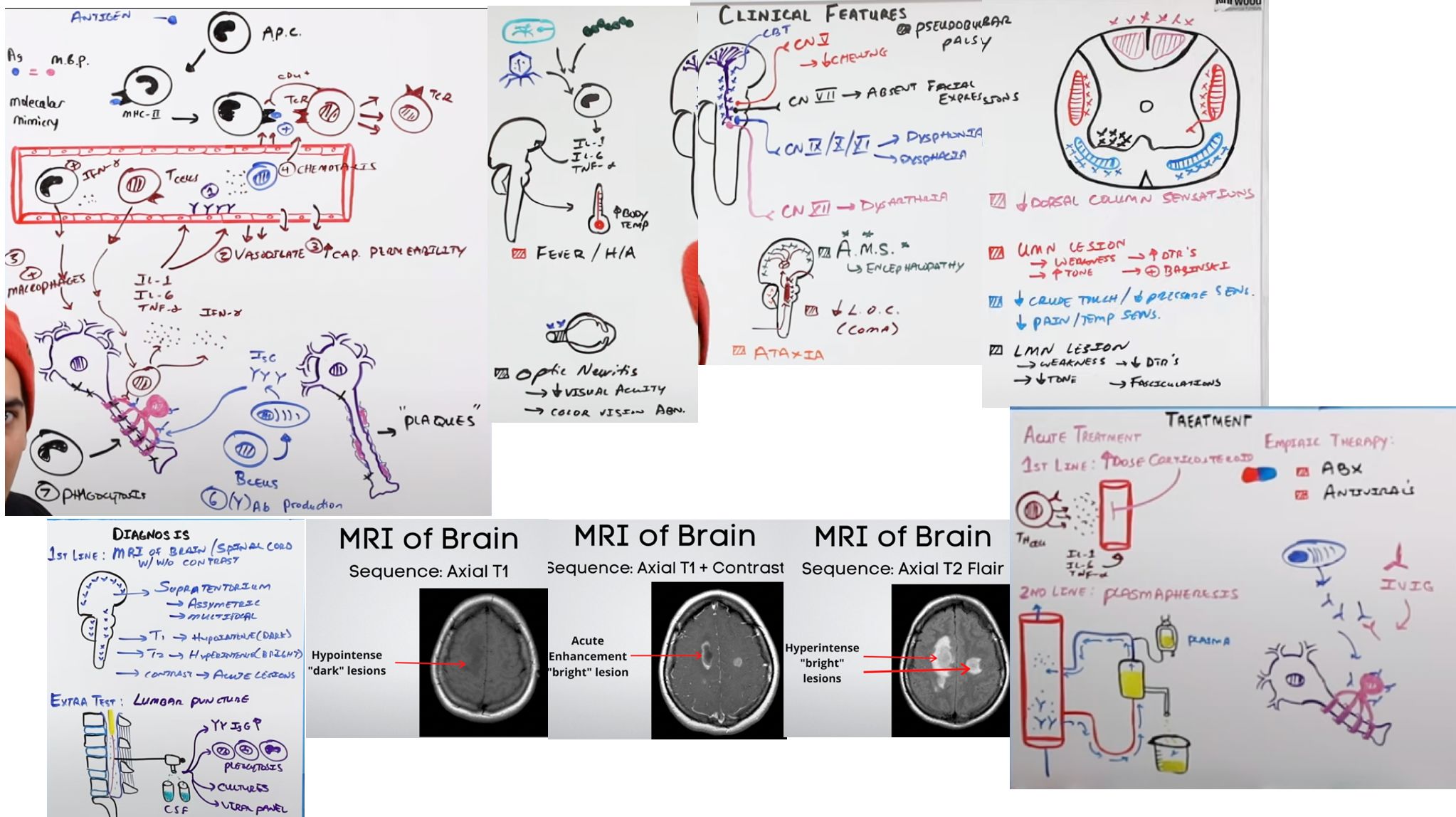
1. APC encounters viral antigen β†’ presents on MHC-II[…] to CD4+ Th cells.
2. Activated CD4+ T cells mistakenly attack myelin basic protein (MBP)[…] on oligodendrocytes via molecular mimicry[…].
3. T cells cross the blood-brain barrier[…] and release cytokines (IL-1, IL-6, TNFΞ±, IFNΞ³) β†’ recruit B cells and macrophages.
4. B cells convert to plasma cells, release IgG; macrophages phagocytose oligodendrocytes.
5. Demyelination + some gray matter destruction β†’ plaques.

Key difference from MS: ADEM is monophasic[…] β€” a single severe attack rather than relapsing-remitting.
ADEM :: Clinical Features and Treatment

Fever[…] + viral-like B symptoms (HA, nausea, malaise) from cytokines acting on the hypothalamus.

Neurologic features depend on lesion location: encephalopathy is REQUIRED for diagnosis (helps distinguish from MS), plus multifocal deficits β€” motor weakness, cranial neuropathies, ataxia, optic neuritis, transverse myelitis.

Imaging: MRI shows large, poorly-marginated, T2/FLAIR-hyperintense[…] lesions in white matter and often deep gray matter (thalamus, basal ganglia) β€” bilateral and asymmetric.

CSF: elevated protein, mild lymphocytic pleocytosis; oligoclonal bands USUALLY absent[…] (helps distinguish from MS).

Treatment:
1. High-dose IV methylprednisolone[…] (1 g/day Γ— 3-5 days) β†’ oral taper.
2. If refractory: IVIG or plasmapheresis[…].

Prognosis: most patients recover well; relapse suggests reclassification as multiphasic ADEM or MS.
Central Pontine Myelinolysis (Osmotic Demyelination)

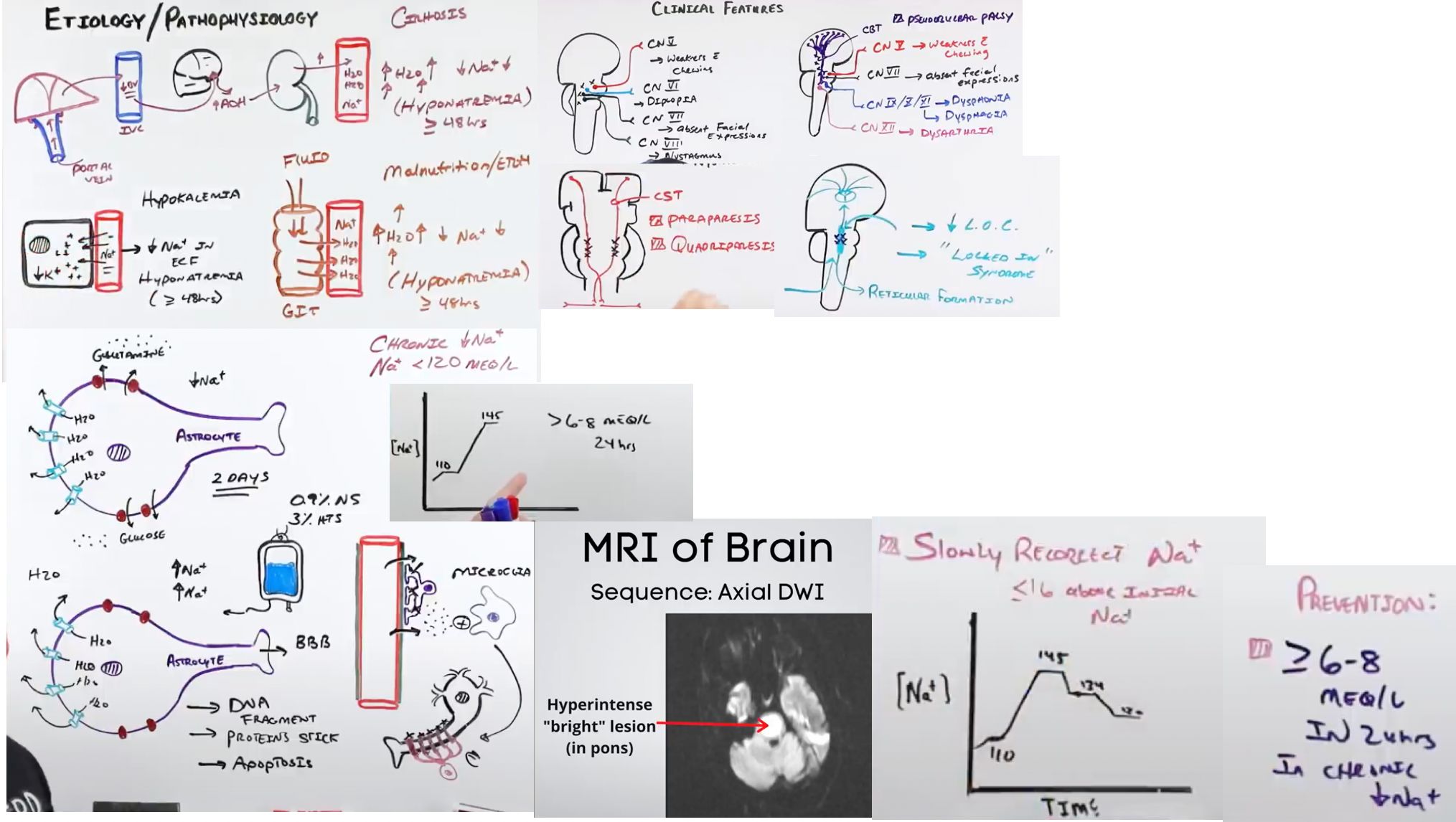
Causes (all create chronic hyponatremia):
- Cirrhosis[…]: portal hypertension β†’ osmoreceptor activation β†’ ADH release β†’ water reabsorption.
- HypoK+[…]: low intracellular K+ drives Na+ INTO cells β†’ serum hyponatremia.
- Malnutrition or EtOH[…]: high-water/low-solute intake.

Pathophysiology:
1. To adapt to chronic hyponatremia (often Na < 120), astrocytes pump out glucose and glutamine[…] osmolytes β†’ draws out water.
2. Rapid correction with 0.9% NS or 3% saline β†’ water rushes OUT of astrocytes too quickly (before osmolytes can be regenerated).
3. Astrocytes shrivel[…] β†’ protein aggregation, DNA fragmentation, apoptosis.
4. Exposed BBB β†’ cytokine release β†’ microglia destroy oligodendrocytes[…] β†’ demyelination.

Predilection for the pons[…] β€” though demyelination can occur in basal ganglia, thalamus, and white matter (extrapontine myelinolysis).
Central Pontine Myelinolysis :: Clinical and Prevention

Clinical features by structure affected in the pons:
- CN V β†’ weak chewing.
- CN VI β†’ diplopia.
- CN VII β†’ flat facial expression.
- CN VIII β†’ nystagmus.
- CBT[…] β†’ pseudobulbar palsy (dysarthria, dysphagia, emotional lability).
- CST[…] β†’ quadriparesis with spasticity.
- Reticular formation β†’ locked-in syndrome[…] (preserved consciousness with only vertical gaze and blinking).

Imaging: MRI shows central pontine T2/FLAIR hyperintensity[…] sparing the periphery ("trident" or "piglet" sign).

Prevention: correct hyponatremia at maximum 6-8 mEq/L per 24 hours[…] (some guidelines allow up to 10 mEq/L, but ≀8 is safer in chronic cases).

If overcorrection occurs: re-lower sodium with D5W and desmopressin (DDAVP)[…].