Vestibular

Vestibular

Subspecialties Β· 62 cards Β· 3 labeled figures

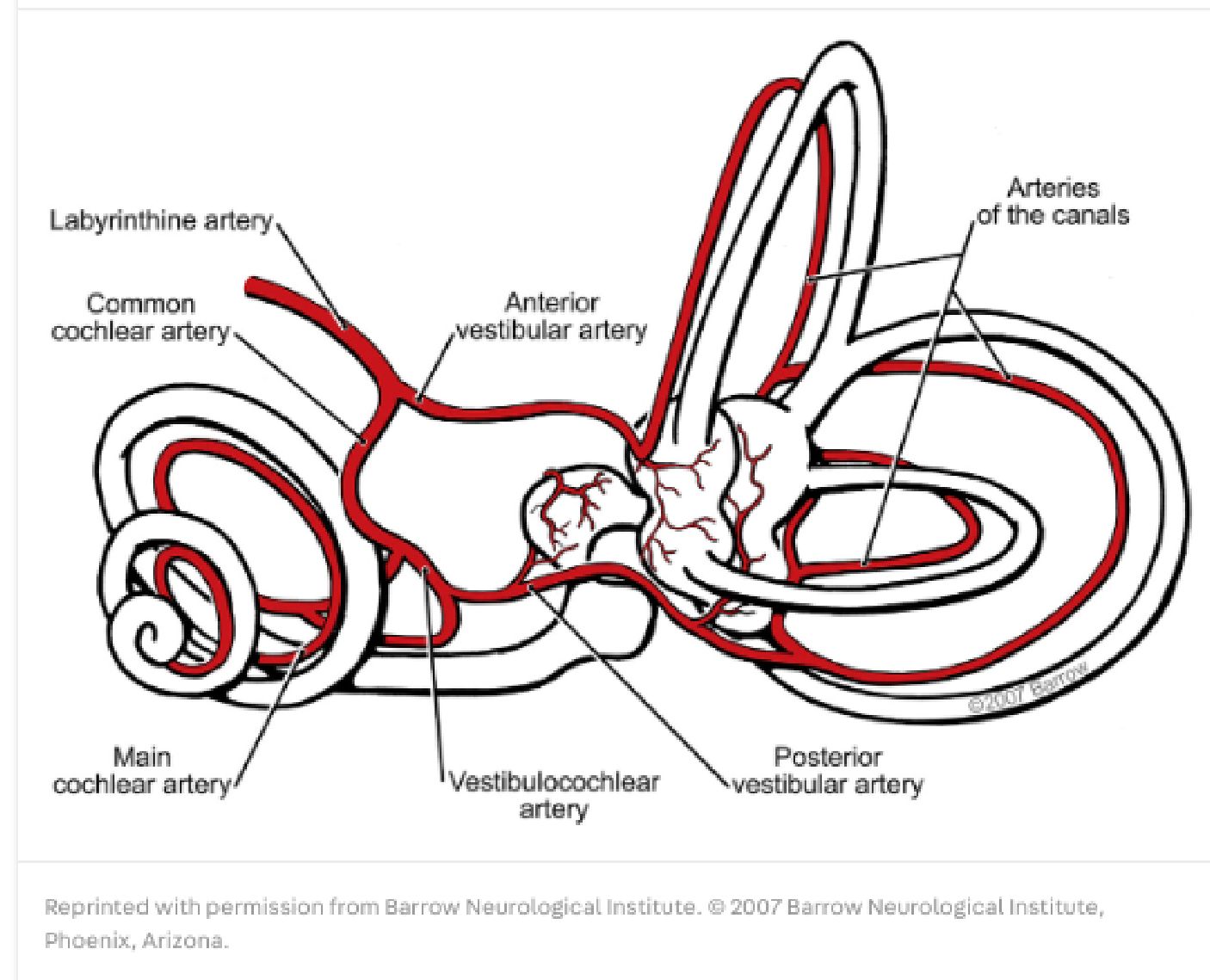
Vascular Supply to the Membranous Labyrinth
The labyrinthine[…] artery
is the main supply and branches into the (2)
  • anterior[…] vestibular artery which combines with the posterior[…] vestibular artery to form the arteries of the canals[…] > to supply the semicircular[…] canals
  • common[…] cochlear artery which then branches into the (2) 
    • main[…] cochlear artery (supplying the cochlea[…]
    • vestibulocochlear[…] artery which further divides into the 
      • posterior[…] vestibular artery 
      • branch that goes to help supply the cochlea[…] along w/the main[…] cochlear artery
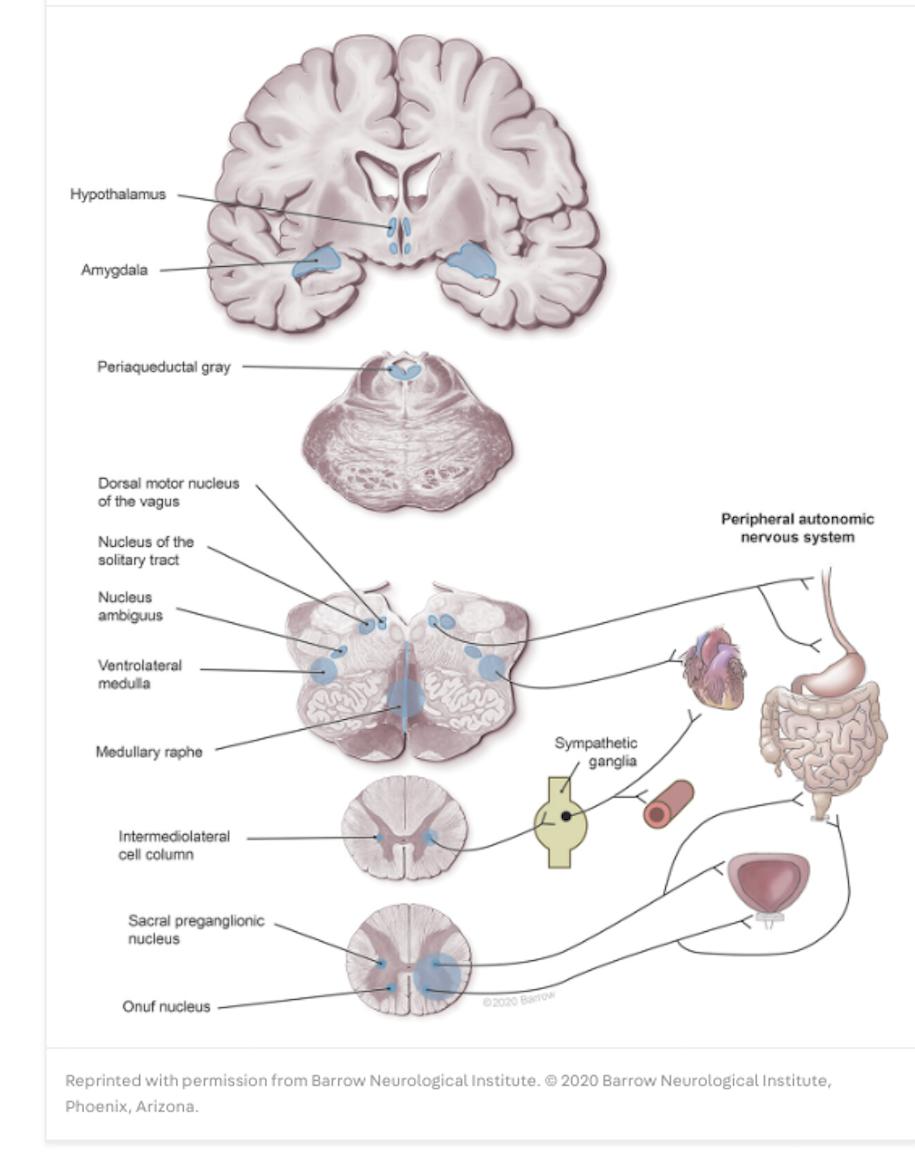
Central Autonomic Network: Pathways and Connections
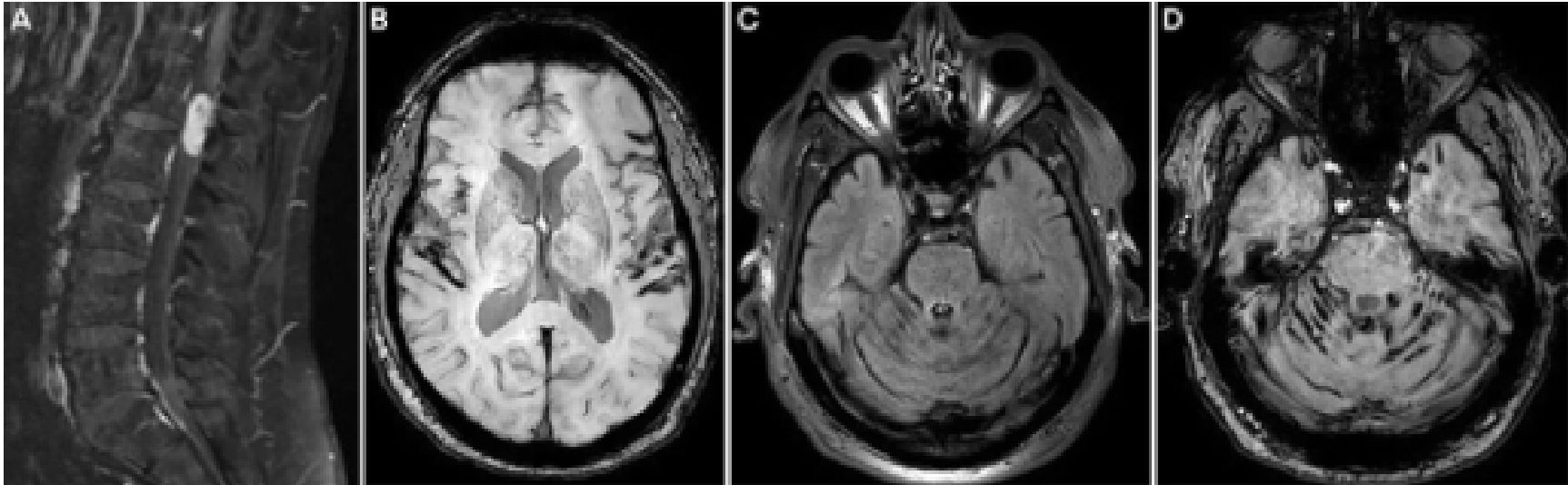
Pt w/Myxopapillary ependymoma causing superficial siderosis 
  • A: MRI Lspine sagittal T1W postcontrast: shows a homogenously enhancing intradural mass (myxopapillary ependymoma) at L1-L2[…]  spinal levels 
  • B: MRIb axial SWI: shows superficial siderosis[…] supratentorially (pia coated w/ hemosiderin)
  • C: MRIb axial T2 FLAIR: shows some mild cerebellar[…] atrophy
  • D: MRIb axial SWI: shows a significant degree of superficial siderosis[…] infratentorially from prior hemorrhage related to the myxopapillary ependymoma

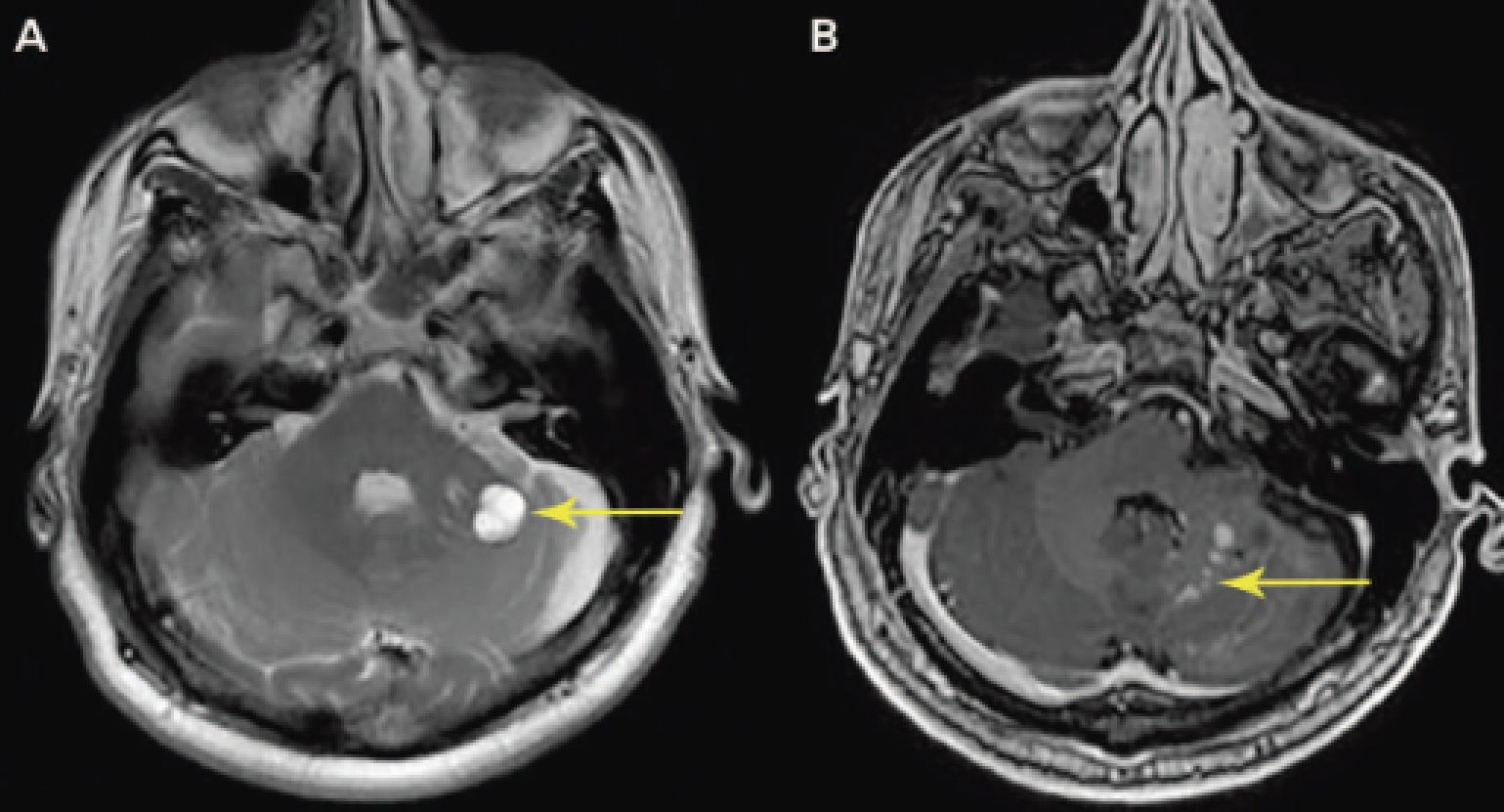
Pt w/Cavernous Malformation
  • A: MRIb axial T2W: L cerebellar cavernous malformation w/a hyperintense cystic[…] component + hypointense rim[…] vs hemosiderin[…] component around the lesion
  • B: MRIb axial T1W postcontrast[…]: shows an adjancent developmental venous anomly (DVA)[…]

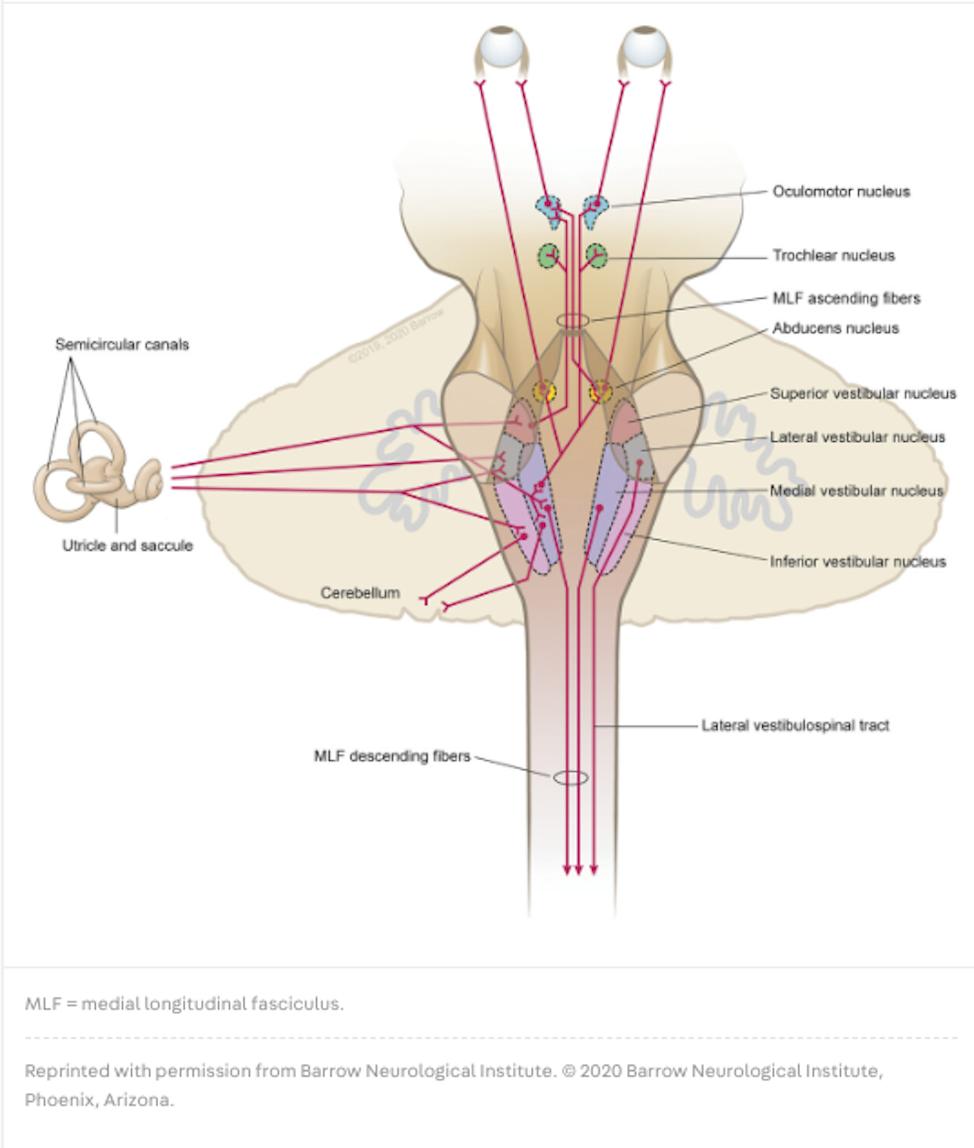
Structures of the CNS Vestibular System
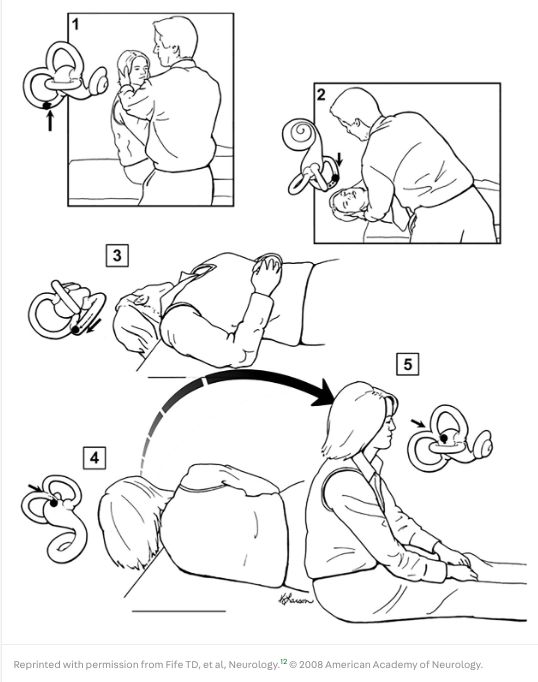
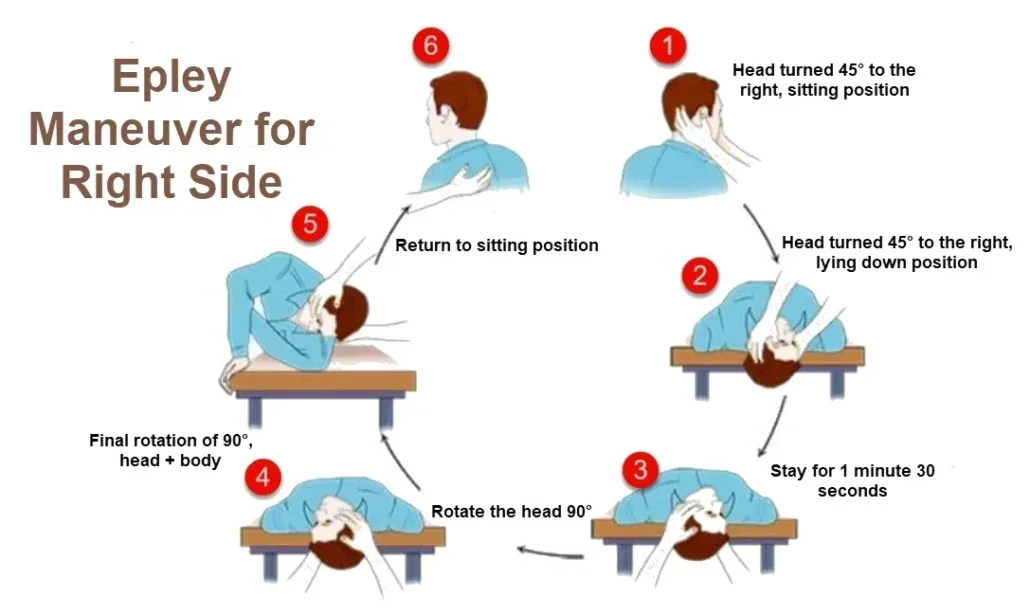
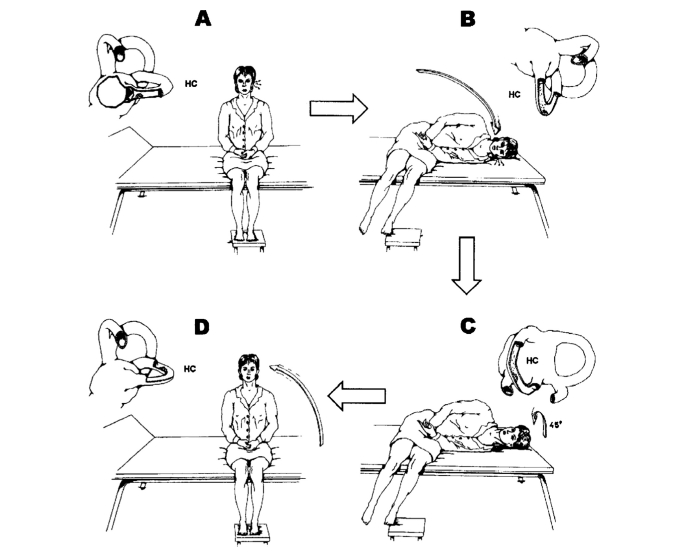
Epley (Canalith Repositioning) Maneuver
  • The Epley[…] maneuver treats posterior[…] canal BPPV by moving otoliths from the semicircular canal to the vestibule[…]
  • Steps 1 and 2 are identical to the Dix-Hallpike[…] test: the patient is held in the right[…] head-hanging position (step 2) for 20-30s
  • In step 3, the head is turned 90[…]˚ toward the unaffected[…] side, held for 20-30s
  • In step 4, the head is turned another 90˚ so the head is nearly in the face-down[…] position, held for 20-30 seconds
  • In step 5, the patient is brought to the sitting[…] up position

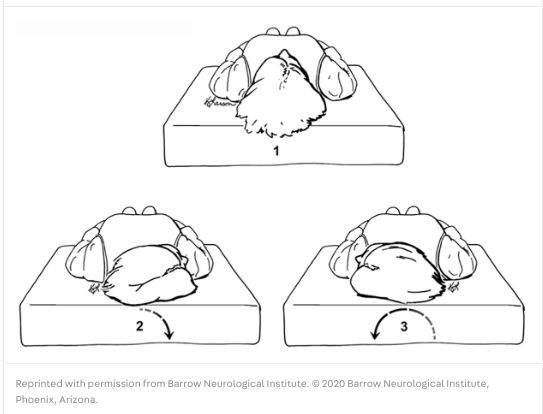
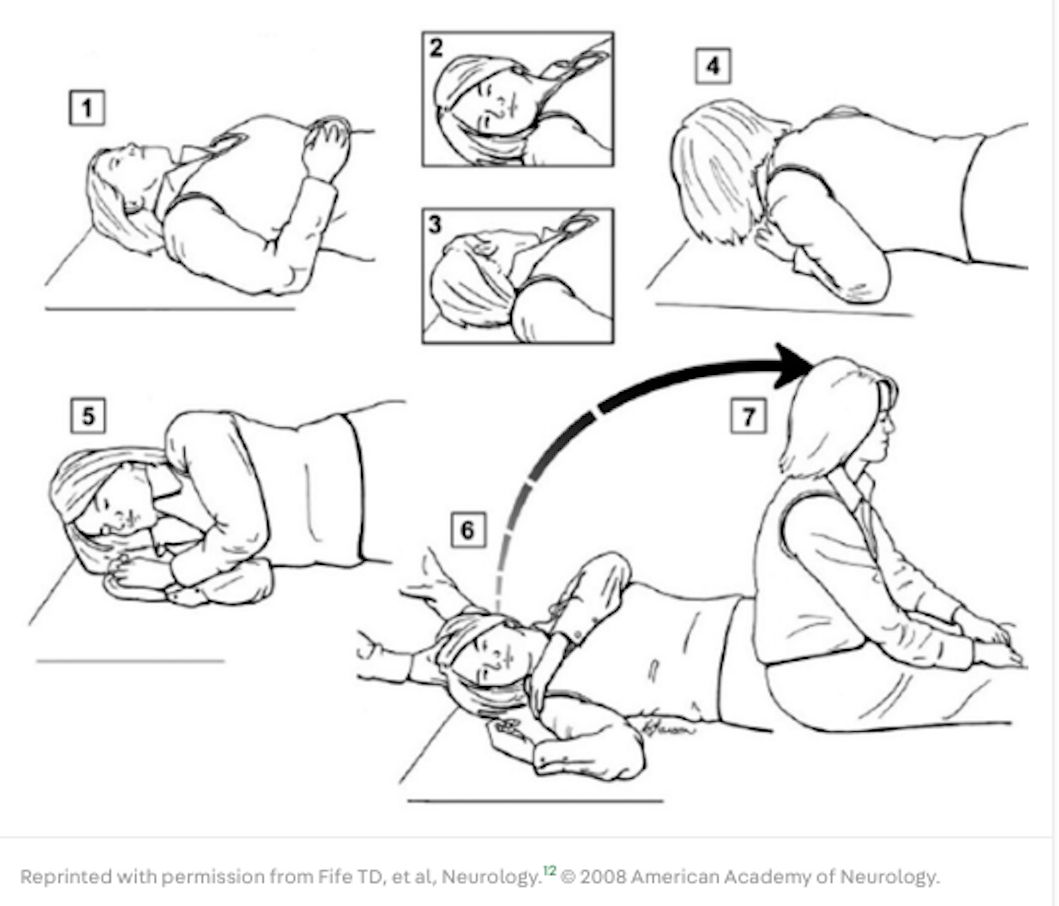
Supine Roll Test
  • The supine roll[…] test is used to detect horizontal[…] canal BPPV
    • The patient is moved from sitting to a straight supine position (step 1) > head is turned to the right side (step 2) with observation of nystagmus, then turned back to face-up (step 1) > head is then turned to the left side (step 3) > side with the most prominent nystagmus is understood to be the affected horizontal semicircular canal

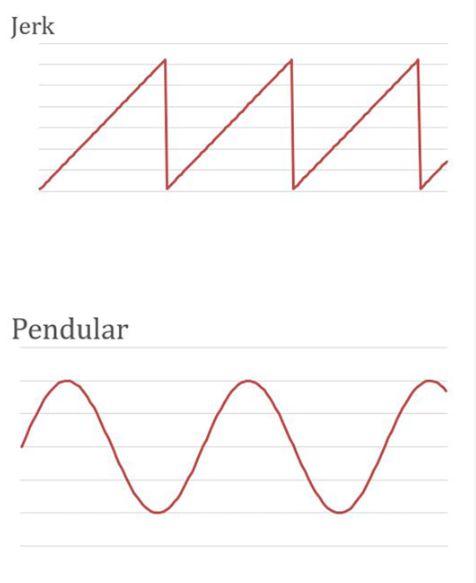
Jerk vs Pendular Nystagmus
  • jerk[…] nystagmus has a slow drift phase followed by a fast[…] corrective phase (sawtooth pattern)
    • named after the fast[…]-beating side
    • typical of vestibular[…] nystagmus causes usually
  • Pendular[…] nystagmus has equal[…] velocity in both directions 
    • sinusoidal[…] pattern
    • less common; seen in CNS[…] nystagmus causes usually
Vertigo Approach - Definitions and History

Definitions: Vertigo[…]: false perception of motion (spinning, rocking, floating, whirling, rotating, tilting); Dizziness[…]: distorted spatial orientation without motion perception; Presyncope[…]: lightheadedness, diaphoresis, impending blackout, yawning, nausea, pallor.

Categorize by time course: <1 min[…] β†’ BPPV; Few minutes β†’ TIA or vestibular migraine; Few hours β†’ Meniere disease or vestibular migraine[…]; Chronic/continuous β†’ bilateral vestibulopathy.

History clues: Episodic vertigo + motion sickness + visually-induced dizziness from visual stimulation, head motion, fragrances β†’ vestibular migraine[…]; Residual symptoms for days following attacks β†’ Meniere disease[…]; Monophasic vertigo with abrupt severe onset β†’ vestibular neuritis; Episodic dizziness with periodic worsening β†’ BPPV; Unilateral ear fullness, muffled hearing, low-pitched tinnitus preceding attacks β†’ Meniere disease[…]; Autophony (hearing internal body sounds loudly) β†’ superior canal dehiscence[…]; Focal hemisensory loss, dysarthria, diplopia, hemiataxia β†’ stroke/TIA.
Vertigo - Nystagmus Exam Findings

Downbeating β†’ central[…] lesion; localizes to cerebellar vermis and cervicomedullary[…] junction.

Upbeating β†’ central[…] lesion.

Horizontal unidirectional obeying Alexander's law (stays in one direction, intensifies with gaze toward fast phase) β†’ peripheral[…] lesion.

Horizontal direction-changing β†’ central[…] lesion in brainstem/cerebellum.

Gaze-evoked[…] nystagmus (beats toward gaze direction) β†’ central lesion.

Neural integrators: Horizontal: nucleus prepositus hypoglossi + medial vestibular nucleus + flocculonodular cerebellum[…]; Vertical/torsional: interstitial nucleus of Cajal[…]. Endpoint nystagmus: benign at extreme gaze ~45Β°; pathologic nystagmus appears by <30Β°.

BPPV by canal: Posterior[…] canal (most common): upbeating/torsional nystagmus; Lateral[…] canal: horizontal nystagmus.

Saccadic dysmetria (bidirectional overshooting): cerebellar vermis and fastigial nucleus[…].

Skew deviation (vertical misalignment): interstitial nucleus of Cajal[…].
Vestibular Testing - Bedside

Romberg testing: Bilateral vestibular loss: pt cannot stand heel-to-toe with eyes closed[…] for 6s; Peripheral neuropathy: cannot stand heel-to-toe with eyes open[…]; Chronic unilateral vestibular loss: normal[…] tandem Romberg (compensated over time).

Bedside hearing: finger-rub[…] test screens high-frequency hearing. Audiometry needed for low-frequency loss (Meniere's). Frenzel goggles (infrared video preferred): remove visual fixation to unmask nystagmus.

Alexander's law: vestibular nystagmus intensifies with gaze toward fast phase[…]. Peripheral vestibular nystagmus never changes direction with gaze. CNS patterns: pendular or saccadic nystagmus.

Congenital latent[…] nystagmus: direction-changing; associated with strabismus.

Nystagmus induced by Valsalva[…] β†’ superior canal dehiscence.

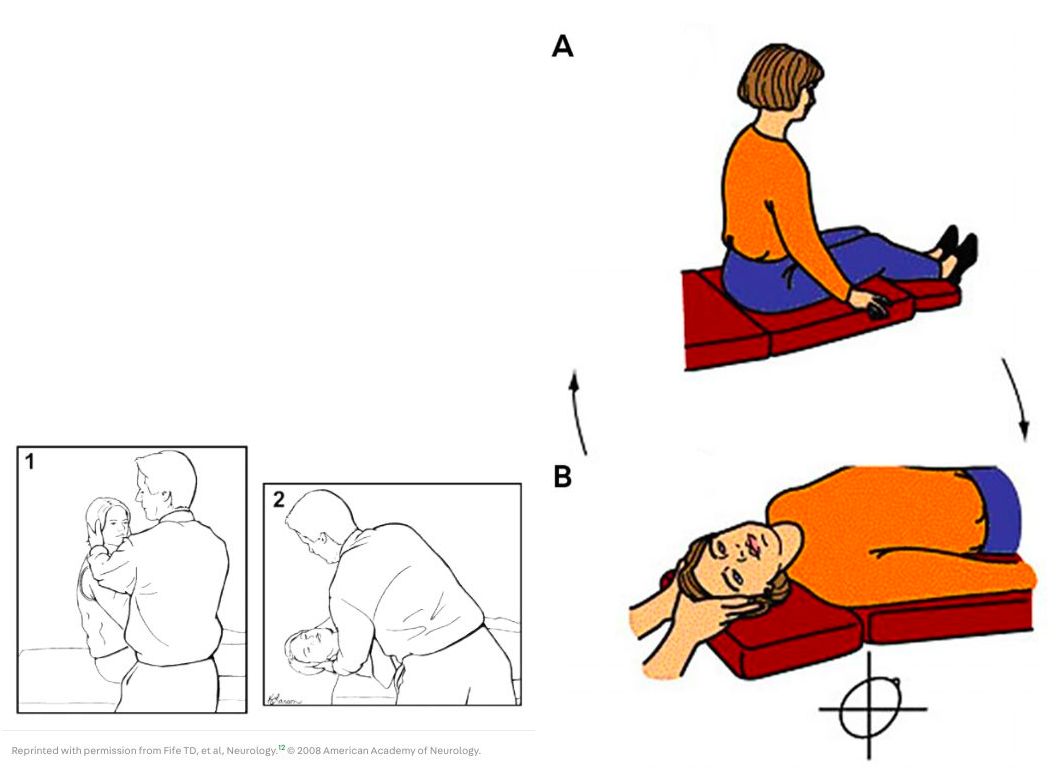
Dix-Hallpike maneuver: turn head 45Β° β†’ lay supine with head hanging.: Posterior canal BPPV: upbeat + rotatory[…] nystagmus; Lateral canal BPPV: horizontal direction-changing[…]; Anterior canal BPPV (rare): downbeat[…]. Head impulse test: tests VOR β€” examiner applies rapid unpredictable head rotations.

Impaired VOR β†’ eyes move with[…] the head, then snap back with catch-up saccade[…] (+ test). Best for confirming vestibular neuritis.
Vestibular Lab Testing

Audiometry: Age-related[…] hearing loss: high frequencies; Meniere[…] disease: low-frequency sensorineural hearing loss.

VNG (Videonystagmography) uses caloric[…] test (warm or cool air/water) β€” only evaluates horizontal canal[…].

VEMP (Vestibular-Evoked Myogenic Potentials) assesses otolith organs: Ocular VEMP (oVEMP)[…]: utricle function; Cervical VEMP (cVEMP)[…]: saccule function via inferior vestibular nerve division; Most sensitive for superior semicircular canal dehiscence[…] β€” shows abnormally large responses + lower-than-normal thresholds.

Video Head Impulse Test (vHIT): best for detecting bilateral[…] vestibular loss.

Posturography: most useful for unmasking functional[…] disorders (fails easy conditions, passes hard ones).

If vestibular testing abnormal: DDX = unilateral/bilateral vestibular loss or superior canal dehiscence[…].

If vestibular testing normal: DDX = vestibular migraine, anxiety, orthostatic hypotension, or PPPD[…].
BPPV - Pathophysiology and Types

  • Background: >90% of dizziness patients report positional triggers. BPPV symptoms are classically brief and fatigable[…]. Always perform ocular motor exam BEFORE positional testing: rule out underlying CNS lesion
    • Look for square-wave jerks[…], ocular flutter, opsoclonus, spontaneous nystagmus (vestibular neuritis)
  • Pathophysiology: otoconia[…] (CaCO3 particles) detach from utricle macula β†’ enter semicircular canal β†’ denser than endolymph[…] β†’ move with gravity β†’ either free-floating (canalithiasis[…]) or adhere to cupula (cupulolithiasis[…]). Detachment risk: head trauma, acute vestibulopathy, old age
  • Posterior canal BPPV is the most common: persists for months because particles trapped in inferior[…] semicircular canal
    • Dix-Hallpike[…] Maneuver: causes a transient upbeat + torsional nystagmus lasting ~10-30s
    • Treatment: Epley maneuver[…]
  • Horizontal canal BPPV: Direction-changing horizontal nystagmus; spontaneous resolution within days
    • Geotropic[…] variant: fast phase beats toward ground. Affected side has higher-velocity nystagmus
    • Apogeotropic[…] variant: fast phase beats away from ground. Affected side has lower-velocity nystagmus
    • Treatment: Barbecue (Lempert) Roll[…] or Gufoni maneuver[…]
  • Anterior canal BPPV (least common): downbeat + torsional[…] nystagmus on Dix-Hallpike
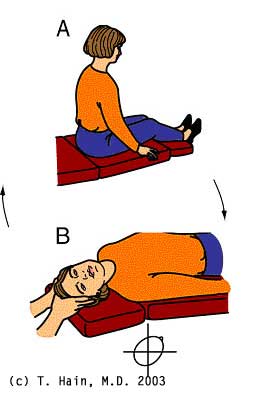
Dix-Hallpike Maneuver (pic credit: Dr Timothy Hain, 2003)
Dix Hallpike Test

Epley Maneuver (pic credit: Fort Worth Head, Neck, Jaw https://www.fwhead-neck-jaw.com/blog/epley-maneuver/epley-maneuver)
What Is the Epley Maneuverβ€”And Can It Really Stop Vertigo? - ForthWorthHeadNeckandJaw

Barbecue (Lempert) Roll Maneuever


Gufoni Maneuever
(pic credit: Ciniglio Appiani G, Catania G, Gagliardi M, Cuiuli G. Repositioning maneuver for the treatment of the apogeotropic variant of horizontal canal benign paroxysmal positional vertigo. Otol Neurotol. 2005 Mar;26(2):257-60. doi: 10.1097/00129492-200503000-00022. PMID: 15793415.)
gufoni
Central Positional Dizziness Mimics

Central causes: most commonly produce downbeat[…] nystagmus or horizontal apogeotropic variant nystagmus.

Most lesions in cerebellum[…] (uvula, vermis, tonsils, nodulus). Central horizontal positional nystagmus: usually present on one side only, typically apogeotropic variant. Duration can be brief or persistent (unlike BPPV's characteristically brief bursts). Degenerative cerebellar ataxias (e.g., SCA6): persistent positional downbeat nystagmus + central ocular findings + ataxia.

Vestibular migraine: can mimic BPPV but positional nystagmus is persistent, non-fatigable, evolves over minutes[…].

Light cupula syndrome: mimics horizontal canal BPPV with geotropic variant, but nystagmus is persistent and non-fatigable[…]. Null point with head supine + rotated 20-30Β° toward affected side. Pathophys: cupula becomes lighter than endolymph β†’ gravity moves it. Refractory to repositioning maneuvers.
Vestibular Migraine

Pathophys (heterogeneous): Aura via cortical spreading depression[…] affecting brainstem vestibular nuclei; Trigeminovascular[…] system (CGRP and serotonin connect vestibular system and trigeminal nuclei); Sensory hypersensitivity to light, sound, smell, motion; Channelopathy possibly causing osmotic disequilibrium β†’ endolymphatic hydrops.

Symptoms: spinning/swaying/rocking/floating with postural unsteadiness.: Triggers: head motion, complex visual environments, stress, sleep deprivation; HA, photophobia, phonophobia; Auditory: tinnitus, aural fullness, muffled hearing in BOTH ears[…] (vs Meniere's: one ear).

Exam: Spontaneous vertical nystagmus[…] is highly specific for vestibular migraine; Spontaneous horizontal nystagmus more specific for Meniere's; Positional nystagmus in vestibular migraine persists[…]; in BPPV transient. Between episodes: motion sickness, visually-induced sickness, head-motion-induced dizziness (may be near-constant like PPPD).

Diagnosis: migraine + recurrent vestibular symptoms lasting 5 min to 72 hr[…]. Treatment: nonpharmacologic + pharmacologic migraine therapies.
Meniere Disease

Pathophys: Oxidative[…] damage to microvasculature β†’ overexpression of inducible NO synthase β†’ blood-labyrinthine barrier breakdown β†’ endolymphatic hydrops[…].

Symptoms (cochlear first, then vertigo): "Roaring" or "rushing" tinnitus[…], aural fullness, hearing loss/distortion.

Then vertigo with intense spontaneous horizontal jerk nystagmus that reverses direction[…] β€” first beats toward the affected ear.

Hearing loss starts at low frequencies[…] β†’ progressively flattens across all frequencies, sometimes bilateral.

Tumarkin drop attacks[…]: sudden falls without LOC or vertigo, feel "shoved." From sudden stimulation of vestibulospinal reflex from otolithic organs[…].

Indication for ablative treatment (labyrinthectomy[…]).

Diagnostics: Audiometry: low-to-medium frequency SNHL[…] + 2 spontaneous vertigo episodes + fluctuating auditory symptoms; Caloric-vHIT dissociation[…]: calorics abnormal but vHIT normal; MRI for endolymphatic hydrops.

Treatment: Low-sodium diet (<1.5 g/day) + diuretic; Abortives: promethazine, prochlorperazine, low-dose benzos; Preventives: intratympanic dexamethasone[…]; For Tumarkin drops: intratympanic gentamicin[…].

Vestibular migraine vs Meniere: Auditory in BOTH ears (migraine) vs one ear (Meniere); Low-frequency SNHL[…] is present in Meniere but not migraine.
Other Episodic Spontaneous Vertigo Causes

Vertebrobasilar TIA: isolated vertigo is the most common warning symptom. AICA[…] supplies internal auditory artery to cochlea + vestibular labyrinth β€” sudden hearing loss + vertigo carries higher stroke risk than either alone.

Vestibular paroxysmia: brief episodes (seconds to <1 min) of stereotyped vertigo/oscillopsia/directional pulsion, up to dozens per day.: Pathophys: microvascular compression of CN VIII[…] (similar to trigeminal neuralgia); Triggered by position changes, head turns, loud noise, hyperventilation; Hyperventilation may induce nystagmus beating toward the affected ear; Treatment: carbamazepine or oxcarbazepine[…] vs vimpat β†’ microvascular decompression if refractory. Benign recurrent vertigo: spontaneous vertigo without migrainous, neurologic, or otologic features. Panic attacks: vestibular symptoms 2nd only to cardiopulmonary; high anxiety. Treatment: CBT/SSRIs.

Delayed orthostatic hypotension: SBP drop β‰₯20 or DBP β‰₯10 more than 3 minutes[…] after upright posture. Cardiogenic dizziness: low CO or transient arrhythmia β†’ global cerebral hypoperfusion. ~10% of acute MIs present with dizziness/vertigo.

Diagnose with telemetry[…].
Acute Vestibular Syndrome - HINTS

Definition: sudden onset of continuous vertigo >24 hours with nausea, head motion intolerance, unstable balance. Most common causes: acute unilateral vestibulopathy (vestibular neuritis or ischemic labyrinthopathy[…]) vs posterior circulation stroke.

Other causes: orthostatic hypotension/arrhythmias (rarely sustained vertigo >24h), Wernicke encephalopathy, drugs (phenytoin toxicity, aminoglycoside ototoxicity, especially gentamicin[…]). HINTS Exam: Head Impulse + Nystagmus + Test of Skew.: More sensitive than early MRI DWI for small strokes (~97% sens, 99% spec) β€” CT misses posterior fossa strokes; MRI can be DWI-negative for first 48h (~14% false negatives).

Peripheral pattern (acute unilateral vestibulopathy): Head impulse test abnormal[…] (catch-up saccade toward affected side); Nystagmus spontaneous, horizontal, unidirectional[…] (no direction change with gaze, attenuates with fixation, follows Alexander's law); Test of skew: absent[…].

Central pattern (likely posterior circulation stroke): Head impulse test normal[…] (no catch-up saccade); Nystagmus direction-changing, vertical[…], or not affected by fixation; Test of skew: vertical skew deviation[…].

HINTS Plus: adds audiometry[…] β€” new-onset hearing loss with AVS increases sensitivity for stroke.

HINTS + truncal ataxia[…]: 100% sensitive for stroke detection.
AVS - Stroke and Neuritis

Posterior circulation stroke causes: PICA[…] (most common): posterior inferior cerebellum + ipsilateral pontomedullary vestibular nucleus.

Dissection[…] is a common cause in younger patients β€” head/neck pain + sudden vertigo β†’ evaluate for vertebral dissection. Can present with vertigo + truncal ataxia without classic cerebellar signs β†’ life-threatening edema risk.

AICA[…]: internal auditory artery β†’ cochlea + vestibular labyrinth + lateral pons + anterior-inferior cerebellum.

Majority affect hearing[…] + have superimposed peripheral and central vestibulopathy. After AVS, patients have higher relative stroke risk in following year.

Vestibular neuritis: Classically viral[…]; HSV-1 DNA in many cases in vestibular ganglia; Ramsay Hunt syndrome[…] (herpes zoster oticus): facial palsy + vestibulocochlear dysfunction + mouth pain + vesicular rash in ear canal β€” needs immediate antivirals; Rare: demyelinating diseases (MS/NMOSD) can impact vestibulocerebellum or CN VIII root entry zone β€” typically aggressive, bilateral; Superior division[…] of vestibular nerve most commonly affected (innervates anterior and horizontal canals) β†’ produces horizontal-torsional unidirectional nystagmus beating away[…] from affected side; Isolated inferior division: spontaneous downbeating + torsional nystagmus; Head impulse test: catch-up saccade toward affected side.

Treatment: 1st line: vestibular PT[…]; Steroids: may speed recovery but don't change long-term outcomes; Acute symptoms: promethazine or dimenhydrinate[…] (less sedating than IV benzos); Avoid chronic vestibular suppressants.
PPPD and MdDS

Persistent Postural-Perceptual Dizziness (PPPD): Dizziness, unsteadiness, or nonspinning vertigo[…] most of the time for β‰₯3 months; Worsened by being upright, in motion, or with visual motion/complex patterns; Develops after an acute event (vestibular neuritis, concussion, autonomic dysfunction, panic attacks, vestibular migraine, Meniere's, BPPV); No asymptomatic periods (distinguishes from episodic vestibular disorders); Maladaptive: shortened stride length[…] and stiffened posture; Patients generally do NOT fall β€” frequent falls indicates another diagnosis; Pathophys: overreliance on visual and somatosensory systems[…] after vestibular injury; Treatment: vestibular PT + CBT + SSRIs/SNRIs[…].

Mal de DΓ©barquement Syndrome (MdDS): Chronic oscillating vertigo (rocking, bobbing, swaying[…]) after prolonged motion exposure (e.g., disembarkation from boat) for >48h; Symptoms decrease with re-exposure[…] to passive motion (driving, getting back on boat) β€” temporary reprieve, then temporary exacerbation when motion stops; No nystagmus, hearing loss, or spinning vertigo; <48h duration = land sickness[…] (very common, up to 75% of healthy adults); Imaging and vestibular/auditory testing normal; Treatment: stress management + sleep + antidepressants or benzos.
Motion Sickness and Bilateral Vestibulopathy

Motion sickness and Visually-Induced Motion Sickness (VIMS): Normal in anyone with intact vestibular system; Symptoms: dizziness, n/v, sweating/pallor, drowsiness/fatigue; Sopite syndrome[…]: motion-triggered drowsiness/fatigue; Pathophys: sensory conflict and mismatch[…] between expected and experienced visual/vestibular/somatosensory stimuli; Migraine, vestibular migraine, Meniere[…]: increase susceptibility (intact vestibular system); Bilateral vestibulopathy[…]: decreases susceptibility (abnormal system); Treatment: habituation exercises + meclizine, dimenhydrinate, promethazine, prochlorperazine, scopolamine[…].

Bilateral vestibulopathy: Significant impairment of both peripheral vestibular systems Β± hearing loss; Symptoms: chronic unsteadiness only when upright, worse in low light and uneven surfaces[…]; Oscillopsia[…]: bouncing vision with walking; Mild head movements (heartbeat, speaking, chewing) cause blurred vision; Etiologies: idiopathic, sequential inner ear injury, toxic/metabolic, intracranial process, iatrogenic (gentamicin, loop diuretics, cisplatin)[…]; Diagnose: symptoms + abnormality on vHIT, rotational chair, or caloric[…] testing.

CANVAS syndrome: Cerebellar Ataxia + Neuropathy + Vestibular Areflexia Syndrome[…].

Late-onset AR; biallelic AAGGG[…] pentameric repeat expansion (RFC1). Histopath: cerebellar Purkinje cell + dorsal root ganglion loss.

Symptoms: chronic cough[…] β†’ unsteadiness, sensory loss, dysautonomia.
Central Vertigo - MS, Stroke, Tumors

Vestibular nuclei anatomy: caudal pontine tegmentum + dorsolateral medulla. Four subnuclei: superior, lateral (Deiters), medial, inferior[…]. Receive afferents from peripheral vestibular system (CN VIII), cerebellum, reticular formation, spinal cord. Project to cerebellum, extraocular nuclei, spinal cord.

MS-related vertigo: Most common CNS sites: root entry zone of CN VIII at lateral pontomedullary junction[…] and medial vestibular nucleus[…]. Root entry zone lesion may mimic peripheral vestibular lesion despite being CNS.

Most common eye movement disorder in MS: INO[…] from MLF demyelination.

Acquired pendular[…] nystagmus from neural integrator network damage; associated with oculopalatal tremor and oscillopsia.

Treatment: gabapentin or memantine[…]; for vertical or central positional nystagmus: 4-aminopyridine[…].

Central positional vertigo in MS: most commonly from a lesion in the superior cerebellar peduncle[…]. Persists, non-fatigable, lacks combined upbeat + torsional components (unlike BPPV).

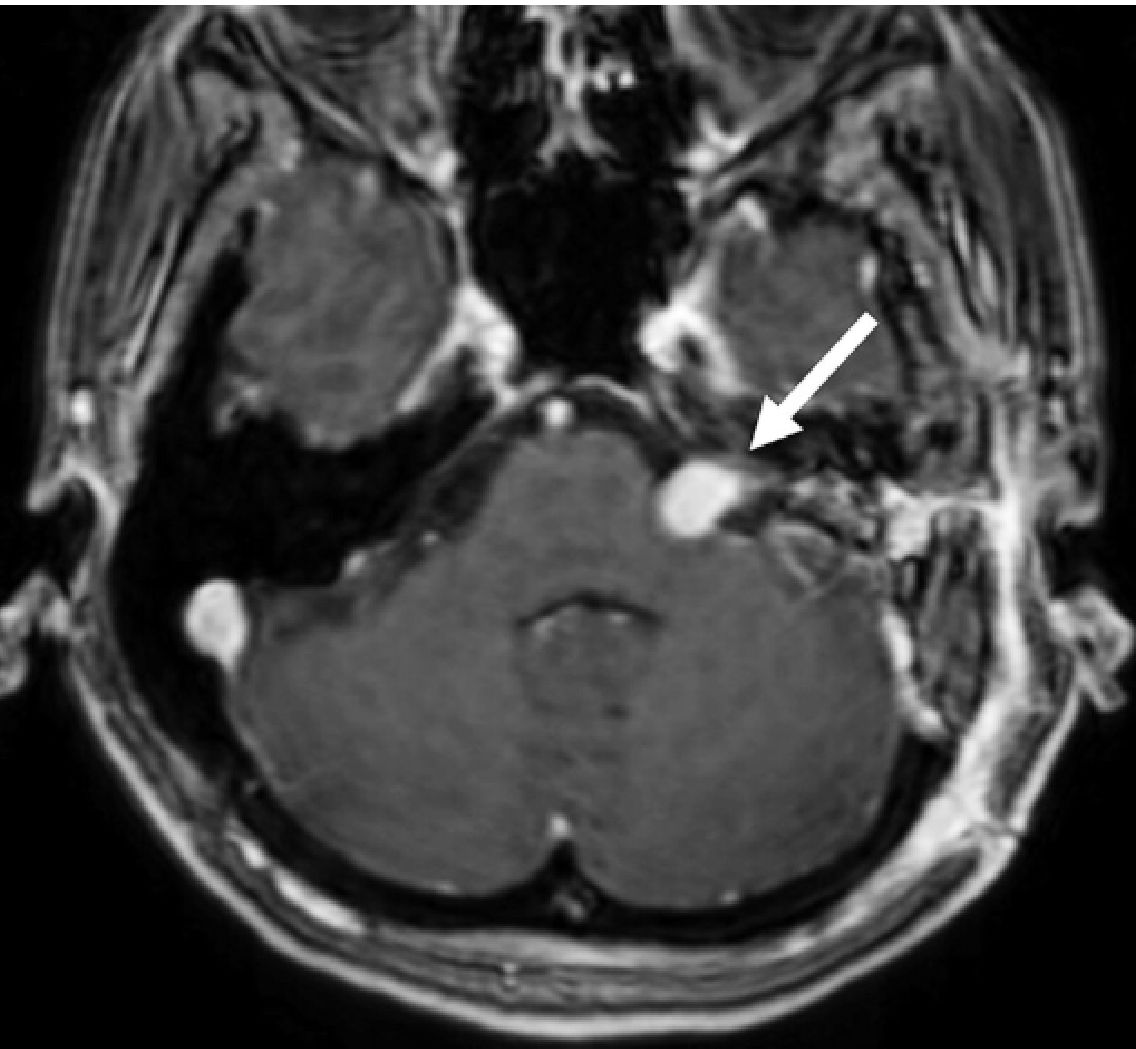
Stroke: cerebellar ischemic stroke commonly causes vertigo + nystagmus when affecting cerebellar peduncles, flocculus, nodulus, vermis[…]. Tumors: Vestibular schwannoma: from CN VIII Schwann cells; hearing loss (cochlear division compression) + vertigo.

Cavernous malformations[…]: "popcorn ball" appearance on MRI with hemosiderin rim. ~1/4 in posterior fossa with higher annual bleeding rates than supratentorial. See imaging A.

Hemangioblastoma[…]: associated with von Hippel-Lindau; enhancing nodule within a cyst; highly vascular. Medulloblastoma: most common malignant brain tumor in kids; can cause central positional vertigo mimicking BPPV.

Imaging A
Central Vertigo - Chiari, Siderosis, Episodic Ataxia

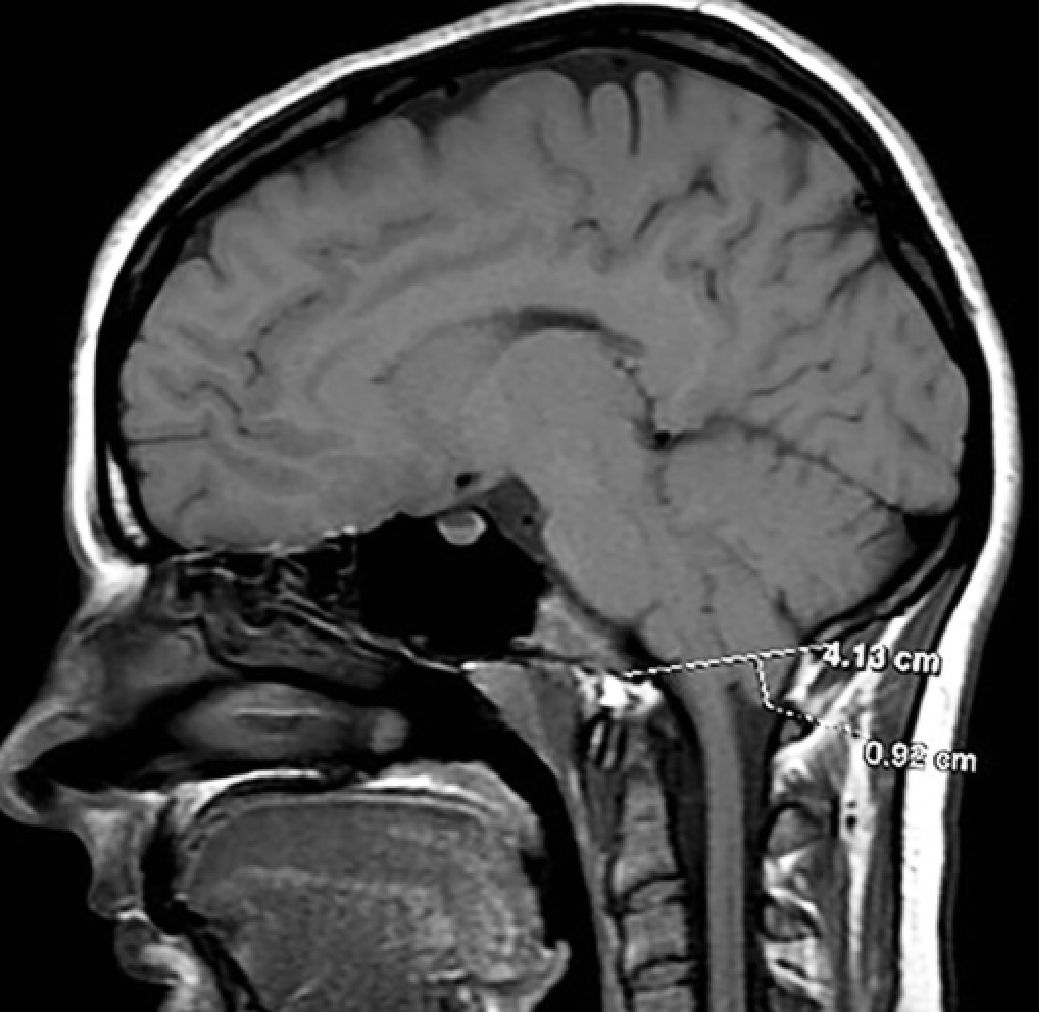
Chiari I malformation: cerebellar tonsillar herniation >5[…] mm below foramen magnum.: Vertigo: episodic, brief, induced by position changes (neck extension); Characteristic downbeat[…] nystagmus at cervicomedullary junction; Treatment: surgical decompression.

Superficial siderosis: Hemosiderin deposition on leptomeningeal surfaces[…] from blood breakdown. Infratentorial type: affects vestibular end organs, CN VIII, brainstem, cerebellum, spinal cord. From chronic recurrent bleeding (disrupted dural integrity) or one-time SAH.

Most common tumor cause: myxopapillary ependymoma[…]. Most common symptom: progressive hearing loss β€” high frequencies first β†’ bilateral, more severe than presbycusis β†’ deafness. CN VIII vulnerable in IAC.

Anosmia[…] rarely (CN I 2nd most affected).

MRI: SWI/GRE/T2 show hypointense rims[…] from hemosiderin. Highest yield for etiology: spinal MRI or CT myelography.

Treatment: iron chelator deferiprone[…] (SE: agranulocytosis).

Episodic ataxia type 2: Onset in adolescence; episodes lasting hours[…], triggered by stress, heat, exertion, alcohol, caffeine; CACNA1A[…] gene (P/Q-type calcium channel) β€” also in SCA6 and Familial Hemiplegic Migraine type 1; Downbeat[…] nystagmus in primary gaze, present during and between episodes; Treatment: acetazolamide or 4-aminopyridine[…]. Autoimmune vestibulocerebellar: Intraneuronal Ab: usually paraneoplastic (T-cell mediated).

Anti-Yo (PCA-1)[…] most common β€” paraneoplastic cerebellar degeneration with OBGYN malignancies; poor prognosis. Cell surface Ab (CASPR2, VGCC, anti-Tr, mGluR1): often nonparaneoplastic; better response to immunotherapy. Treatment: steroids, PLEX, IVIG β†’ rituximab or cyclophosphamide.

Cerebellar ataxia: paroxysmal vertigo with spontaneous downbeat[…] nystagmus from flocculus dysfunction.
Chiari 1 Tonsillar Herniation
Superior Semicircular Canal Dehiscence

Pathophys: bony defect in roof of superior[…] semicircular canal β†’ creates a "third window[…]" (normally only oval and round windows exist) β†’ shunts sound waves into vestibular system β†’ vestibular hypersensitivity.

Unique symptoms: Tullio phenomenon[…]: sound-induced vertigo; Hennebert sign[…]: pressure-induced vertigo from Valsalva (cough, sneeze, strain); Conductive hyperacusis / autophony[…]: heightened hearing of internal sounds (voice, eye movements, stomach, heartbeat, chewing).

Diagnostics: cVEMP or audiometry[…] + temporal bone CT. Treatment: surgery via transmastoid approach vs full craniotomy.
Other Otologic Causes

Perilymphatic fistula: abnormal communication between fluid-filled inner ear and air-filled middle ear (oval or round window leak). Causes: congenital, barotrauma, temporal bone fracture[…]. Symptoms: Hennebert sign + nystagmus/vertigo with positive or negative pressure in ear canal. Less autophony/hyperacusis than SSCD. Treatment: surgery for penetrating; supportive for non-penetrating.

Scuba diving inner ear damage: Barotrauma[…]: pressure changes during descent/ascent; hearing loss + perilymphatic fistula. Treatment: high-dose steroids + surgery.

Decompression damage[…]: local supersaturation of inert gases or R-to-L air emboli. Vestibular symptoms.

Treatment: immediate hyperbaric oxygen <5 hours[…].

Cholesteatoma: keratinizing epithelium in middle ear following chronic otitis media; adjacent to horizontal semicircular canal[…] β€” can erode into labyrinth, facial canal, CNS.

Symptoms: gradual facial weakness + otalgia + otorrhea[…]. MRI DWI: restriction (keratin).

Ramsay Hunt syndrome: peripheral facial paralysis + vesicular rash + hearing loss; VZV reactivation in geniculate ganglion[…]. Treatment: antivirals (acyclovir or famciclovir) + corticosteroids initiated <1-3 days. Enlarged Vestibular Aqueduct syndrome: Meniere-like recurrent vertigo + childhood hearing loss β†’ adult vestibular symptoms.

SLC26A4 (encodes pendrin)[…] gene alterations β†’ "third window" mechanism similar to SSCD but less prominent Tullio/Hennebert.

Treatment: cochlear implant[…]. Autoimmune inner ear disease: bilateral hearing loss often precedes other symptoms. Screen for anti-68-kDa Ab (heat shock protein 70). Treatment: high-dose steroids.

Cogan syndrome: triad of nonsyphilitic keratitis + vertigo + tinnitus[…]. Despite immunosuppression many progress to deafness.
Tinnitus - Pathophys and Pulsatile

Pathophys: cochlear hair cell dysfunction β†’ frequency-specific increased output to central auditory pathways β†’ loss of thalamic inhibitory gating β†’ cortical reorganization. Similar to denervation hypersensitivity or phantom limb pain[…].: Cannot be eliminated by severing auditory nerves β€” problem eventually involves CNS; Similar pathophys to musical ear syndrome (hearing music with deafness) or Charles Bonnet syndrome (seeing images with blindness)[…].

Unilateral pulse-synchronous (pulsatile) tinnitus is most concerning: Most dangerous: dAVF (dural AV fistula)[…] β€” abnormal connections between dural arteries and veins/sinuses, especially transverse/sigmoid/cavernous sinuses.

Most arise from venous sinus thrombosis[…] with venous hypertension. Annual hemorrhage risk.

Treatment: endovascular embolization[…].

IIH[…] β†’ high ICP β†’ altered arterial flow and venous turbulence. Carotid pathology (atherosclerosis, dissection, FMD). High-flow states: pregnancy, anemia, hyperthyroidism. High-riding jugular bulb.

Glomus tumors[…]: jugular foramen or middle ear tympanicum. SSCD β†’ autophony.

Workup: audiogram; if pulse-synchronous β†’ CTA HN or DSA[…] to exclude dAVF, AVM, glomus tumors. Check for papilledema.
Pulse-Asynchronous Tinnitus and Misophonia

Unilateral pulse-asynchronous tinnitus: patulous (persistently open) eustachian tube[…] modulated with respiration and swallowing.

Typewriter tinnitus: staccato "machine gun" or "Morse code" sounds.: Causes: microvascular loop compression[…], Ehlers-Danlos syndrome, basilar artery invagination; Treatment: carbamazepine, oxcarbazepine, or gabapentin[…].

Middle ear myoclonus: intermittent fluttering or thumping sounds from movements of stapedius (CN VII) or tensor tympani (CN V)[…]. Treatment: carbamazepine, klonopin, baclofen, or botox.

Bilateral pulse-asynchronous tinnitus: Tinnitus perceived bilaterally from palatal myoclonus[…] of midline soft palate. Essential palatal myoclonus: no structural cause.

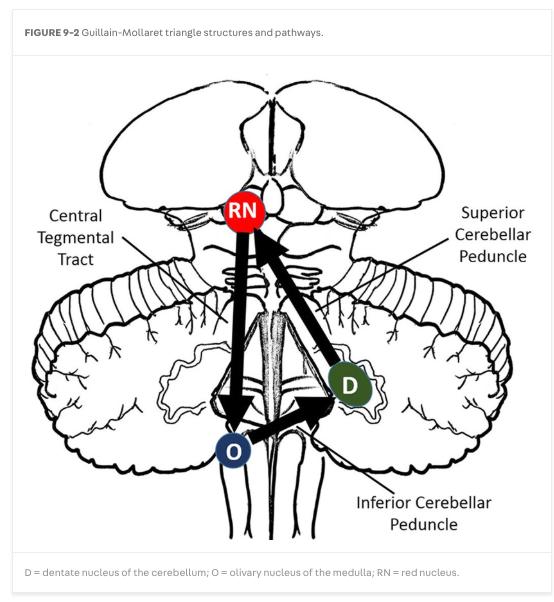
Oculopalatal myoclonus[…]: palatal movements + synchronous pendular torsional/vertical eye bobbing.

Localizes to disruption of Guillain-Mollaret triangle[…] (dentate-red-olivary). Seen after stroke. Hyperacusis: abnormally low tolerance for ordinary environmental sounds (different from phonophobia in migraines). Pathophys: central auditory pathway disruption. Treatment: sound avoidance, CBT, comorbid psych. Misophonia: selective dislike of specific sounds (chewing, pen click) triggering disproportionate reactions. Treatment: CBT.
Hearing Loss

Types: Conductive: external or middle ear problem; Sensorineural (SNHL): inner ear, CN VIII, or central auditory pathways. Bedside tests: Weber test[…] (fork on forehead): lateralizes toward impaired ear in conductive; away from impaired ear in SNHL; Rinne test[…] (mastoid then canal): bone > air conduction in conductive.

Acute unilateral SNHL: Labyrinthitis[…]: vestibular neuritis + unilateral SNHL, viral.

Cochlear infarction[…]: labyrinthine artery branches from AICA. Can be sign of impending cerebellar/pontomedullary stroke.

Isolated labyrinthine infarcts often invisible on standard MRI β€” HINTS superior to early MRI[…].

Treatment: pulse IVMP 1g/d Γ— 3d[…] or intratympanic corticosteroids; ideally <7 days.

Acute bilateral SNHL (<1 month): rule out intracranial hypotension[…] (spontaneous or VP shunt overshunting) β†’ brain sagging β†’ traction on CN VIII + disturbed perilymphatic-CSF dynamics. Chronic unilateral SNHL: Meniere: recurrent vertigo + fluctuating unilateral low-frequency SNHL + ear fullness + nonpulsatile tinnitus. Vestibular schwannoma: benign tumor from CN VIII Schwann cells.

Bilateral schwannomas β†’ NF2[…]. Chronic bilateral SNHL: age-related, heritable, noise exposure (most common preventable).

Struggles to distinguish speech from background; loses consonant sounds (F, S, V, SH, ZH)[…].

Hearing augmentation: cochlear implants[…] convert sound to electrical impulses; bypass damaged cochlear hair cells. In kids: implant before language develops. Bilateral implants advised even for asymmetric hearing loss. Idiopathic otalgia: referred pain from CN V, VII, X, and spinal C2-C3.

Glossopharyngeal neuralgia[…]: severe throat/tongue/ear pain on swallowing/talking/coughing; can trigger syncope. Causes: microvascular compression, MS plaques at root entry, Eagle syndrome. Treatment: carbamazepine β†’ microvascular decompression.

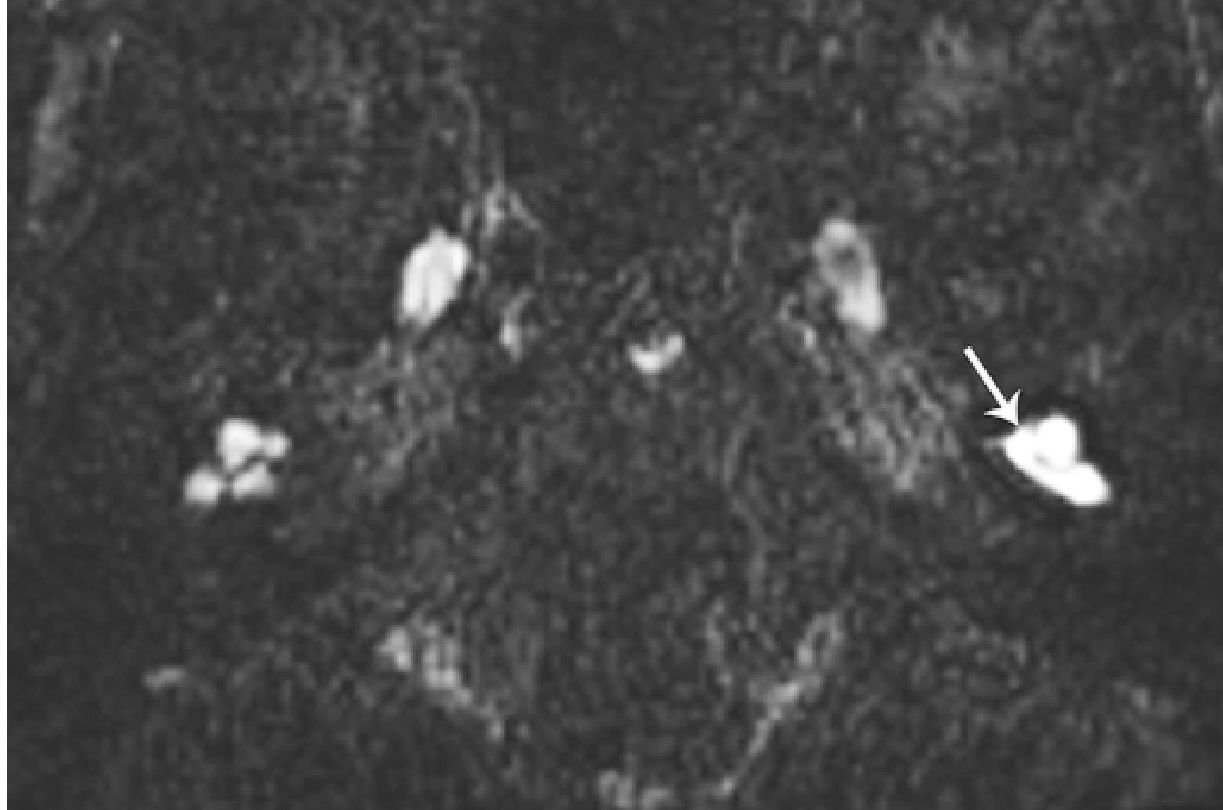
Vestibular Schwannoma

Practice Q - Vestibular Neuritis HINTS

Acute continuous vertigo, unidirectional nystagmus[…] (left-beating, torsional), abnormal rightward head impulse test, and normal hearing strongly suggest vestibular neuritis[…] β€” a peripheral vestibular syndrome.

Hearing loss would indicate labyrinthitis[…]; episodic vertigo plus hearing loss/tinnitus points to Meniere's[…]; brief positional attacks are typical for BPPV[…].
Practice Q - Posterior Canal BPPV Treatment

Posterior canal BPPV (most common) is diagnosed by the Dix-Hallpike maneuver[…] eliciting upbeat-torsional nystagmus on the affected side.

Treatment: the Epley maneuver[…].
Practice Q - HINTS Plus and Truncal Ataxia

HINTS Plus (adds audiometry) and HINTS + truncal ataxia[…] together are 100%[…] sensitive for stroke detection in acute vestibular syndrome β€” superior to early MRI DWI.
Practice Q - SSCD and Tullio Phenomenon

Superior semicircular canal dehiscence creates a "third window[…]" β†’ shunts sound waves into the vestibular system β†’ causes Tullio phenomenon[…] (sound-induced vertigo), Hennebert sign[…] (pressure-induced vertigo), and autophony[…].
Practice Q - Ramsay Hunt Syndrome

Ramsay Hunt syndrome is VZV[…] reactivation in the geniculate[…] ganglion, causing facial paralysis + vesicular rash in the ear canal + hearing loss/vertigo.

Treatment: antivirals + corticosteroids[…] initiated <1-3 days.
Practice Q - Episodic Ataxia Type 2

Episodic ataxia type 2: adolescent onset; hour-long episodes triggered by stress/heat/exertion/alcohol/caffeine; CACNA1A[…] gene mutation. Downbeat nystagmus present during and between episodes.

Treatment: acetazolamide or 4-aminopyridine[…].
Practice Q - CANVAS Syndrome

CANVAS[…] (Cerebellar Ataxia, Neuropathy, Vestibular Areflexia Syndrome[…]): late-onset AR with biallelic AAGGG[…] pentameric repeat expansion (RFC1).

Symptoms start with chronic cough[…] β†’ unsteadiness, sensory loss, dysautonomia.
Practice Q - Pulsatile Tinnitus Workup

Unilateral pulse-synchronous (pulsatile) tinnitus requires CTA HN or DSA[…] to exclude dAVF[…] (most dangerous cause), AVM, or glomus tumors.

Also check for papilledema[…] (IIH).
Practice Q - Cogan Syndrome Triad

Cogan syndrome: triad of autoimmune nonsyphilitic keratitis + vertigo + tinnitus[…]. Despite immunosuppression, many patients progress to deafness; some develop systemic vasculitis or aortitis.
Practice Q - PPPD Diagnosis

PPPD (Persistent Postural-Perceptual Dizziness[…]): nonspinning dizziness/unsteadiness most of the time for β‰₯3 months[…], worsened by being upright/in motion/exposed to visual motion. Develops after an acute event.

Treatment: vestibular PT + CBT + SSRIs/SNRIs[…].