Cognitive

Cognitive

Subspecialties · 71 cards · 1 labeled figure

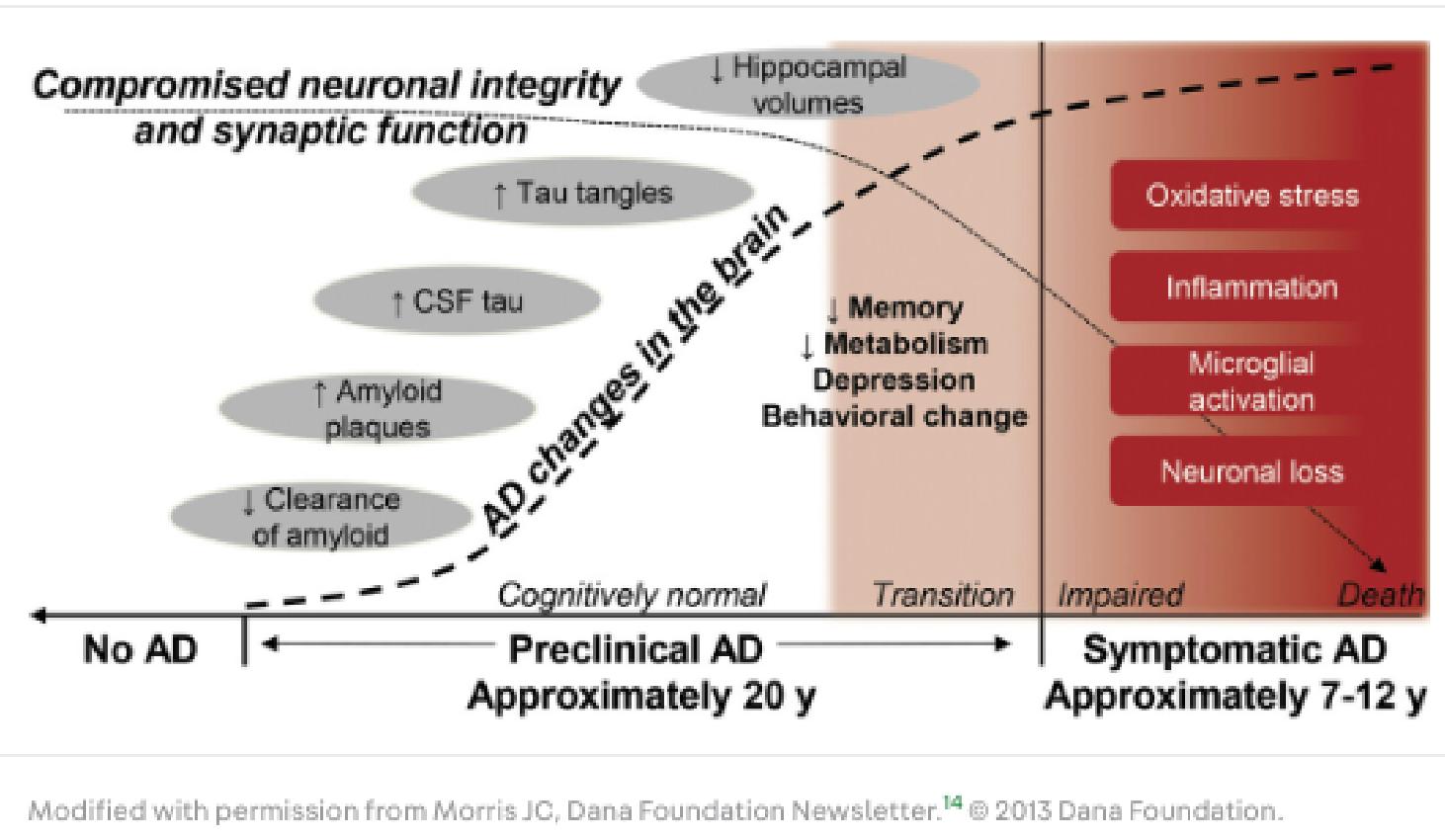
Histopathological Time Course of AD: Please list the event (arranged in chronological order)
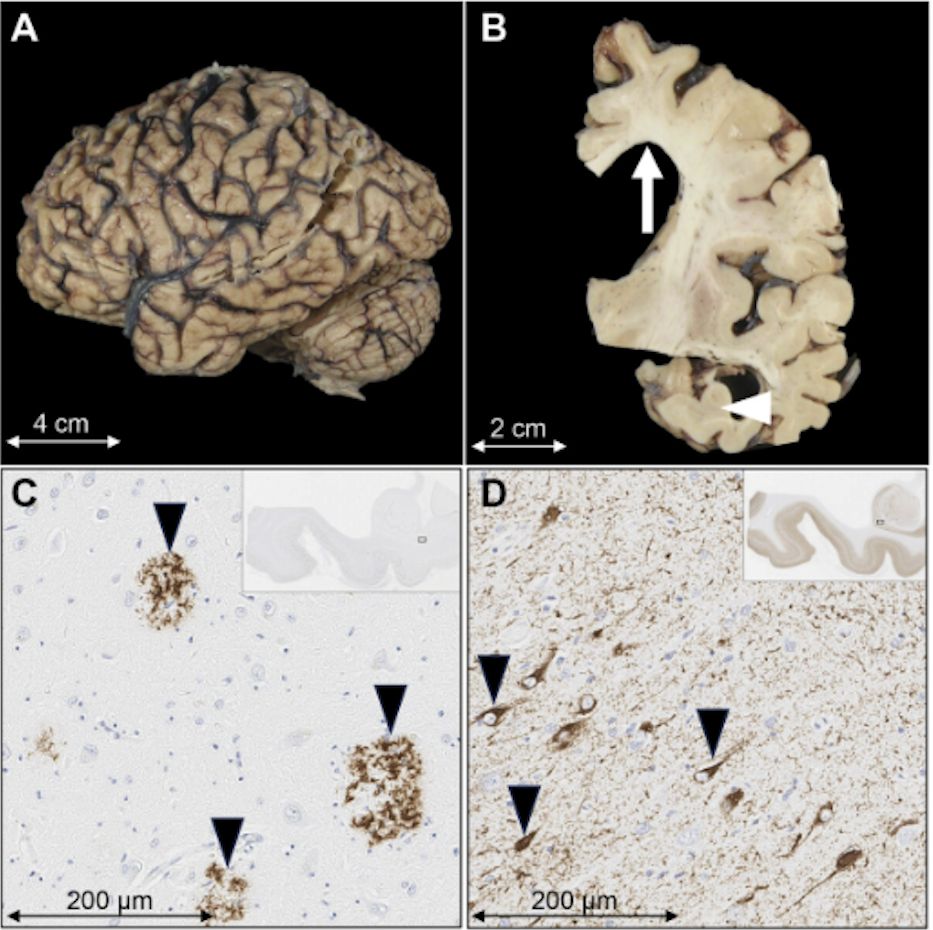
Pt with AD
  • A: shows generalized atrophy[…] w/thinning of the cortical ribbon[…], widening of sulci[…]
  • B: shows expansion of the lateral ventricles[…] and prominent hippocampal[…] volume loss
  • C: amyloid-ß plaques[…] 
  • D: neurofibrillary tangles[…] 

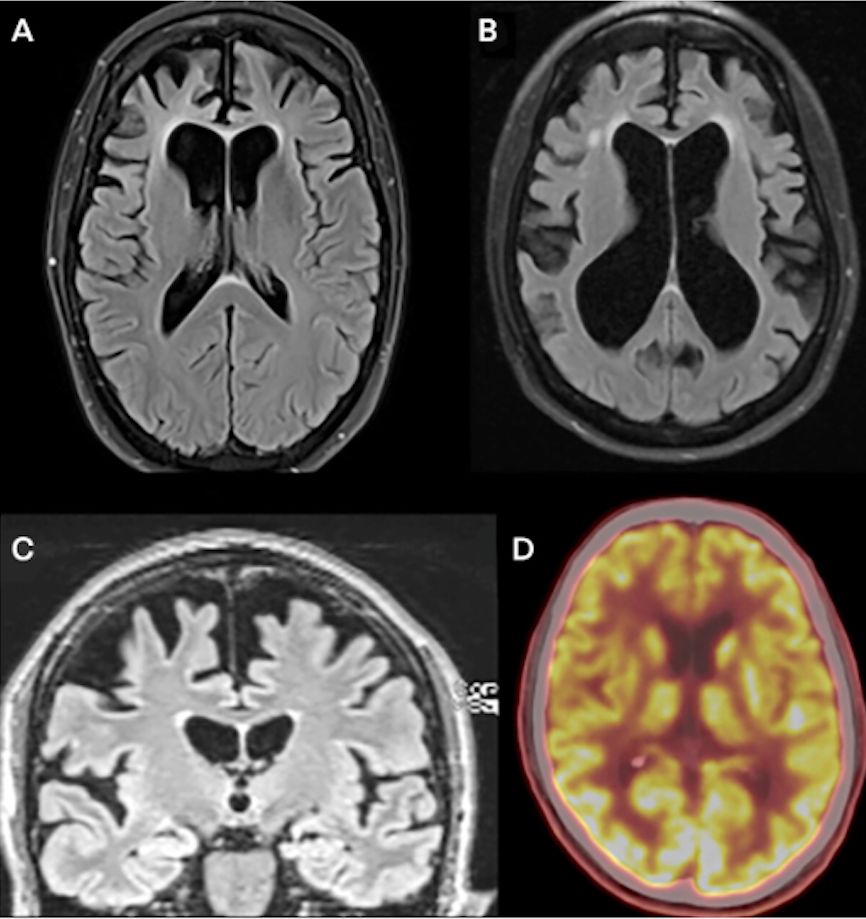
  • A (bvFTD): MRIb axial T2 FLAIR: R>L frontal[…] lobe atrophy
  • B (C9orf72 mutation): MRIb axial T2 FLAIR: global atrophy with frontal[…]>temporal[…] atrophy
  • C (C9orf72 mutation): MRIb coronal T2 FLAIR: R>L hemisphere atrophy overall + frontal[…]> temporal[…] lobe atrophy
  • D (C9orf72 mutation): FDG-PET: relative frontal[…] lobe hypometabolism

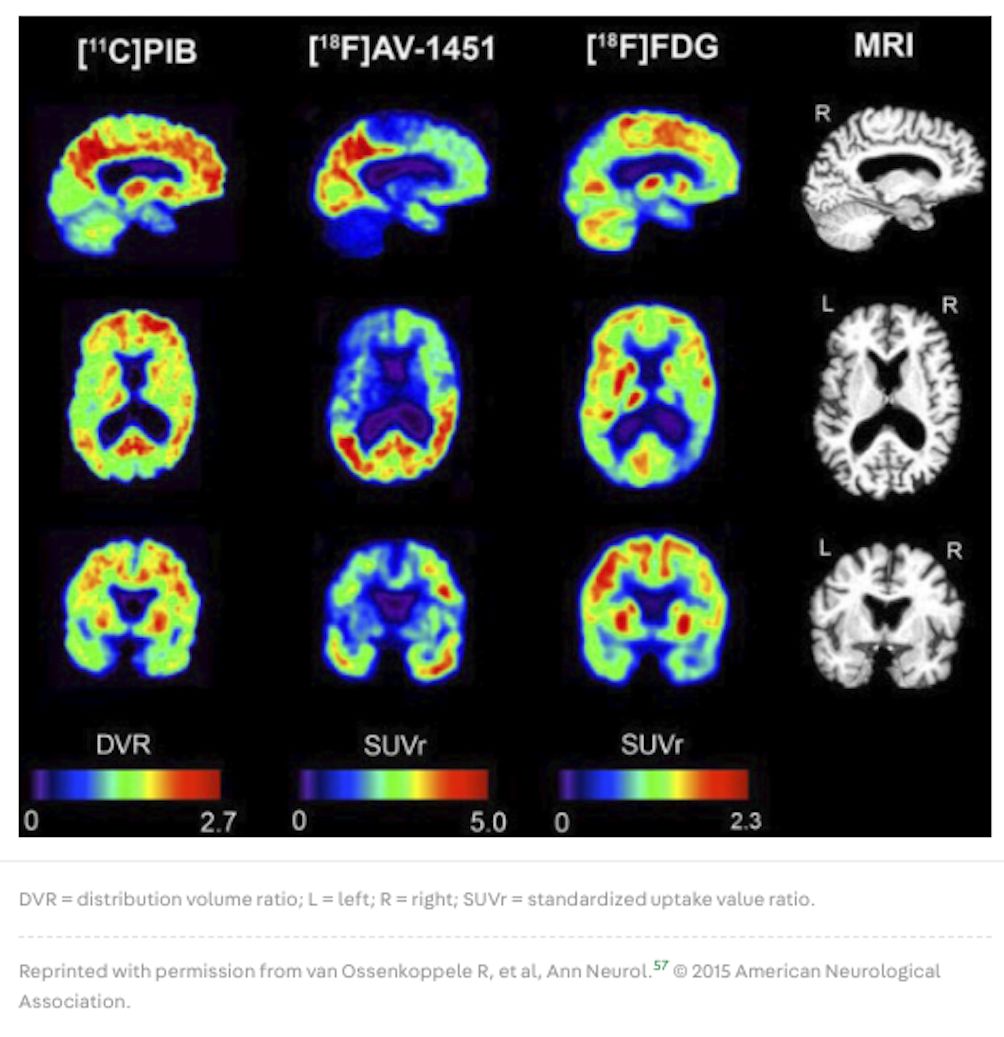
PCA: visuospatial/visuoperceptual AD variant (vs memory loss)
  • Amyloid PET (11C-PIB): diffuse cortical amyloid[…] deposition (more red DVR)
  • Tau PET (18F-AV-1451): posterior[location]-predominant tau deposits in parieto-occipital[…] regions 
  • FDG-PET (18F-FDG): posterior[location]-predominant glucose hypometabolism reflecting regional cortical dysfunction (measured as SUVr)
  • Structural MRI: prominent parieto-occipital[…] region volume loss

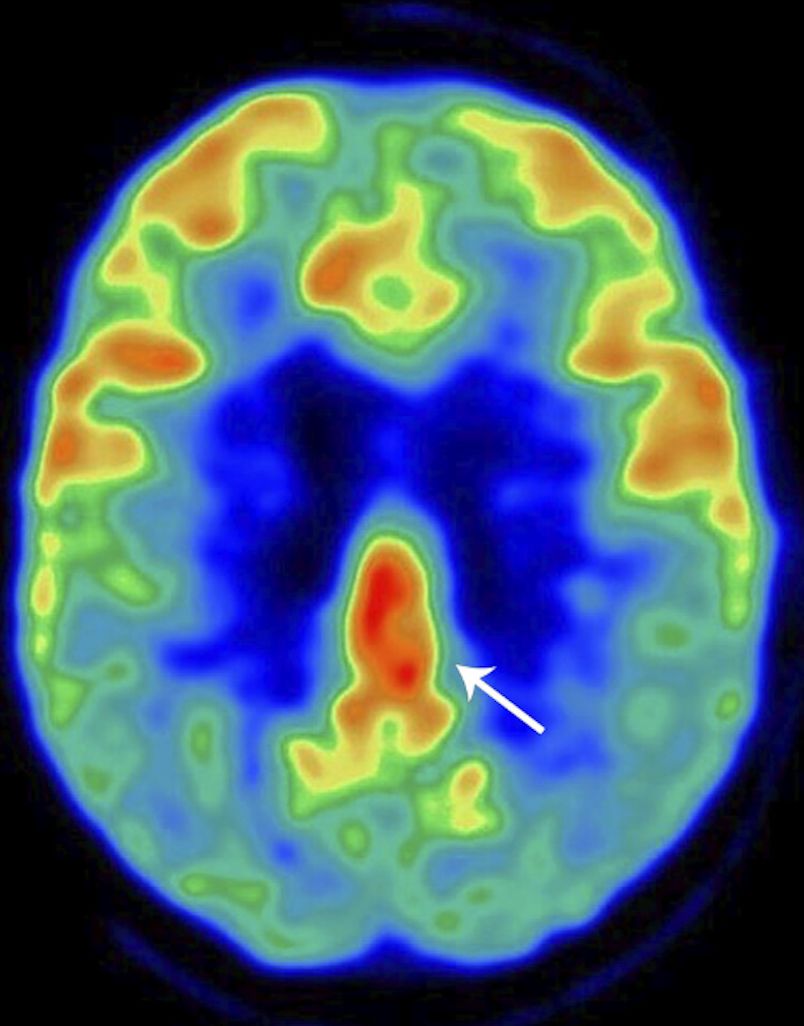
  • FDG-PET scan in pt with DLB showing cingulate island[…] sign which is relative preservation of glucose metabolism in the posterior cingulate[…] gyrus relative to hypometabolism in the precuneus[…] + cuneus[…] gyrus 


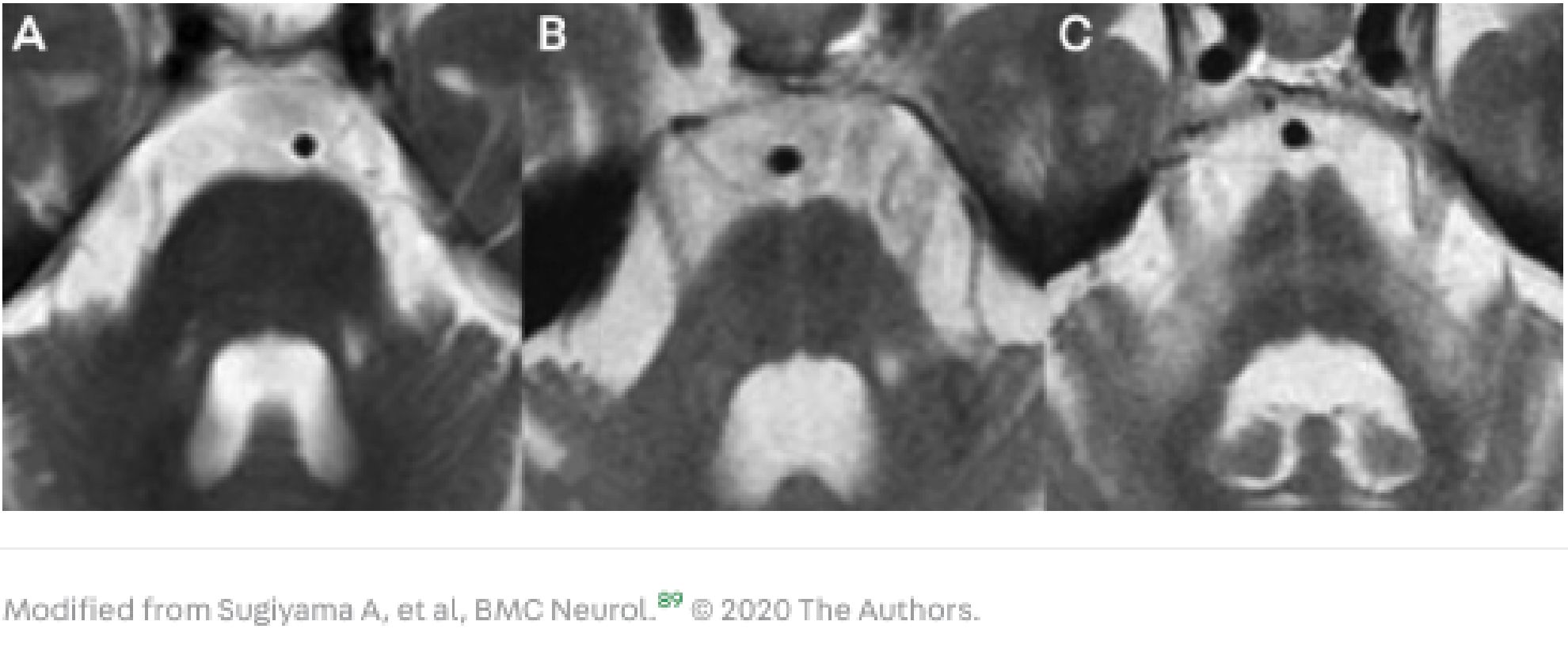
These MRIb axial cuts show
  • Hot cross bun[…] sign in pt w/MSA[…] which is hyper[…]intense signal of the cruciform[…] more pronounced the more advanced the disease

Alzheimer Disease - Pathophysiology

Note: AD ≠ dementia, but AD is the most common[…] cause of dementia.

Amyloid Cascade Hypothesis: amyloid-β (Aβ)[…] plaques aggregate → triggers formation of neurofibrillary tau tangles (NFTs)[…].

Changes can occur 20+ years[…] before symptom onset.

Amyloid-β pathway: produced when β-secretase and γ-secretase[…] sequentially cleave APP (amyloid precursor protein)[…], highly expressed at neuron synapses → produces Aβ40 and Aβ42.

Cleared via CSF absorption, BBB transport, and enzymatic degradation[…].

NFTs: hyperphosphorylated aggregates of tau[…], normally encoded by MAPT[…] on chromosome 17[…].

Tau normally stabilizes microtubules[…] for axonal transport. With Aβ present, tau hyperphosphorylates → aggregates → decreased microtubule binding → misfolding.

Tau spread sequence: transentorhinal[…] cortex (earliest) → anterior hippocampus → adjacent limbic and temporal cortex → association cortex → unimodal (primary sensory and motor) cortices.
Alzheimer Disease - Genetics and Stages

Genetics: Mutations in APP, PSEN1, PSEN2[…] → Aβ overproduction; Triplication of chromosome 21[…] (Down syndrome) → early-onset AD; APOE ε4[…] increases AD risk (strongest common risk allele); APOE ε2[…] decreases AD risk; In African ancestry populations, ABCA7[…] is a stronger risk allele.

Stages: Preclinical[…]: Aβ plaques and NFTs in transentorhinal area (hippocampus, amygdala).

Transitional[…]: new neuropsychiatric symptoms in patients ≥50yo → Mild Behavioral Impairment (MBI)[…] not yet meeting MCI criteria.

Symptomatic[…]: Aβ plaques in frontal and parietal lobes; NFTs in temporal lobe (hippocampus), parieto-occipital cortex, precuneus.

Short-term memory loss first (hippocampus[…] dysfunction) → MCI → dementia when ADLs impaired. Risk factors: age, family history, modifiable factors (sleep deprivation, cerebrovascular disease).
Alzheimer Disease - Symptoms and Cortical Signs

Progression of deficits: Transentorhinal/temporal/hippocampal → short-term memory[…] loss; Tau spreads beyond entorhinal cortex → executive[…] dysfunction (poor financial planning, scam susceptibility); Parietal/posterior cortical → visuospatial[…] dysfunction (wayfinding, wandering, elopement); Late: language deficits (alexia, comprehension issues, dysgraphia) and unimodal cortex involvement with abnormal motor exam; Neuropsychiatric symptoms common throughout — heavily consider AD in ≥50yo[…] with no prior psychiatric history.

Cortical signs and localization: Anomia[…] → temporal then frontal lobe (reduced nouns → word-finding difficulty → unintelligible speech); Apraxia and Gerstmann[…] syndrome → dominant parietal lobe (angular gyrus); Visual extinction and neglect → nondominant parietal[…] lobe; Balint[…] syndrome → bilateral parieto-occipital; Cortical sensory loss → parietal.
Alzheimer Disease - Diagnostics

Serum workup: TSH, B12, syphilis in endemic areas. MRI brain: rule out hippocampal[…] atrophy → progressive involvement → eventual hydrocephalus ex vacuo[…] with global atrophy.

FDG-PET: measures synaptic function via glucose metabolism.: AD: bitemporal and biparietal[…] hypometabolism; DLB: bioccipital[…] hypometabolism with sparing of posterior cingulate cortex = "cingulate island[…]" sign; bvFTD: frontal and temporal[…] hypometabolism with posterior cortex preservation.

Genetic testing: APOE genotyping done before anti-Aβ monoclonal antibody therapy due to association with ARIA[…] and APOE ε4 copy number.
Atypical AD - Dysexecutive Variant (dAD)

Definition: predominant nonmemory[…] symptoms instead of memory.

dAD: typically younger patients with predominant executive[…] dysfunction (planning, organization, decision-making, working memory). Disconnect pattern: patients can perform well-learned automatic activities like driving but cannot multitask or spatially manipulate.

Test with the Trail Making[…] Test.

Pathology: shared AD pathology (Aβ → NFTs), but tau builds up first in parietal > frontal[…] lobes sparing medial frontal regions (unlike bvAD), primarily hitting executive networks.

Diagnostics: MRI: atrophy in parietal heteromodal association cortex → frontal, sparing hippocampus[…]; FDG-PET: parietal and frontal hypometabolism with sparing of medial frontal and medial temporal regions; LP/CSF: low […], normal pTau[…], high pTau/Aβ ratio. Treatment: AChEi + NMDAr blocker ± psych meds.
Atypical AD - Behavioral Variant (bvAD)

Clinical: mimics bvFTD[…] — personality and behavior changes, blunted affect, apathy, OCD-like[…] repetitive behaviors.

Pathology: shared AD (Aβ → NFTs) but tau builds up in anterior temporal and frontal[…] lobes, especially the medial frontal portion (unlike dAD which spares it).

Disrupts the salience and default mode[…] networks.

Diagnostics: FDG-PET: hypometabolism in frontal, medial temporal, and cingulate[…] cortices; Genetics: autosomal dominant just like with bvFTD. Treatment: AChEi + NMDAr blocker ± psych meds.
Atypical AD - Posterior Cortical Atrophy (PCA)

Clinical: prominent cortical visual[…] dysfunction with sparing of other functions.

Blurry vision unimproved by glasses → praxis impairment, dysgraphia, dyscalculia, features of Gerstmann and Balint[…] syndromes, ± homonymous visual field deficit.

Reviews: Balint: oculomotor apraxia + ocular ataxia + simultanagnosia[…]; Gerstmann: L-R disorientation + dysgraphia + dyscalculia + finger agnosia[…]. Pathology: mostly underlying AD (Aβ/tau NFT).

Rarely corticobasal degeneration (CBD)[…] or DLB.

Diagnostics: MRI: posterior[…] cortex atrophy; FDG-PET: occipito-parietal[…] hypometabolism with relative frontal hypermetabolism + "cingulate island[…]" sign (just like DLB); LP/CSF or amyloid PET: same as typical AD; Tau PET: posterior[…] regional deposition patterns. Treatment: AChEi + NMDAr blocker ± psych meds.
Atypical AD - Logopenic PPA (lvPPA)

Clinical (3 subtypes by language network involvement, usually left hemisphere): Logopenic[…]: impaired word retrieval[…] (anomia); spared comprehension and grammar.

Peak atrophy in left temporoparietal[…] cortex. Pathology: AD (Aβ/tau).

Notably APOE ε4 is not[…] associated.

Agrammatic (nonfluent)[…]: impaired grammar; spared comprehension and retrieval. Peak atrophy in left posterior frontoinsular cortex.

Pathology: FTLD-tau[…].

Semantic[…]: impaired word comprehension; spared grammar and retrieval.

Peak atrophy in anterior temporal[…] lobe.

Pathology: FTLD-TDP[…].

Imaging: MRI: asymmetric left hemisphere[…] atrophy → eventual diffuse; FDG-PET: left temporoparietal hypometabolism; Amyloid and tau PET: focal asymmetric deposition in language network. Treatment: nothing effective; AChEi and NMDAr have limited data.
Frontotemporal Dementia - Behavioral Variant (bvFTD)

Clinical: caregivers report "they no longer seem like the same person" — disinhibition, apathy, blunted affect, OCD-like repetitive behaviors[…]. Almost identical to bvAD.

Localization: atrophy within the salience[…] network.: Apathy → anterior cingulate[…] cortex (medial frontal) + DLPFC; Disinhibition and eating behavior changes → insula and orbitofrontal cortex[…] (R > L); Executive dysfunction → subcortical circuits + DLPFC.

Pathology clues: +MND/ALS → TDP-43[…]; +Psychosis → TDP-43 or FUS; +Disproportionate caudate atrophy, pica/hyperorality, very young onset → FUS[…]; +Atypical parkinsonism → tau. Treatment: no curative treatment.

AVOID AChEi[…] — can worsen cognitive/behavioral symptoms.
FTD - Nonfluent and Semantic PPA

Nonfluent variant (nfvPPA) aka "progressive nonfluent aphasia": Agrammatism[…] (omission of grammar) + impaired language output and comprehension → effortful, hesitant speech with apraxia of speech[…]; Single-word comprehension and object knowledge are spared[…]; MRI/FDG-PET: atrophy/hypometabolism of left frontal and anterior insular[…] cortex; Pathology: both MAPT/tau and TDP-43[…].

Semantic variant (svPPA) aka "semantic dementia": Loss of word knowledge[…] → impaired comprehension, concealed with circumlocution; fluent[…] speech overall. Issues with irregular spellings (yacht, island, colonel).

Eventually nonverbal agnosias like prosopagnosia[…]. Grammar spared.

MRI: atrophy in anterior temporal[…] lobes (perirhinal cortex), often asymmetric and markedly worse on the left.

Pathology: mostly TDP-43[…] then MAPT/tau.
FTD - Overlap Syndromes and Genetics

bvFTD-ALS overlap: bvFTD and ALS commonly co-occur. C9orf72[…] hexanucleotide (GGGGCC) repeat → TDP-43[…] pathology → bvFTD + ALS with features of psychosis[…] and parkinsonism.

Imaging: relatively symmetric, frontal > temporal[…] atrophy. GRN mutations: TDP-43 pathology, can cause bvFTD > nfvPPA > logopenic PPA.

Imaging: striking asymmetric[…] atrophy (frontal/temporal/parietal).

MAPT mutations: young patient with family history, more disinhibition, classic FTD presentation → 3R/4R tau[…] pathology.

Imaging: relatively symmetric, temporal > frontal[…] atrophy.

FTLD-spectrum disorders: Corticobasal Syndrome (CBS)[…]: AD or Pick disease (3R tau) or CBD (4R tau) pathology.

Asymmetric rigidity[…] + movement disorders (myoclonus, dystonia) + cortical dysfunction (alien limb, ideomotor apraxia[…]). MRI: asymmetric perirolandic atrophy on the affected hemisphere.

PSP[…]: falls, symmetrically increased axial[…] tone, saccadic eye movement disorder, behavior changes. MRI: subcortical atrophy (midbrain, thalamus).

Pathology: globose NFTs[…] in STN/SN + tufted astrocytes and oligodendroglial coiled bodies.

FTLD neuropathology: 3 molecular categories: TDP-43, MAPT/tau, FUS[…]. TDP-43 subtypes: C9orf72, GRN, VCP.

MAPT: 3R[…] tau = Pick bodies (Pick disease); 4R[…] tau = CBD, PSP. Both in AD. FUS: exclusively bvFTD.

Biomarkers: blood/CSF NfL[…] differentiates FTD from psychiatric mimics.

CSF RT-QuIC[…] detects TDP-43 or tau.
Lewy Body Dementia - Pathophysiology

Definition: LBD is an umbrella for disorders from α-synuclein[…] aggregates (Lewy bodies and Lewy neurites).

Subtypes: DLB (Dementia with Lewy Bodies)[…]: dementia symptoms before or during parkinsonism onset; PDD (Parkinson Disease Dementia)[…]: dementia symptoms ≥1 year after parkinsonism.

Most cases have concomitant […] pathology (meeting AD criteria in some) but less commonly NFTs/tau than AD.

Genetics: SNCA[…] (encodes α-synuclein); GBA[…] increases LBD risk 5-fold.
LBD - Clinical Features

Core features: early prominent, fluctuating[…] cognitive deficits with visuospatial, executive, and attention[…] dysfunction (unlike episodic memory in AD).

Recurrent, well-formed visual hallucinations[…]; Parkinsonism[…] (bradykinesia, rigidity, postural instability instead of resting tremor; bilateral unlike unilateral onset in PD); REM Sleep Behavior Disorder (RBD)[…] — vocalizations/violent behavior during sleep from loss of REM muscle atonia; Autonomic[…] features (orthostatic hypotension, syncope, falls, constipation — can precede cognitive/motor symptoms by >10 years); Prominent neuropsych symptoms (depression, anxiety, sleep, psychosis).

Memory pearl: unlike AD, memory in LBD may improve with cues[…] and be spared early.

Misidentification syndromes: Capgras[…] phenomenon: belief that a person is replaced by an identical imposter; Phantom boarder[…]: belief that unseen people are in the home. Fluctuating cognition lasts minutes to days.
LBD - Diagnostics

MRI brain: relative preservation[…] of hippocampus and medial temporal lobe (unlike AD).

FDG-PET: posterior parietal, temporal, and occipital[…] hypometabolism + "cingulate island[…]" sign (preservation of posterior cingulate gyrus).

DA-SPECT (DAT): low dopamine[…] uptake in striatum (used for PD, PDD, DLB).

Amyloid PET: cortical Aβ burden is higher in DLB[…] than in PDD; helpful to distinguish AD vs PDD. Tau PET: less helpful in DLB/PDD.

Polysomnography: REM sleep without atonia[…] confirming RBD.

LP/CSF: total α-synuclein reduced[…] in LBD (increased in AD).

CSF seed amplification (RT-QuIC)[…] for α-synuclein. 
  • Skin biopsy: detect α-synuclein in sweat/sebaceous glands and nerves.

SWI sequence MRI: loss of "swallow tail[…]" sign (loss of DA cell bundles in midbrain SN pars compacta).
LBD - Treatment

Cognitive symptoms: AChEi[…]. SE: GI (n/v/diarrhea/weight loss), insomnia, leg cramps, vivid dreams.

Motor symptoms: Sinemet[…].

AVOID: Classic neuroleptics (haldol)[…] — bad reactions can be fatal within days; Anticholinergics, MAOi, COMTi, amantadine (used in PD).

Psychiatric symptoms: therapy first → atypical antipsychotics[…] like quetiapine.

Pimavanserin[…] for psychosis in PD/PDD. Avoid TCAs (anticholinergic) and benzos (paradoxical agitation).

RBD: melatonin and clonazepam[…].

Autonomic symptoms (avoid anticholinergics): Orthostatic hypotension: midodrine, fludrocortisone, droxidopa[…]; Overactive bladder: β3 agonist (mirabegron)[…].
Vascular Cognitive Impairment - Overview

Definition: VCI covers Vascular Dementia + MCI with preserved function + mixed-etiology dementias. Most common mixed pathology is AD + cerebrovascular disease[…].

Mechanism: cerebrovascular disease lowers the threshold[…] for dementia to express when combined with other pathologies.

Clinical: motor slowing, executive[…] dysfunction, decreased processing speed[…], gait imbalance, urinary dysfunction/incontinence, and psychiatric issues (MDD/apathy).

Major subtypes: Poststroke[…] dementia: higher with hemorrhagic > ischemic; cognitive decline <6 months.

Strategic infarcts in left frontotemporal, right parietal, or left thalamus[…].

Subcortical ischemic[…] vascular dementia: small vessel disease.

Multi-infarct cortical[…] dementia.

Mixed pathology[…] dementia.
VCI - Small Vessel Disease MRI Features

Lacunar infarcts: BG and thalamus[…] locations fare worse.

Microinfarcts: microscopic lesions invisible on gross exam. ≥3 has similar dementia risk to high NFT (Braak V-VI)[…] burden. Mechanism: BBB leakage → neuronal death and astrogliosis → white matter tract injury → macrophage activation along tracts can injure contralateral hemisphere. Microhemorrhages.

Perivascular spaces: between endothelial BM and astrocyte end-feet, integral to the glymphatic[…] system (functions more during sleep[…]).: Filter CSF from subarachnoid space → brain parenchyma, combining with interstitial fluid and toxic solutes (Aβ/tau); Centrum semiovale[…] perivascular spaces → AD/CAA; Basal ganglia[…] perivascular spaces → VCI. White Matter Hyperintensities (WMH): periventricular or subcortical/deep.

Affects executive and processing speed[…] domains.: Posterior[…] location → AD pathology; Anterior[…] location → VCI pathology; Pathology: demyelination, axonal loss, inflammation/vacuolization from arteriolosclerosis or venous collagenosis[…].
Cerebral Amyloid Angiopathy (CAA)

Clinical: acute neuro decline from lobar ICH[…] vs Transient Focal Neurologic Episodes (TFNEs)[…] <30 mins (stereotyped, positive or negative symptoms) vs gradual dementia.

Pathophys: Aβ40[…] deposits (vs Aβ42 in neuritic plaques) in the tunica media and adventitia of small arterioles in cortex and leptomeninges[…]. Genetics: severity risk higher with APOE ε4.

Boston Criteria v2.0 (T2/SWI): Hemorrhagic: lobar ICH and CMBs[…] ± cortical superficial siderosis[…] ± convexity SAH. Lobar/cerebellar (not BG/thalamus/pons like HTNsive bleeds). Non-hemorrhagic: >10 subcortical WMHs (ovoid/circular) and >20 centrum semiovale perivascular spaces.

CAARI (CAA-Related Inflammation): Young[…] patient with HA, FND, seizures, and subacute cognitive decline; Similar to ARIA-E/H[…] from anti-amyloid monoclonal antibodies; More common with APOE ε4; MRI: asymmetric[…] cortical/subcortical WMHs + ≥1 CAA imaging feature; Treatment: steroids[…].
CADASIL and Other Vascular Conditions

CADASIL (Cerebral Autosomal Dominant Arteriopathy[…] with Subcortical Infarcts[…] and Leukoencephalopathy): Genetics: AD NOTCH3[…] mutation → cysteine-altering changes → vascular smooth muscle cell degeneration, fibrosis, stenosis.

Triad: migraine ± aura, subcortical strokes, young-onset VCI[…].

MRI: classic external capsule, anterior temporal lobe, and superior frontal lobe[…] involvement.

Treatment: valproate[…] preferred for migraine PPX, ASA for stroke prevention, donepezil/memantine for cognition.

Avoid β-blockers[…] for migraine PPX. Cardiovascular disease: AFib, CAD, CHF, symptomatic carotid stenosis → microinfarcts, global hypoperfusion, inflammation, CMBs.

HTN → VCI: SPRINT-MIND[…] trial showed SBP <120 mmHg reduces MCI/dementia risk. Anti-amyloid therapy CIs: CAA/CAARI features (superficial siderosis, >4 CMBs, macrohemorrhage >10mm, TIA/stroke in past year, significant WMHs, multiple lacunes, or major territory stroke). Treatment of VCI: AChEi + NMDAr blocker.
Neuropsychiatric Symptoms (NPS) in Dementia

Localization: NPS localize to frontal-subcortical[…] networks.

AD dementia: tau NFTs deposit especially in anterior cingulate[…] cortex → disrupts reward/medial frontal pathways → more depression and agitation.

In LBD, more hallucinations[…].

Treatments: First-line: behavioral modifications[…]; Then meds — assess response to dementia therapies (AChEi, NMDAr) first.

Specific options: Dextromethorphan/quinidine[…] → pseudobulbar affect; Brexpiprazole[…] → agitation in AD; SSRIs[…] → depression (avoid paroxetine — anticholinergic; SSRIs may worsen apathy); Bupropion[…] → depression + apathy; Mirtazapine[…] → depression + poor appetite; Trazodone[…] → depression + insomnia; Stimulants[…] (methylphenidate, dextroamphetamine) → apathy alone; Mood stabilizers[…] (lamotrigine, valproate, gabapentin) → labile mood, agitation, mania; Buspirone[…] → GAD. Cautions: Benzos: worsen delirium/cognition; paradoxical disinhibition.

Antipsychotics: quetiapine (low D2), risperidone (higher EPS), pimavanserin[…] for psychosis in PD/PDD.

Avoid altogether in LBD[…].

SE: sedation, metabolic syndrome, EPS, long-term QTc-related arrhythmias[…] (black box warning).
Neuroimaging Signs in Dementia

MRI sequences: T1 for atrophy; T2 FLAIR and SWI[…] for VCI (WMH, CMBs).

ARIA (anti-amyloid mAb side effect): risks include CAA/VCI and APOE ε4[…].: ARIA-E[…] (vasogenic edema): T2-FLAIR; ARIA-H[…] (hemorrhage: CMB or ICH): SWI; Most self-resolve after treatment discontinuation within ~4 months. FDG-PET: localizes hypometabolism for all dementia types.

Disease-specific signs: LBD: loss of "swallow tail[…]" sign on SWI; "cingulate island" sign on FDG-PET; MSA[…]: "hot cross buns" sign in the pons; PSP[…]: "hummingbird" sign sagittal; "Mickey Mouse" or "morning glory" axial (midbrain > pons atrophy); CAA[…]: occipital Aβ + cortical superficial siderosis.

AD differentiators: AD vs FTLD: temporoparietal[…] hypometabolism vs frontal; AD vs LBD: mesial temporal atrophy[…] vs sparing; AD vs early-onset AD: mesial temporal atrophy vs sparing[…].

FTLD differentiators: GRN[…]: prominent WMHs and highly asymmetric atrophy; C9orf72[…]: prominent cerebellar atrophy (unlike other FTLD); MAPT[…]: prominent mesial temporal lobe atrophy.
Fluid Biomarkers in Dementia

AD: Low Aβ42[…] (sequestered in plaques); High pTau181[…] (favors AD); High total tau (nonspecific — stroke, TBI, encephalitis, CJD); Low ATI (Aβ42:tau ratio)[…]; Tube: use polypropylene (soft)[…] tubes — Aβ adheres to polystyrene (hard).

CJD: RT-QuIC[…]: mainstay of diagnosis, great sens/spec; High 14-3-3 protein[…]: nonspecific — any neuron injury.

α-Synucleinopathies (LBD = DLB/PDD, including precursor RBD, PD, MSA): α-synuclein seed amplification (RT-QuIC)[…] — positive/negative, not quantitative.

RT-QuIC summary: detects prions[…] → CJD; detects α-synuclein → α-synucleinopathy.

Emerging serum biomarkers: Neurofilament Light (NfL)[…]: neuron injury — correlates with AD progression (nonspecific).

Neurogranin[…]: synaptic injury — best correlate of dementia severity.

GFAP[…]: glial injury (astrocyte activation).

Aβ42/Aβ40 ratio[…] (vs absolute).

pTau217[…]: better than pTau181, used to risk-stratify amyloid/tau PET need.

Caveat: artificially elevated in kidney disease[…]. Nonspecific: total tau, 14-3-3, NfL.
AD Treatment - Symptomatic

AChEi (all AD stages): MOA: increase synaptic ACh → compensate loss of activity in nucleus basalis of Meynert[…]delay decline[…] but not improve from baseline; Donepezil[…] is best tolerated PO; rivastigmine has highest SE; SE: GI (n/v/weight loss), dizziness, bradycardia (may need PPM if combined with β-blockers), vivid dreams.

NMDAr blockers (moderate-severe AD): Memantine[…]; No strong evidence of neuroprotection.

Symptomatic management of behavioral/NPS: MDD: SSRIs[…]; Psychosis: antipsychotics with mortality black box; lowest risk with quetiapine[…]; avoid haldol; Sleep: melatonin, trazodone, suvorexant[…] (avoid zolpidem — cognitive risk); Agitation: brexpiprazole[…] for AD; SSRIs (citalopram) for nonpsychotic agitation.
AD Treatment - Anti-Amyloid Monoclonal Antibodies

Indication: MCI or mild[…] AD.

Lecanemab (Leqembi): q2-week IV infusion; SE: infusion reaction, ARIA-E/H[…] (especially with APOE ε4). Donanemab (Kisunla): qMonthly IV infusion; SE: ARIA-E/H.

Pre-treatment: APOE genotyping due to APOE ε4/ε4[…] highest risk of ARIA (~12-17% incidence).

Management of ARIA: suspend treatment[…]; ARIA-E is parenchymal/sulcal edema; ARIA-H is microhemorrhages/macrohemorrhages.
Neurodegenerative Proteins Overview

Major proteins: Amyloid-β[…]: extracellular plaques; in AD/CAA; Tau[…]: intracellular NFTs, Pick bodies, coiled bodies, astroglial inclusions; in AD, PART, PSP, CBD; α-synuclein[…]: intracellular Lewy bodies, Lewy neurites, glial cytoplasmic inclusions; in PD, DLB, MSA; TDP-43[…]: intracellular neuronal cytoplasmic/nuclear inclusions; in FTLD-TDP, LATE, ALS; PrP (prion)[…]: extracellular and intracellular plaques; in CJD.

Aβ deposition sequence in AD: neocortex → hippocampus/limbic → BG/thalamus → brainstem → cerebellum[…].

Tau Braak stages (3R + 4R isoforms): transentorhinal → entorhinal → hippocampus → association cortices → primary sensory/motor[…]. Correlates with neurodegeneration and memory loss progression.
Other Neuropath Conditions

PART (Primary Age-Related Tauopathy): only tau[…] misfolds, no Aβ. Does not spread to neocortex (unlike AD); APOE ε4 less common.

LATE (Limbic[…]-Predominant, Age[…]-Related, TDP-43[…] Encephalopathy): mostly limbic cortex (amygdala, hippocampus, middle frontal gyrus). Associated with hippocampal sclerosis and FTLD-TDP.

ARTAG (Age[…]-Related Tau AstroGliopathy): 4R-tau inclusions in astrocytes.

Aβ-Related Angiitis: Aβ deposits in BVs → rapid destruction → rapidly progressive dementia[…].

Huntington Disease: AD[…] mutation, CAG[…] trinucleotide repeat → abnormal huntingtin → atrophy of caudate and putamen[…] → later cortex.

Prion diseases: Genetics: PRNP[…] mutation → abnormal PrP → rapidly progressive dementia, ataxia, myoclonus[…] ± EPS or pyramidal signs; FFI[…]: progressive insomnia + dysautonomia; Pathology: spongiform changes (microvacuolization) — in neocortex[…] → CJD; in cerebellum[…] → GSS; in thalamus[…] → FFI.
Practice Q - Classic AD Amnestic Presentation

Amnestic-predominant cognitive decline with hippocampal atrophy[…] and positive amyloid biomarkers in an older adult is classic for Alzheimer disease[…].
Practice Q - APOE ε4 and Family History

APOE ε4[…] is the strongest common susceptibility allele for late-onset AD.

Triplication of APP[…] (trisomy 21) causes early-onset AD.

PSEN1[…] is the most common gene in familial autosomal dominant early-onset AD (40s).
Practice Q - CSF Biomarkers Pattern

Classic AD CSF biomarker pattern: low Aβ42[…] (plaque sequestration), elevated pTau181[…], and low Aβ42:tau ratio (ATI)[…].

Plasma pTau217[…] is better than pTau181 but is artificially elevated in CKD[…].
Practice Q - ARIA Highest Risk Allele

Homozygosity for APOE ε4/ε4[…] confers the highest risk for ARIA among patients treated with anti-amyloid monoclonal antibodies. ARIA-E is parenchymal/sulcal edema (T2-FLAIR); ARIA-H is microhemorrhages (SWI).
Practice Q - Lecanemab and Microhemorrhages

Lecanemab may be discontinued if MRI detects microhemorrhages[…], which indicate elevated risk for hemorrhagic ARIA.

ARIA-E and -H self-resolve[…] within ~4 months after treatment discontinuation in most patients.
Practice Q - Donepezil and Memantine

Donepezil[…] (AChEi) delays global functional decline in AD; the most common side effects are nausea and vomiting[…].

Memantine (NMDAr)[…] is only indicated for moderate-to-severe dementia.
Practice Q - Anticholinergic Burden

In older adults with MCI, drugs like diphenhydramine[…] should be discontinued due to strong anticholinergic[…] effects and increased dementia risk.
Practice Q - bvFTD Core Features

bvFTD: disinhibition, hyperorality, loss of empathy, executive dysfunction[…], and right-predominant frontotemporal atrophy on MRI.
Practice Q - bvFTD Behavioral Symptom Management

Sertraline[…] can help behavioral symptoms in bvFTD.

Eating-behavior changes localize to the orbitofrontal cortex[…].
Practice Q - nfvPPA

Nonfluent/agrammatic PPA: pathology is tau (FTLD-tau)[…]; atrophy of left posterior frontal and insular[…] cortex; semantics relatively spared.

Apraxia of speech[…] is characteristic.
Practice Q - svPPA

Semantic variant PPA: pathology is mostly TDP-43[…]; atrophy of anterior temporal[…] lobe; impaired single-word comprehension with fluent speech.
Practice Q - lvPPA

Logopenic variant PPA: usually AD pathology[…]; atrophy of left temporoparietal[…] cortex; word-retrieval problems with spared comprehension and grammar.
Practice Q - DLB Core Features

DLB: fluctuating cognition, well-formed visual hallucinations, parkinsonism, RBD[…], neuroleptic sensitivity, low DAT-SPECT uptake, occipital hypometabolism with cingulate island[…] sign, and phosphorylated α-synuclein on skin biopsy.
Practice Q - PD Dementia Prodrome

Prodromal features of PD that predict dementia conversion include constipation, anosmia, and RBD[…]. Gait/postural instability is a strong predictor of PDD.
Practice Q - RBD Marker

REM Sleep Behavior Disorder (RBD)[…] is a strong premotor marker for synucleinopathies (PD, DLB, MSA).

Treat with melatonin or clonazepam[…]; in DLB, melatonin is preferred.
Practice Q - LBD Capgras and Misidentification

Capgras[…] syndrome (familiar person believed to be replaced by an imposter) is common in LBD.

Fregoli[…] syndrome misidentifies strangers as familiar people in disguise.

Phantom boarder[…] = delusion that strangers live in the home.

Cotard[…] delusion = "walking corpse" belief of being dead/nonexistent.
Practice Q - Swallow Tail and Hot Cross Buns

Loss of the "swallow tail[…]" sign on SWI MRI (nigrosome-1 loss) is seen in PD/DLB.

The "hot cross bun[…]" sign in the pons is classic for MSA[…].
Practice Q - Hummingbird Sign

The "hummingbird[…]" or "Mickey Mouse" sign on MRI (midbrain > pons atrophy) is classic for PSP[…].
Practice Q - PSP Pathology

PSP pathology: globose NFTs[…] in subthalamic nucleus and substantia nigra + tufted astrocytes[…] and oligodendroglial coiled bodies (4R tau). Clinical: early falls, vertical gaze palsy, truncal rigidity.
Practice Q - CBD Pathology

Corticobasal degeneration pathology: astrocytic plaques[…] and 4R tau.

Corticobasal syndrome can arise from CBD, AD, or Pick disease[…] pathology.
Practice Q - MSA Orthostasis

MSA orthostatic hypotension results from failure to increase norepinephrine[…] on standing (central pre-ganglionic autonomic failure).
Practice Q - VCI Cognitive Domains

Vascular cognitive impairment most affects executive function[…] and processing speed[…].

The most common combined pathology is AD + cerebrovascular disease[…].
Practice Q - CADASIL Anterior Temporal Sign

CADASIL (NOTCH3[…] mutation): anterior temporal pole[…] WMHs, lacunar infarcts, migraine with aura, maternal stroke history.

Migraine PPX: valproate[…] preferred; avoid β-blockers.
Practice Q - CAA Boston Criteria v2.0

CAA Boston v2.0 (T2/SWI): hemorrhagic features include lobar ICH, cortical microbleeds, superficial siderosis[…], convexity SAH.

Non-hemorrhagic features include >10 subcortical WMHs and >20 centrum semiovale[…] perivascular spaces.
Practice Q - CAARI Treatment

CAA-related inflammation (CAARI): young patient with HA, FND, seizures, subacute cognitive decline; asymmetric WMHs from inflammation-mediated vasogenic edema; respond to steroids[…].
Practice Q - LATE Encephalopathy

LATE = Limbic-predominant, Age-related, TDP-43 Encephalopathy[…]: amnestic decline in patients >85 with hippocampal sclerosis, amyloid-negative[…], TDP-43 entorhinal inclusions. Doesn't require ASMs without seizures.
Practice Q - PART

PART (Primary Age-Related Tauopathy): slowly progressive memory loss with tau[…] pathology and no significant Aβ. APOE ε4 less common than AD.
Practice Q - Orbitofrontal vs DLPFC vs Amygdala

Loss of social tact, impulsivity, and inappropriate affect → dysfunction of the orbitofrontal[…] cortex.

The amygdala regulates fear[…].

The DLPFC[…] is critical for executive function.

The anterior insula monitors interoception[…].

The posterior cingulate is involved in memory[…].
Practice Q - Posterior Cortical Atrophy

Posterior cortical atrophy (often Alzheimer variant) presents with simultanagnosia[…], dyscalculia, and constructional apraxia.
Practice Q - Memory Subtypes

Prefrontal cortex[…] mediates working memory and immediate information manipulation.

Medial temporal lobes, anterior thalamus, and mammillary bodies[…] govern long-term and episodic memory.
Practice Q - Apathy in Dementia

Apathy in AD localizes to anterior cingulate[…] cortex atrophy.

SSRIs can worsen[…] apathy; methylphenidate[…] (or other stimulants) can help.
Practice Q - Post-Aneurysm Apathy

Post-aneurysm apathy and reduced spontaneous movement improve with methylphenidate[…] (frontal-subcortical circuits). Antidepressants and mood stabilizers are not effective for apathy after brain injury.

Mechanism: increasing dopamine and norepinephrine[…] in motivation pathways.
Practice Q - sCJD vs FFI

sCJD: RT-QuIC positive[…] in CSF, with cortical involvement.

FFI: RT-QuIC negative[…] for prion, with thalamic MRI changes, sleep disruption, dysautonomia.
Practice Q - Pseudobulbar Affect Treatment

Pseudobulbar affect in dementia (or ALS, MS): treat with dextromethorphan/quinidine[…].
Practice Q - AD vs LBD vs FTLD Imaging

AD: bitemporal and biparietal hypometabolism with mesial temporal atrophy[…].

LBD: occipital hypometabolism with cingulate island[…] sign and preserved mesial temporal lobe.

FTLD: frontal and temporal[…] hypometabolism with posterior cortex preservation.