Sleep

Sleep

Subspecialties Ā· 34 cards

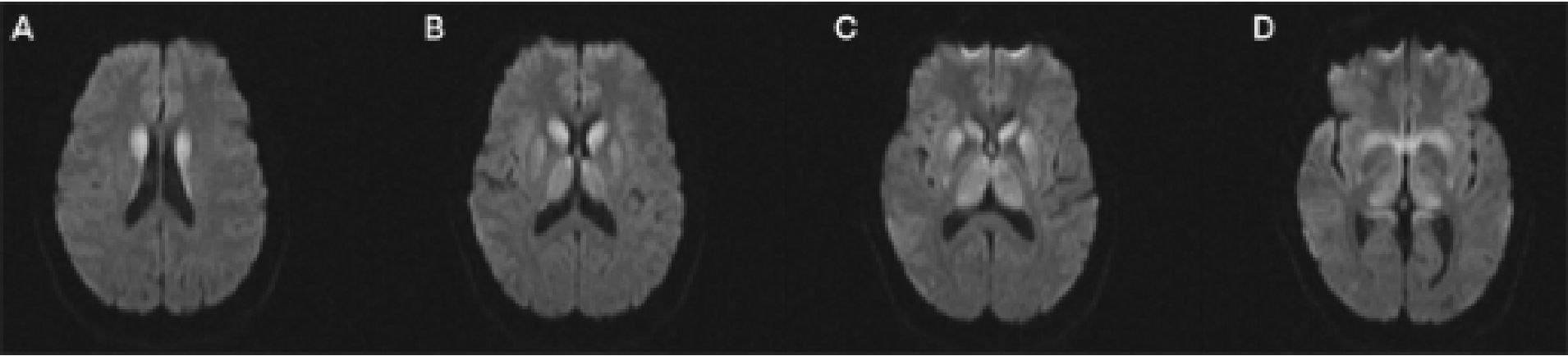
Pt w/CJD - all MRIb axial DWI 
  • all these show restricted diffusion in the basal ganglia[…] and thalami[…] bilaterally

Insomnia/Excessive Daytime Sleepiness Meds
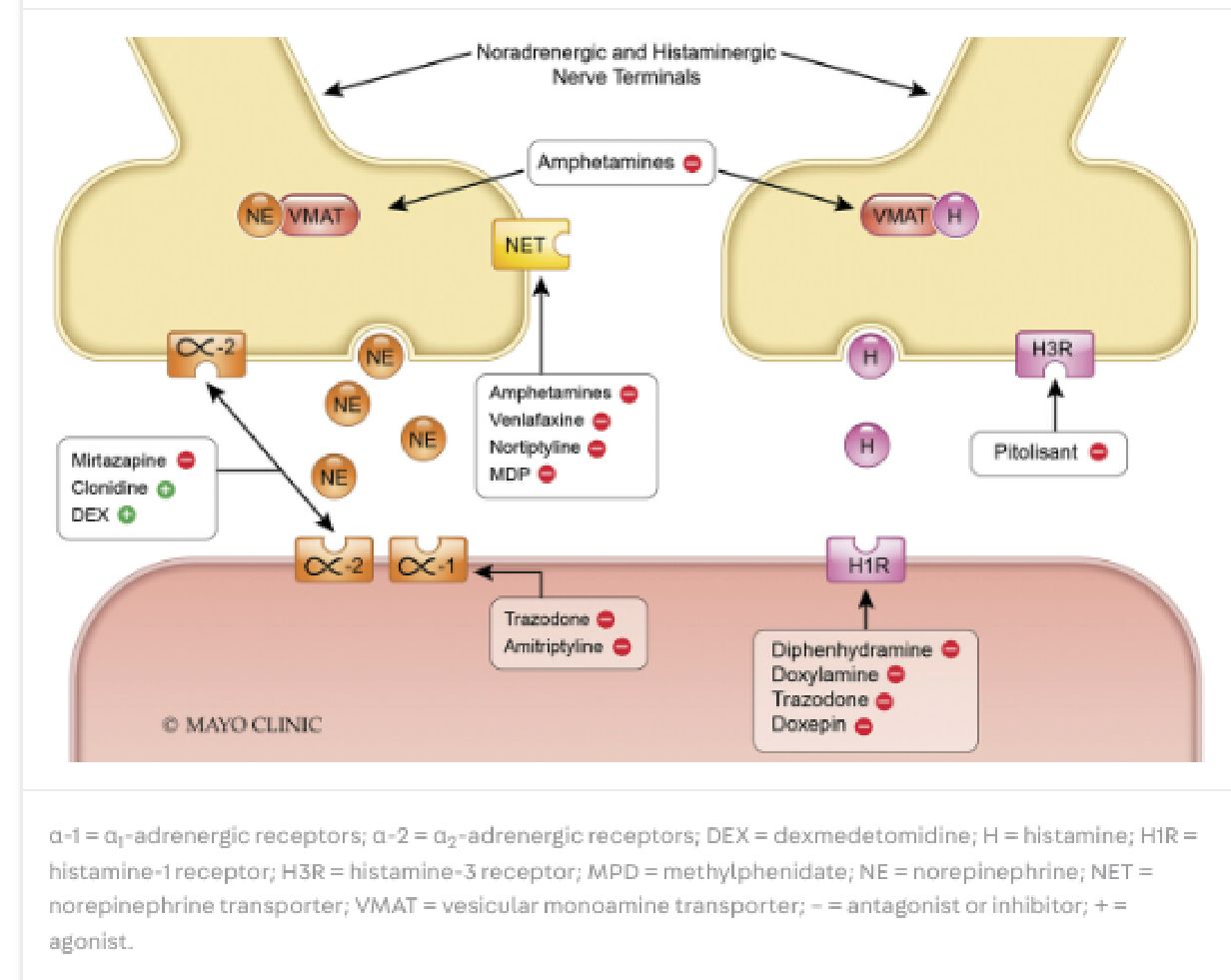
  • Amphetamine-like stimulants: increase wakefulness by blocking NE/DA reuptake[…] 
  • Dexmedetomidine (Precedex)[…] is a selective a2 agonist[mechanism?] > inhibits the locus ceruleus[…] > leading to disinhibition[…] of ventrolateral preoptic (VLPO)[…] region firing

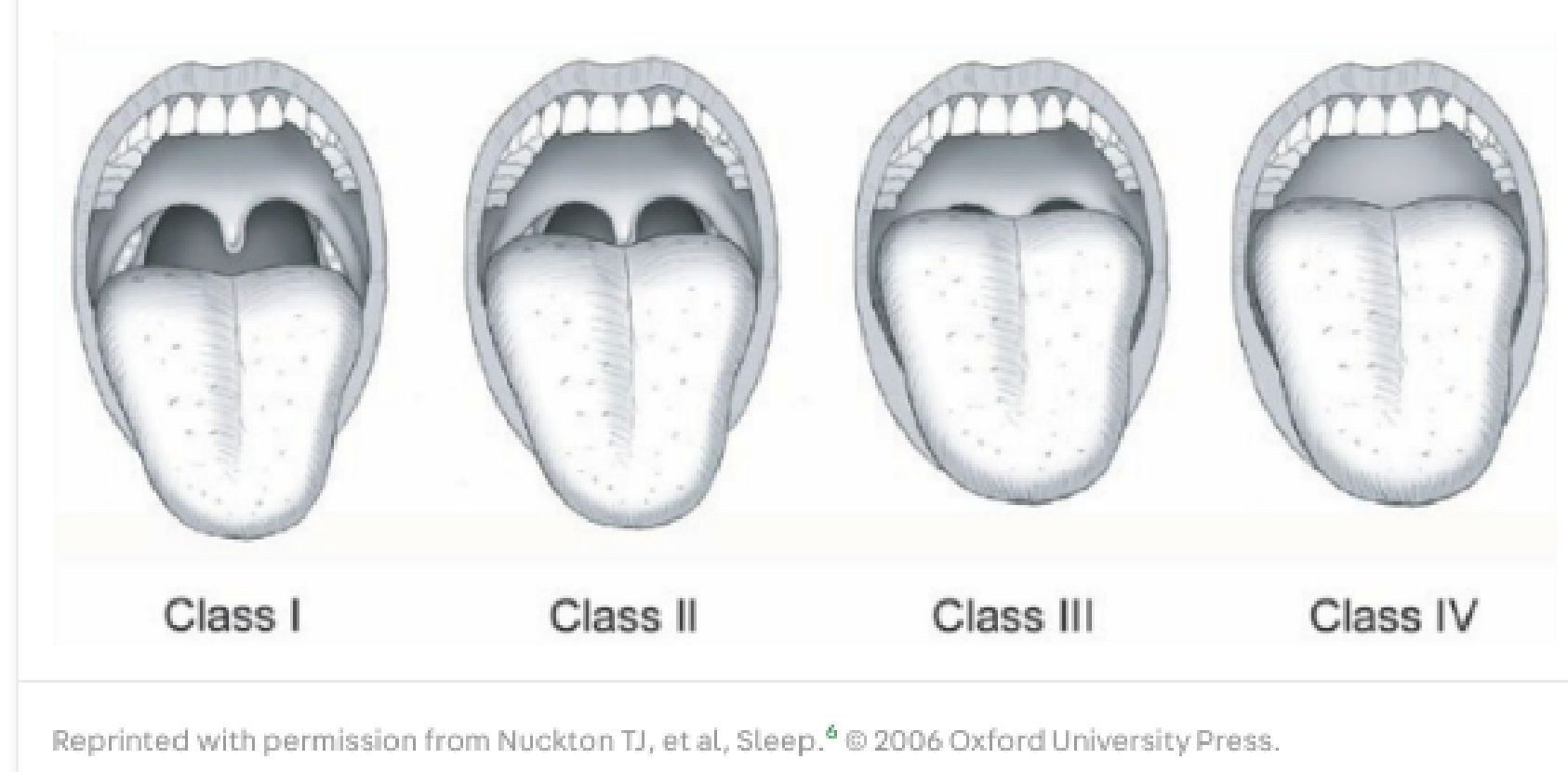
Mallampati Classification Score for OSA
  • Class 1: soft[…] and hard[…] palate, uvula[…], and tonsilar pillars[…] can be seen
  • Class 2: all structures except the tonsillar pillars[…] can be seen
  • Class 3: only the soft[…] and hard[…] palate and the base of the uvula[…] can be seen
  • Class 4: only the hard[…] palate can be seen

Sleep Neurobiology - Two-Process Model

Two-Process model: Process S: builds the longer you're awake via accumulation of adenosine[…].

Caffeine blocks A1 and A2a[…] adenosine receptors — masks rather than eliminates the sleep pressure.

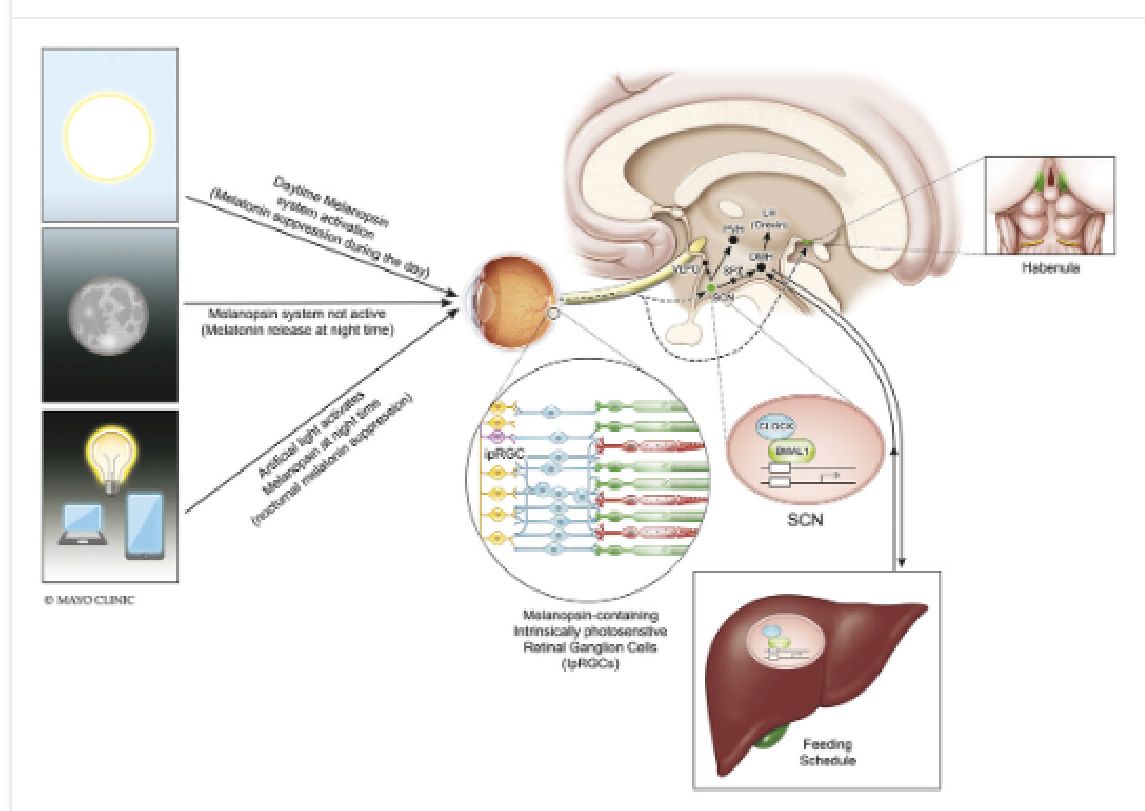
Process C (circadian): 24-hour internal clock controlled by the suprachiasmatic nucleus (SCN)[…] above the optic chiasm.

Receives light from retinal ganglion cells containing melanopsin[…] → synchronizes internal clock to external light-dark cycle.

Promotes alertness during the day to oppose sleep pressure; promotes melatonin[…] release from the pineal gland at night.
Sleep-Wake Switch and Stabilizing System

"Flip-flop" switch between sleep and wakefulness — body is in one state or the other. Wake side (ascending arousal system[…]): Locus ceruleus[…] → NE; Dorsal raphe[…] → serotonin; Tuberomammillary nucleus[…] → histamine; Basal forebrain[…] → ACh (wake + REM); VTA and PAG → dopamine; Lateral hypothalamus[…] → orexin/hypocretin.

Sleep side: Ventrolateral preoptic nucleus (VLPO)[…] in hypothalamus → releases GABA and galanin → inhibits arousal centers.

Stabilizing system: orexin/hypocretin[…] fires during wakefulness → reinforces wake state by exciting arousal centers.: In narcolepsy type 1[…], orexin signaling is lost → patients suddenly fall asleep with cataplexy[…] (muscle atonia triggered by emotions mediated by amygdala connections to motor regions).
Sleep Stages and EEG Features
  • Non-REM sleep
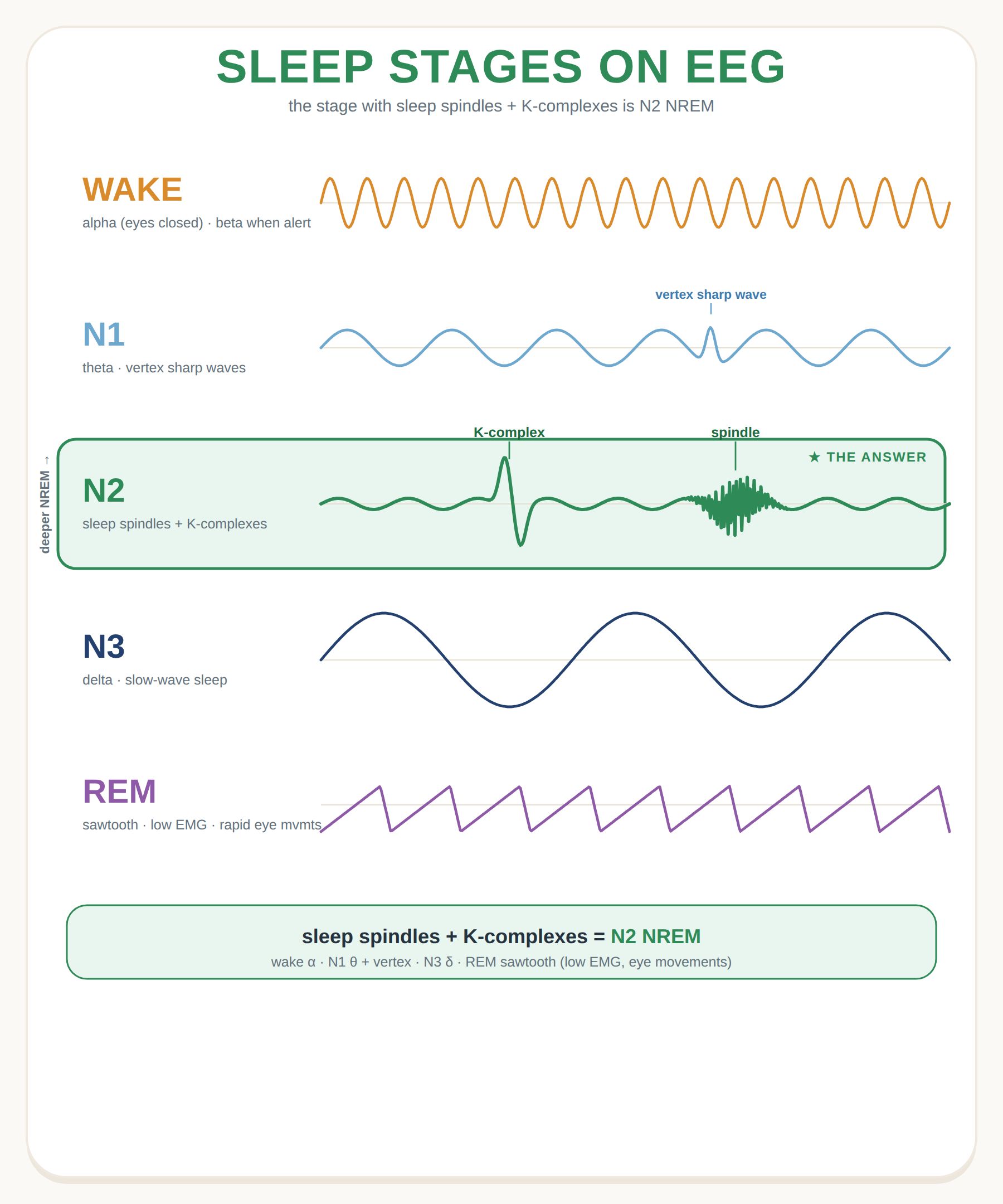
    • N1[…]: lightest sleep with rolling eye movements, theta waves (4-7 Hz)[…], vertex sharp waves.
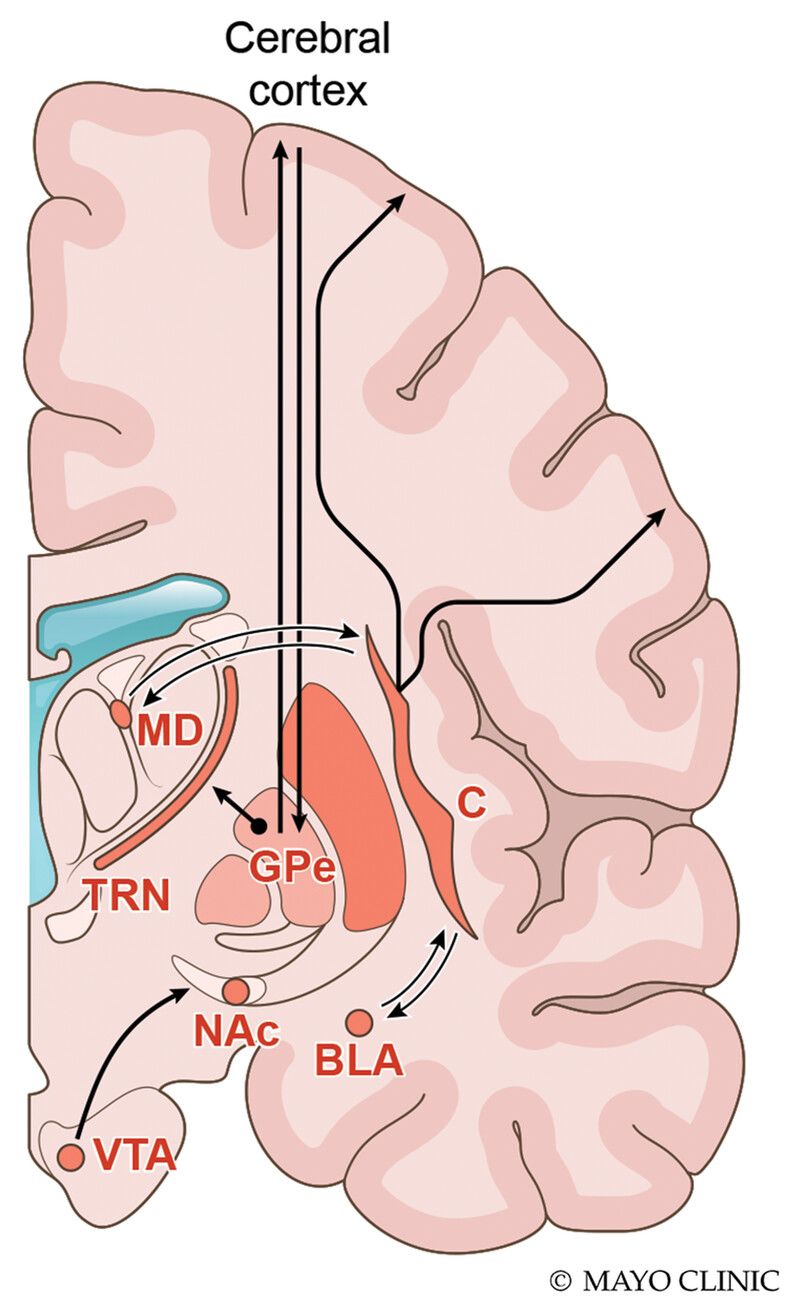
    • N2[…]: sleep spindles (7-14[…] Hz bursts from thalamic reticular nucleus and thalamocortical circuits) important for memory consolidation + K complexes (cortical synchronization).
      • K complexes absent in Fatal Familial Insomnia[…].
    • N3 (slow-wave/deep sleep)[…]: high-amplitude delta waves; cortical neurons alternate between "up" (active) and "down" (silent) states. Thalamocortical system disconnects from external inputs.
      • Synaptic downscaling[…] (pruning and consolidation).
      • Glymphatic[…] system clears metabolic waste via AQP4[…] channels in astrocytes.
      • Disorders of arousal[…] (sleepwalking, sleep terrors) emerge from this phase.
  • REM sleep: Phasic REM: rapid eye movements, muscle twitches, EEG sawtooth[…] waves; Tonic REM: quieter background between phasic bursts; SLD (sublaterodorsal tegmental)[…] nucleus + ventromedial medulla → GABA and glycine → inhibit spinal motor neurons → REM atonia[…] prevents acting out dreams; RBD[…] = failure of this circuit.
  • Thalamocortical modes
    • Depolarized → tonic firing[…]: in wake and REM (sensory info passes).
    • Hyperpolarized → burst firing[…]: in slow-wave sleep, uses T-type Ca+2[…] channels to generate spindles and slow waves. 
      • Blocked by ethosuximide[…].


Pic of REM Sleep Neurobiology (Pic Credit: Figorilli, M., Lanza, G., Congiu, P., Lecca, R., Casaglia, E., Mogavero, M. P., ... & Ferri, R. (2021). Neurophysiological aspects of REM sleep behavior disorder (RBD): a narrative review. Brain Sciences, 11(12), 1588.)
Rapid Eye Movement Sleep Behavior Disorder | Encyclopedia MDPI
Sleep Pharmacology

Wakefulness drugs: Caffeine[…]: blocks adenosine A1 and A2a receptors.

Metabolized by CYP1A2[…] — slow metabolizers more sensitive.

Modafinil[…]: increases DA in nucleus accumbens and striatum; requires intact ventral tegmental area.

Amphetamines (methylphenidate)[…]: block DA and NE reuptake.

Pitolisant[…]: blocks H3[…] receptors → increases histamine release (used in narcolepsy).

Sleep drugs: Suvorexant[…]: dual orexin receptor antagonist; Ramelteon[…]: melatonin MT1/2 agonist; Dexmedetomidine[…] (ICU): α2 agonist → inhibits locus ceruleus → reduces NE → disinhibits VLPO; Trazodone[…]: blocks 5HT2 + weakly α1; Doxepin[…]: H1 blocker.
Sleep Disorder Evaluation

Categories: Insomnia[…]: prolonged latency, frequent awakenings, early morning awakenings, poor quality. Associated with anxiety, depression, PTSD, chronic pain. Sleep-related breathing disorders: snoring, apneic episodes with choking/gasping, morning HA (resolves <30 min), nocturia. OSA → obesity, HTN, CVD.

Central sleep apnea → HFrEF, AFib, stroke, MS[…]. Sleep-related movement disorders: bruxism, RLS.

Distal polyneuropathy[…] is associated with RLS. Central disorders of hypersomnolence: narcolepsy with sleep paralysis, hypnagogic/hypnopompic hallucinations, cataplexy. Circadian rhythm disorders. Parasomnias: sleepwalking, RBD.

α-synucleinopathies (PD/DLB/MSA)[…] are associated with RBD — can precede motor symptoms by decades. Medication effects: ASMs → hypersomnolence; SSRIs/TCAs → hypersomnolence, RBD, RLS; Stimulants, steroids, nicotine → insomnia.

Diagnostics: Epworth Sleepiness Scale[…] for subjective sleepiness (>10 = excessive).

Polysomnography[…] (gold standard for all except insomnia, which is clinical).

MSLT[…]: gold standard to quantify sleepiness and diagnose central hypersomnolence. Mean sleep latency <8 min = excessive; <5 min = severe. >2 SOREMPs + latency <8 min = narcolepsy. 0-1 SOREMP + latency <8 min = idiopathic hypersomnia.

Maintenance of Wakefulness Test (MWT)[…]: tests ability to stay awake.
Narcolepsy - Pathophys and Subtypes

Symptoms: Excessive daytime sleepiness with sleep attacks. Sleep paralysis[…] on waking.

Hypnagogic[…] (falling asleep) or hypnopompic (waking up) hallucinations — usually visual.

Cataplexy[…] (in type 1 only): sudden transient loss of muscle tone triggered by strong emotions (laughter). REM atonia intruding into wakefulness. Bilateral, partial (head drop, knee buckle) or generalized (slumping). No LOC during episode.

Status cataplecticus[…]: lasting hours from abrupt withdrawal of suppressive meds or severe sleep deprivation.

Type 1 (with cataplexy or low CSF orexin <110[…]): Often HLA-DQB1*06:02[…] allele; Pathophys: autoimmune destruction of orexin/hypocretin[…] neurons in lateral hypothalamus → unstable sleep-wake switch → REM intrusions; More severe disrupted nighttime sleep. Type 2 (no cataplexy, normal CSF orexin): Same MSLT criteria (>2 SOREMPs + latency <8 min); Less severe disrupted nighttime sleep.

Secondary narcolepsy: trauma/tumors/toxins; anti-Ma2[…] autoimmune encephalitis.
Idiopathic Hypersomnia and Kleine-Levin

Idiopathic hypersomnia: Very excessive daytime sleepiness + sleep inertia[…] + brain fog; no narcolepsy REM-sleep phenomena (no cataplexy, sleep paralysis, hallucinations); Patients describe "drunkenness[…]" upon waking — extreme difficulty waking up requiring multiple alarms or another person to wake them; Orexin levels normal; MSLT: latency ≤8 min + <2[…] SOREMPs (low sensitivity); FDA-approved 2023: lower-sodium oxybate[…].

Kleine-Levin syndrome: Episodic hypersomnia (>18 hrs/day)[…] lasting days to weeks + cognitive dysfunction + apathy + disinhibited behavior (hypersexual, hyperphagia)[…] or derealization. Patients return to baseline between episodes. Diagnosis is clinical (MSLT not needed).
Hypersomnolence Treatments

Behavioral: sleep hygiene + scheduled naps (more helpful for narcolepsy than idiopathic hypersomnia). Pharmacologic targets: Excessive daytime sleepiness: modafinil[…] or sodium oxybate or solriamfetol; Cataplexy: sodium oxybate[…] or pitolisant; Disrupted nighttime sleep: sodium oxybate; Sleep inertia: stimulant at bedtime.

Specific medications: Modafinil/armodafinil[…]: blocks DA reuptake. SE: decreases OCP efficacy; not recommended in pregnancy.

Solriamfetol[…]: blocks DA and NE reuptake. SE: HTN, tachycardia.

Amphetamines/methylphenidate[…]: block DA and NE reuptake. SE: weight loss, HTN, abuse potential.

Pitolisant[…]: inverse agonist of H3 receptors → increases histamine. CYP2D6 inhibitor.

Sodium oxybate[…]: GABAb receptor agonist. SE: sleepwalking, confusion, weight loss; use low-Na+ form in HTN/CHF.
OSA - Definitions and Pathophys

Definitions: Apnea[…]: ≄90% airflow reduced for ≄10 seconds. Obstructive = with persistent effort; central = with no effort.

Hypopnea[…]: ≄30% airflow reduced + ≄3-4% desat or arousal.

RERA[…]: flow-limited or snoring causing arousal but not at hypopnea level.

AHI[…] severity: mild ≄5, moderate ≄15, severe ≄30.

Pathophysiology: repetitive narrowing/collapse of upper airway during sleep → intermittent hypoxia + cortical arousals → oxidative stress → systemic inflammation + sympathetic activation → vascular damage + increased cardiac afterload + hypercoagulable[…] state → pHTN, CHF, AFib, ACS.

Can increase L→R shunting through PFO[…] or decrease post-stroke perfusion.

Snoring is also harmful: low-frequency vibrations damage sensory nerves in oropharynx/larynx → reduce genioglossus[…] muscle response to hypoxia → worse events needed to trigger arousal.

Risk factors: BMI ≄28, increased neck circumference, craniofacial abnormalities (retro/micrognathia, macroglossia)[…], adenotonsillar hypertrophy, supine position, EtOH/sedative use.
OSA - Diagnostics and Treatment

Diagnostics: HSAT (Home Sleep Apnea Test)[…]: no EEG → may underestimate arousals; pulse ox may overestimate hypoxia.

Polysomnography (PSG)[…]: gold standard. Use for higher-risk patients, suspected central sleep apnea, obesity hypoventilation.

Treatment: All patients: weight loss[…], EtOH/tobacco cessation, treat nasal congestion, avoid supine position.

PAP therapies (adults): 1st line: CPAP[…] — continuous pressure prevents upper airway collapse; Auto-PAP (APAP)[…]: adjusts pressure up for obstructive events, down for normal breathing; BIPAP[…]: higher pressure on inhale, lower on exhale; ASV (Adaptive Servo-Ventilation)[…]: variable pressure + backup breaths; good for periodic breathing (Cheyne-Stokes); VAPS (Volume-Assured Pressure Support)[…]: adjusts pressure for steady tidal volume + backup breaths; for NM diseases, restrictive lung diseases, hypoventilation.

Kids: 1st line is tonsillectomy and adenoidectomy[…]. Non-PAP alternatives: Mandibular advancement device (mild-moderate supine OSA).

Hypoglossal nerve stimulator[…]: chest lead senses effort → stimulates CN XII → protrudes tongue. Nasal EPAP.

Acetazolamide[…]: mild metabolic acidosis stimulates ventilation. SE: paresthesias, metallic taste, kidney stones.
REM Sleep Behavior Disorder (RBD)

REM sleep characteristics: rapid eye movements, desynchronized mixed alpha/theta EEG, muscle atonia[…] (spares extraocular muscles and diaphragm), dreaming.

RBD: dysfunction of mechanisms controlling REM atonia → dream enactment behaviors[…] (talking, screaming, punching, kicking, jumping out of bed) caught via history or video PSG. May have persecutory dreams.

Occurs in 2nd half of sleep[…] (REM-rich), eyes closed, no environmental awareness — easily awakened.

Pathophys: normally REM-"on" neurons in sublateral dorsal nucleus (subcoeruleus)[…] → glutamine projections to ventromedial medulla → GABA/glycine to spinal motor neurons → atonia.

Lesions (α-synuclein[…], antidepressants, stroke) disrupt SLD → loss of atonia.

Diagnostics: PSG[…] shows REM sleep without atonia (tonic or phasic EMG activity).

Types: Isolated RBD[…]: no identified cause; increases risk of neurodegenerative disease; Secondary RBD[…]: α-synucleinopathies (PD/DLB/MSA), narcolepsy, drugs (SSRIs/SNRIs/TCAs).

Treatment: Safety at home (sharp objects, weapons, furniture, mattress); Treat coexisting OSA[…] (both mimic and comorbidity); Switch antidepressants to bupropion[…]; 1st line: melatonin[…] immediate-release (preferred in dementia) vs clonazepam (more cognitive issues); 2nd line for MCI/PD: rivastigmine[…] (cholinergic transmission drives REM atonia).
Other REM Parasomnias

Recurrent isolated sleep paralysis: Waking unable to move trunk/limbs for seconds-minutes; Spares diaphragm but affects accessory respiratory muscles → "chest weight[…]" sensation; Visual/auditory/tactile hallucinations possible; Triggers: jet lag, shift work, severe sleep deprivation[…]; Most commonly due to narcolepsy[…] (REM atonia persists into wakefulness); Treatment: reassurance + sleep hygiene. Nightmare disorder: Recurrent extended nightmares causing distress; sleep avoidance behaviors.

Strongly linked to PTSD[…]. Pathophys: hyperarousal + impaired fear extinction.

Treatment: image rehearsal therapy[…] (exposure to nightmare content during daytime). 1st-line pharmacologic: prazosin (α1 blocker)[…]. SE: orthostatic hypotension.
Non-REM Parasomnias

Overview: mixed state of consciousness with both sleep and wakefulness. Associated with HLA-DQB1*05:01[…].

Disorders of arousal: recurrent incomplete awakening from stage N3[…] sleep (deep slow-wave); first half of night. Reduced/absent responsiveness; no dream imagery (unlike RBD); limited memory.

Sleepwalking[…]: patient leaves bed; can last >30 min; tend to return to bed if left alone. Can perform complex tasks (eating, urinating inappropriately).

Sleep terrors[…]: intense fear with abrupt onset from non-REM, resolves in several to >20 min.

Loud scream + autonomic (mydriasis, tachycardia, tachypnea, diaphoresis[…]). Amnesia common. Kids do NOT jump out of bed and do NOT have dream recall (unlike RBD). Confusional arousals: altered consciousness from non-REM with sitting up and looking around confused. No ambulation (unlike sleepwalking) or terror (unlike sleep terrors).

Subtype: sexsomnia[…].

Sleep-related eating disorder: involuntary eating in altered consciousness; may consume inedible[…] substances. Associated with RLS and eating disorders.

Treatment: topiramate[…]. Exploding head syndrome: sudden sensation of loud noise in head with no pain during wake-to-sleep transition; EEG shows drowsy/awake state (not fully asleep).

Mimic — Nocturnal frontal lobe epilepsy: "agitated sleepwalking" but EEG shows epileptic discharges from stage N1/N2 sleep[…].

Secondary parasomnias: often iatrogenic from benzos (zolpidem) and antidepressants[…].

Treatment: 1st line nonpharmacologic (safety, sleep hygiene, avoid zolpidem, scheduled awakenings, treat comorbid sleep disorders). 2nd line: clonazepam and melatonin[…] or gabapentin.
Restless Legs Syndrome

Hallmark: irresistible need to move one's limbs (arms or legs). Pathophys: impaired transport of iron[…] into brain (especially substantia nigra neuromelanin cells) → CNS-specific iron deficiency → activation of hypoxic pathways + mild myelin deficit.

Iron is cofactor for tyrosine hydroxylase[…] (rate-limiting in DA synthesis).

Aggravating meds: antihistamines, serotonergic antidepressants (except bupropion[…]), antipsychotics.

Diagnostics: low serum ferritin[…] fasting and AM, low Tsat. Note ferritin is an acute-phase reactant — may be artificially high.

MRI shows regional iron deficiency in SN, putamen, caudate, thalamus[…]. Treatments: Nonpharmacologic: reduce caffeine/alcohol, massage, stretch, walk.

Iron supplementation[…] (recheck ferritin in 3 months).

AVOID DA agonists[…] (pramipexole, ropinirole, rotigotine) — updated guidelines.

SE: augmentation[…] (worsens long-term), impulse control disorders, sleep attacks.

α2Ī“ ligands[…]: gabapentin, pregabalin. SE: dizziness, sedation, weight gain; adjust for renal disease.

Opioids[…]: tramadol or any (codeine, oxycodone, methadone).
Other Sleep-Related Movement Disorders

PLMD (Periodic Limb Movement Disorder): Stereotyped repetitive LE movements: big toe extension, ankle dorsiflexion, knee flexion[…], sometimes hip flexion.

Requires capturing on PSG[…] + sleep disruption/daytime fatigue.

Abnormal: >5/hr children, >15/hr adults[…]. PLMI >15/hr associated with incident MI in men ≄65.

Sleep-related rhythmic movement disorder: Stereotypic repetitive movement of large muscle groups during quiet wake, drowsiness, or sleep; Types: rocking, rolling, head banging, leg banging; Provides vestibular stimulation (self-soothing); Typically children, associated with ADHD[…]. Nocturnal muscle cramps: in bed, painful, relieved by stretching. Check electrolytes, identify trigger meds.

Quinine[…]: FDA-restricted to malaria only (2012) due to thrombocytopenia, hypersensitivity, QT prolongation.

Treat with Mg supplementation[…] (especially in pregnancy) or stretching. Sleep-related bruxism: repetitive jaw clenching/grinding from CNS issue (not dental). PSG: primarily stages N1/N2, fewest in REM. Treat underlying causes + oral appliance.

Propriospinal myoclonus at sleep onset: brief muscle jerks generated within thoracic spinal cord → repetitive jerking of thoracoabdominal/paraspinal muscles → flexion of neck/trunk/abdomen[…]. Disappears during sleep. Treatment: clonazepam or botox. Benign sleep myoclonus of infancy: repetitive myoclonic jerks during sleep, resolve with waking.

EEG normal[…] (unlike epileptic seizures). Self-resolves.
Circadian Rhythm Sleep-Wake Disorders

Master clock: SCN[…] receives light via retinohypothalamic tract from melanopsin-containing retinal ganglion cells → outputs to peripheral tissue clocks.

Molecular clock: CLOCK and BMAL1[…] activate transcription of PER and CRY[…] → they dimerize (rate-limiting, mediated by casein kinase[…]) → translocate to nucleus → inhibit own transcription. Cycle takes ~24 hours.

Melatonin physiology: Bright light directly inhibits melatonin (most sensitive to blue[…] light); Evening light → "phase delay[…]" (clock later); Morning light → "phase advance[…]" (clock earlier).

Disorders (≄3 months of impairment): Delayed[…] sleep-wake phase: sleep-wake times later than conventional.

Advanced[…] sleep-wake phase: sleep-wake times earlier.

Irregular sleep-wake rhythm: 3+ discrete sleep episodes at variable times; in kids with developmental disorders or adults with neurodegenerative disease ("sundowning[…]").

Non-24-hour sleep-wake[…]: >1/2 of blind patients (unless RGCs preserved); alternating insomnia and daytime sleepiness.

Treatment: tasimelteon[…] (melatonin agonist).

Shift work disorder[…]: treatment = modafinil/armodafinil before shift + melatonin before sleep + scheduled nap + caffeine for alertness. Jet lag: travel >2 time zones (east harder than west).

Treatments: Nonpharmacologic: scheduled sleep environment, last meal ~3h before bed, regular exercise, bright light[…] exposure x60 min after waking + dim light x2h before bed; Pharmacologic: low-dose melatonin (<0.5 mg)[…].
Insomnia

Diagnostic criteria: Difficulty sleeping despite adequate opportunity; Associated daytime dysfunction. Subtypes: short-term <3 months; chronic >3x/week for >3 months. Mimics to exclude: RLS, circadian rhythm disorders, naturally short sleepers[…]. PSG not indicated unless excluding comorbid conditions.

Pathophys: hyperarousal[…] (heightened physiologic/emotional/cognitive response) → prevents disengagement from environment. Predisposing + perpetuating behavioral factors (irregular schedules, excessive time in bed).

Treatment: 1st line nonpharmacologic: CBT-I[…] (stimulus control with bed only for sleep/sex, sleep restriction, cognitive/relaxation training, sleep hygiene).

Pharmacologic targets: GABA-ergic meds[…]: 1st line non-benzos (zolpidem, zaleplon, eszopiclone[…]) selective for VLPO receptors. Benzos: triazolam, temazepam. Avoid in older patients (dementia) or complex parasomnias.

Orexin antagonists[…] (suvorexant[…], lemborexant, daridorexant): SE rare risk of narcolepsy-type symptoms.

Histamine antagonists[…]: doxepin, mirtazapine (SE: weight gain), trazodone.

Melatonin agonists[…]: ramelteon (higher MT1/2 affinity than melatonin). More effective for circadian disorders than insomnia.
Sleep in Stroke, AD, PD

Stroke and OSA: OSA → 2-fold[…] increased stroke risk via intermittent hypoxia + arousals → sympathetic activation, endothelial dysfunction, hypercoagulability, atherosclerosis + AFib + PFO[…] reopening (WAKE-UP mechanism).

Treatment: CPAP[…] decreases HTN, inflammation, improves CBF (Sleep-SMART[…] trial).

Alzheimer disease: sleep disturbances → decreased glymphatic clearance of amyloid-β[…], decreased N3 slow-wave + REM sleep, increased wakefulness, circadian irregularity.

Degeneration of SCN[…].

Promising: light therapy or CBT-I[…].

Parkinson disease: Insomnia[…] is most common sleep disorder; Others: OSA, RLS, RBD; Treatments: melatonin + light therapy; sinemet or rotigotine patch[…] for nocturnal motor symptoms; non-benzos like eszopiclone.

Multiple sclerosis: Fatigue[…] = leading cause of decreased QoL; RLS, OSA, central sleep apnea common; Hypothalamic lesions[…] correlate with narcolepsy symptoms in MS and NMOSD (narcolepsy is core NMOSD criterion).
Sleep in NM, Epilepsy, HA, TBI

Neuromuscular disorders: progressive respiratory weakness → hypoventilation + nocturnal hypoxemia (worst in REM[…]).

Gold standard: in-lab overnight PSG with noninvasive CO2[…] monitoring.

Treatment: noninvasive ventilation prolongs survival in ALS; better effects when started early[…] (mild FVC reduction).

Epilepsy: ~1/3[…] of focal seizures begin in sleep — more common in stages N1/N2; Landau-Kleffner[…] syndrome: aphasia, 2-8 yo, bilateral posterior spike-and-wave in stage N3; JME[…]: seizures shortly after awakening + generalized atypical polyspike/wave; SUDEP[…]: up to 60% of deaths sleep-related. Headache: Insomnia = most common sleep disorder in migraine (triggered by sleep deprivation, improved with sleep). Pathophys: trigeminal pain + hypothalamic/orexin activation.

Treatment: CBT-I[…].

Hypnic headache[…] ("alarm clock HA"): during sleep ~same time every night. Treatment: caffeine for acute episodes.

Concussion/TBI: Insomnia[…] = most common complaint; Mechanism: diffuse axonal injury within sleep regulation system (hypothalamus, brainstem, RAS); Treatment: CBT-I or other insomnia treatments.
Sleep Deprivation Consequences

Recommended sleep: ≄7 hours/night for adults 18-60 yo. Types: Acute: single night with wakefulness >24h[…]; Chronic: inadequate duration >2 consecutive nights; Sleep-stage-specific: REM suppression[…] (SSRIs, TCAs, nicotine, MAOIs); N3 suppression (alcohol withdrawal, theophylline, caffeine); Sleep fragmentation: disrupted continuity.

Neurologic consequences: Cognition: impairs prefrontal cortex[…] → deficits in working memory and attention; microsleep with errors of omission; blood alcohol equivalent of 0.1%[…] after 24h awake. Slow recovery — deficits persist after 10h recovery sleep. Psych: increased depression risk; mania episodes in bipolar.

Glymphatic system[…] and AQP4 channels disrupted → can't clear amyloid-β, tau, α-synuclein. Pain tolerance reduced (hyperalgesia).

Reduced seizure threshold; seizures highest during stage N2[…]. Morning headaches more frequent. Downregulates oligodendrocyte precursor genes → increased MS risk.

Systemic: Metabolic: <4h decreases glucose sensitivity and leptin[…] + increases ghrelin[…] → weight gain; Immune: NK cell[…] function decreased; Provider burnout, hospital/ICU delirium.
Fatal Familial Insomnia and CJD Sleep

Fatal Familial Insomnia (FFI): Prion[…] disease → especially affects the medial dorsal nucleus of the thalamus[…]; EEG: absent sleep spindles and K-complexes[…]; Associated with agrypnia excitata[…] — inability to sleep with motor/autonomic hyperactivation. Creutzfeldt-Jakob Disease: prion disease causing mostly insomnia; can also cause REM without atonia. MRI: diffusion restriction in BG and thalami.

Trazodone[…] may help insomnia.

Smith-Magenis syndrome: inverted[…] melatonin rhythm (secreted during day instead of night) → severe sleep/behavioral disruption.

Treatment: β-blocker in AM[…] to suppress daytime melatonin + PM melatonin supplement.
Practice Q - RBD and PD

A 70-year-old man with idiopathic Parkinson disease exhibits violent behaviors (punching/kicking his partner) during sleep and occasionally recalls vivid dreams. Polysomnography most likely reveals increased phasic EMG activity during REM periods[…], characteristic of REM Sleep Behavior Disorder (RBD)[…].
Practice Q - First-Line for Chronic Insomnia

For chronic insomnia in young adults, CBT-I[…] is first-line treatment, with superior efficacy and long-term safety compared to medications such as melatonin, triazolam, suvorexant, or trazodone[…].
Practice Q - Narcolepsy Diagnostics

Narcolepsy type 1 diagnostic criteria: cataplexy or CSF orexin <110[…] pg/mL; HLA-DQB1*06:02 association common but nonspecific.

MSLT shows mean sleep latency ≤8 min + ≄2 sleep-onset REM periods (SOREMPs)[…]. A SOREMP on the preceding PSG may replace one on MSLT.
Practice Q - REM Atonia Pathway

REM atonia is generated by glutamatergic projections from the sublateral dorsal (subcoeruleus)[…] nucleus to the ventromedial medulla → GABA/glycine to spinal motor neurons.

Disruption (synucleinopathy, antidepressants) → RBD[…].
Practice Q - Iron Deficiency and RLS

Treatment for RLS starts with iron supplementation[…] if ferritin is low (target ferritin >75-100).

DA agonists are now AVOIDED due to augmentation[…] (worsening over time) and impulse control disorders.

Alternatives: α2Ī“ ligands (gabapentin, pregabalin)[…] or opioids.
Practice Q - Modafinil and OCPs

Modafinil[…] decreases the efficacy of oral contraceptives[…] and is not recommended in pregnancy.
Practice Q - Smith-Magenis Inverted Melatonin

Smith-Magenis[…] syndrome has an inverted melatonin rhythm (melatonin secreted during day instead of night).

Treatment: β-blocker in AM[…] to suppress daytime melatonin + PM melatonin supplement.
Practice Q - Prazosin for Nightmares

For PTSD-related nightmares, first-line pharmacologic treatment is prazosin[…] (α1 blocker).

Side effect: orthostatic hypotension[…]. First-line nonpharmacologic: image rehearsal therapy.
Practice Q - Hypoglossal Nerve Stimulator

A hypoglossal nerve stimulator[…] is an alternative to CPAP for OSA.

A chest lead senses respiratory effort → stimulates CN XII[…] → protrudes the tongue to maintain airway patency.
Practice Q - K Complexes in FFI

K complexes are absent in Fatal Familial Insomnia[…], which targets the medial dorsal nucleus of the thalamus[…]. Also features absent sleep spindles.