Vascular

Vascular

Subspecialties Β· 146 cards Β· 1 labeled figure

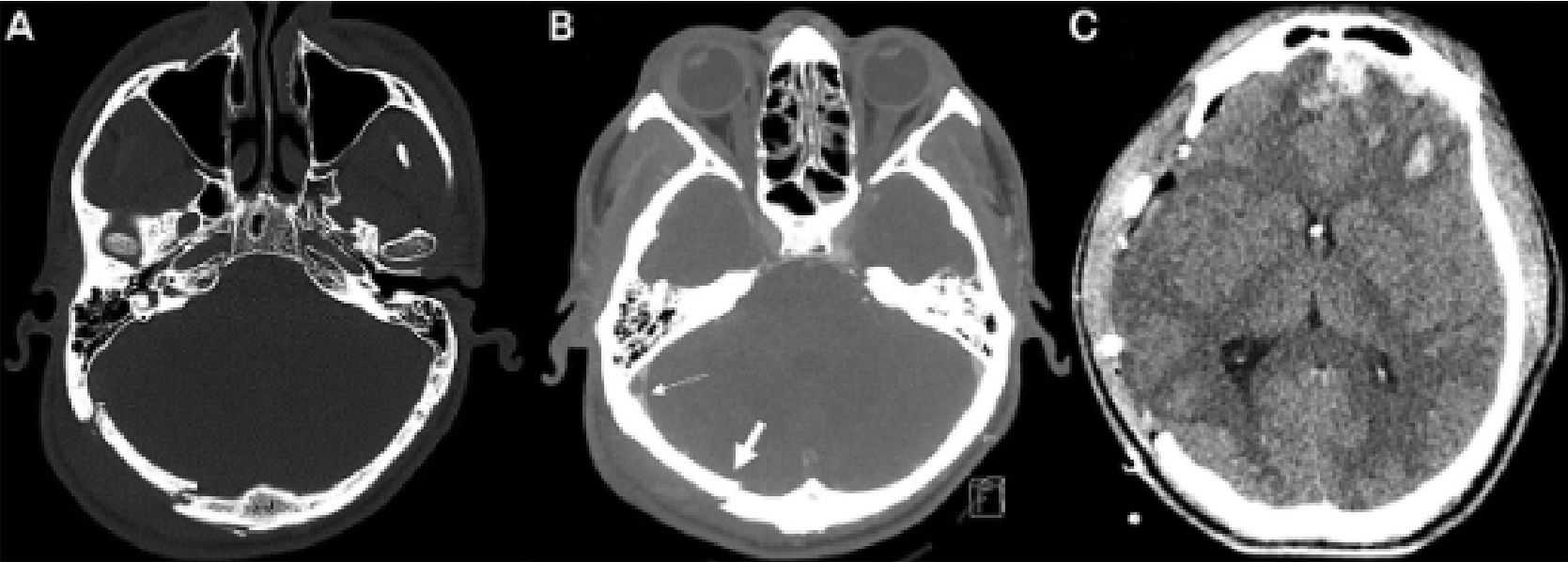
  • A: CTHwo shows comminuted and depressed R occipital[…] bone fracture 
  • B: CTV demonstrates distal R transverse[…] venous sinus thrombosis 
  • C: CTHwo later shows multifocal hemorrhagic contusions[…] and increasing cerebral edema[…] with effacement of the basal cisterns[…] along w/ post-decompressive craniotomy[…] changes

Cervical Artery Dissection - Imaging

  • For suspected cervical artery dissection, CTA[…] is the preferred imaging modality.
  • Use MRA[…] when iodinated contrast is contraindicated (renal dysfunction, pregnancy).
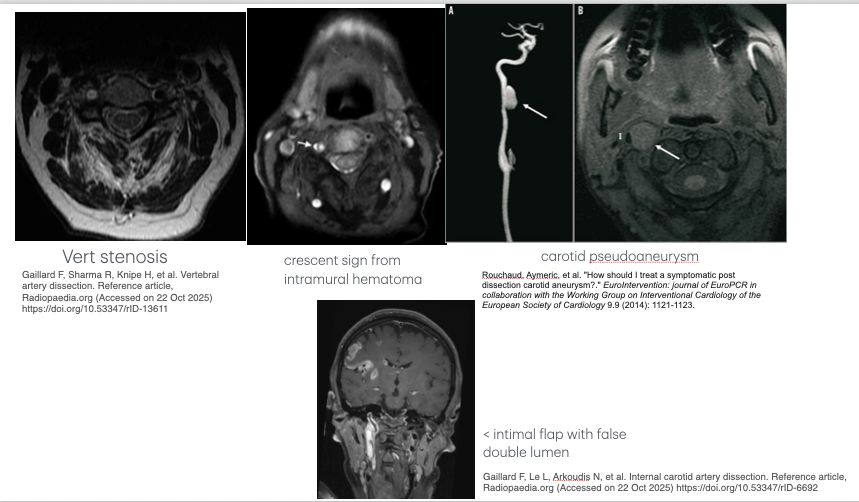
  • On either modality, look for these findings: long-tapered arterial stenosis or occlusion, dissecting pseudoaneurysm, intimal flap, double lumen, or an intramural hematoma producing the classic "crescent sign[…]" β€” an eccentric rim of hyperintensity surrounding a hypointense residual lumen on axial sequences.
  • Always repeat neurovascular imaging at 3-6 months[…] to assess for arterial recanalization.
Unruptured Aneurysms - Antithrombotic Therapy

When a patient with an asymptomatic unruptured intracranial aneurysm is already on antiplatelet or anticoagulation therapy, the management is to continue[…] it β€” the risk of aneurysm rupture is less than the stroke/TIA risk from stopping.

This is supported by the ISUIA[…] Study, which counterintuitively showed patients on aspirin had a lower chance of rupture than those not on aspirin.

The PROTECT-U[…] trial is investigating ASA + intensive BP control for further risk reduction.
Unruptured Aneurysms - Endovascular Treatment

ISAT[…] established that coil embolization > surgical clipping for most unruptured symptomatic or ruptured aneurysms β€” now first-line. For aneurysms with anatomy that makes plain coiling unreliable (wide necks), adjunctive techniques are used: Balloon-Assisted Coiling (temporary balloon across the neck during deployment to prevent coil prolapse); Stent-Assisted Coiling (permanent stent across the neck for the same purpose).

Three features predict aneurysm recurrence after coiling: wide neck >4 mm, size >10 mm, and incomplete initial occlusion[…].

For wide-neck aneurysms specifically, Flow Diverters[…] are the most effective option.

Intrasaccular Flow Disruptors[…] (e.g., WEB-IT[…] trial) target wide-neck bifurcation aneurysms β€” most often at the MCA, Acomm, or basilar tip.
Cardioembolic Stroke - Atrial Cardiopathy

  • Atrial cardiopathy is atrial dysfunction without overt AFib β€” and a significant but often-missed cause of cardioembolic stroke. Diagnostic clues come from two biomarker categories: General biomarkers (LA enlargement (LA index >3 cm/mΒ²), increased p-wave terminal force[…] in EKG lead V1 (>5000 ΞΌVΒ·ms), elevated NT-proBNP[…] (>250 pg/mL), atrial fibrosis); LAA-specific (high-risk LAA morphology, reduced LAA flow velocity, LAA fibrosis).
  • Trial landscape (AC vs ASA in atrial cardiopathy or ESUS): NAVIGATE-ESUS[…]: Rivaroxaban vs ASA β€” overall negative, but post-hoc showed Rivaroxaban superior in patients with LA diameter >4.6 cm[…]; ARCADIA[…]: Apixaban vs ASA β€” negative.
CSVD - STRIVE Six Radiographic Features

The STRIVE[…] criteria define six radiographic signatures of CSVD on MRI: Lacunar infarcts are the most common feature.

Round/ovoid, 3-15 mm[…] in diameter, classically in the putamen, caudate, thalamus, internal capsule, or pons.

Pathophys: healed infarct from rupture of a perforating[…] artery. Recent small (<20 mm) subcortical infarct. White matter hyperintensities (best on T2 FLAIR). Cerebral microbleeds (best on SWI). Widened perivascular spaces. Brain atrophy.

Five clinical lacunar syndromes: pure motor, pure sensory, sensorimotor, dysarthria-clumsy hand, and ataxic hemiparesis[…].
Dabigatran - Mechanism

  • Dabigatran is a direct thrombin[…] inhibitor β€” it blocks the enzyme that converts fibrinogen to fibrin in the clotting cascade, preventing clot formation and lowering stroke risk in atrial fibrillation.
  • Critically, dabigatran does NOT act on factors VII, VIII, Xa, or protein C β€” distinguishing it from vitamin K antagonists[…] (act on II, VII, IX, X, C, S) and the factor Xa inhibitors[…] (Rivaroxaban, Apixaban, Edoxaban).
Sickle Cell Vasculopathy - Stroke Prevention
  • The most effective stroke prevention strategy in sickle cell vasculopathy is chronic exchange transfusions[…] β€” these lower hemoglobin S and prevent sickled cells from occluding cerebral vessels.
  • Antiplatelets are NOT effective[…] here, because the mechanism is intravascular sickling and microvascular occlusion, not platelet aggregation.
Warfarin - Early PE Risk

  • Patients starting warfarin without bridging can develop a paradoxical pulmonary embolism early in therapy. The mechanism: proteins C and S[…] (anticoagulant) have shorter half-lives than the procoagulant factors II, VII, IX, X β€” producing a transient hypercoagulable state in the first ~5 days.
  • This is why heparin/LMWH[…] is used as a bridge in high-risk patients.
Thalamic Infarction - Vascular Anatomy

Thalamic infarcts are most commonly caused by occlusion of penetrating branches from the posterior cerebral artery (PCA)[…], especially the paramedian, inferolateral, or posterior choroidal branches.

Key board pearl: the artery of Percheron[…] is an anatomic variant where a single paramedian branch supplies BOTH thalami.

Occlusion produces a characteristic bilateral paramedian thalamic infarct[…] β€” often with vertical gaze palsy and impaired consciousness.
Clopidogrel - Mechanism + CYP2C19

Clopidogrel irreversibly blocks the platelet P2Y12 ADP[…] receptor, inhibiting platelet aggregation for the ~7-10 day lifespan of the platelet. Hold 5-7 days before bleeding-risk procedures.

A subset of patients have CYP2C19[…] loss-of-function variants (common in Han-Chinese) which impair clopidogrel activation. CHANCE-2 showed ASA + ticagrelor is superior to ASA + clopidogrel in these patients.
CAD - Classic Presentation

Persistent unilateral headache and/or neck pain[…] with delayed onset of weakness after trauma should raise immediate suspicion for cervical carotid or vertebral artery dissection[…] with embolic stroke. The delay reflects time for an intramural hematoma to organize and embolize distally β€” neurologic symptoms often appear hours to weeks after the inciting event.
Carotid Plaque - Intraplaque Hemorrhage

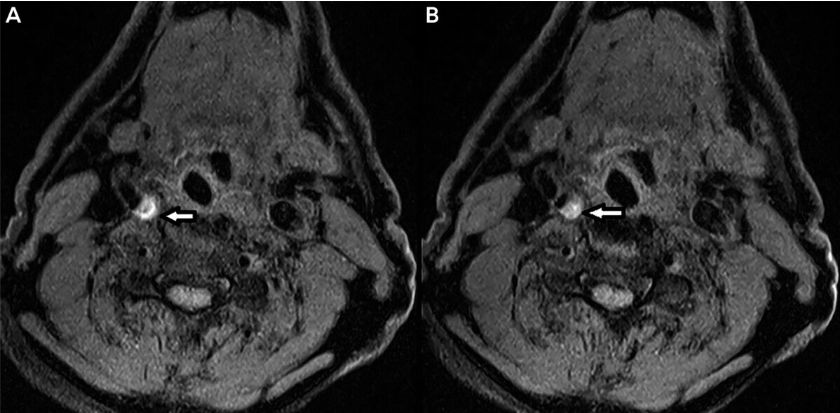
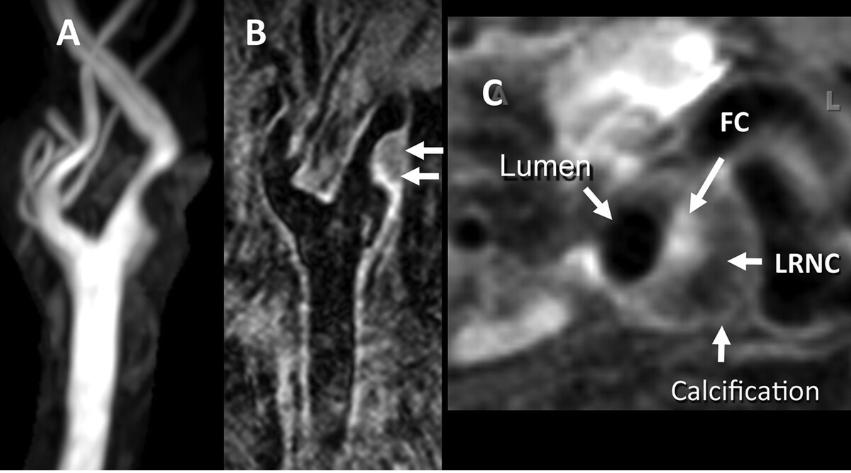
This cross-sectional MRI of the R ICA shows a carotid plaque surrounded by a rim of intraplaque hemorrhage[…] β€” a marker of plaque vulnerability that confers significantly increased risk of stroke recurrence[…] regardless of stenosis percentage.

Lacunar Syndromes - Classic Five

Five classic lacunar syndromes from small-vessel infarcts in the basal ganglia, internal capsule, or pons: pure motor hemiparesis (most common), pure sensory, mixed sensorimotor, dysarthria-clumsy hand, and ataxic hemiparesis[…]. All produce contralateral deficits without cortical signs (no aphasia, neglect, or visual field cut), distinguishing them from cortical strokes.
History of IV Thrombolysis - Foundational Trials

Several landmark trials established and progressively extended the IV thrombolysis time window: NINDS[…]: foundational β€” established IV tPA at 0.9 mg/kg (10% bolus + 90% over 1 hour)[…]; ECASS III[…]: extended the window to 4.5 hours[…], only for patients without extensive ischemic changes on CT; WAKE-UP[…]: extended treatment for unknown-onset strokes if MRI shows DWI-FLAIR mismatch β€” pushing the treatable window up to 9 hours since LKN; BEST-MSU (mobile stroke units): showed dose-response benefit within the first hour of LKN.
tPA and TNK - Mechanism + Comparison

IV thrombolytics work by activating fibrinolysis: tPA cleaves plasminogen β†’ plasmin[…], which dissolves fibrin in clots.

Real-world efficacy: rtPA dissolves an LVO clot in only ~10-30[…]% of cases.

TNK (tenecteplase)[…] is increasingly preferred over tPA because of single-bolus administration, longer half-life, and greater fibrin specificity[…].

A growing exclusion from IV thrombolysis: prior use of factor Xa inhibitors[…] β€” can't be reliably reversed in time for safe lysis.
CTA/DSA Image - M1 MCA Occlusion

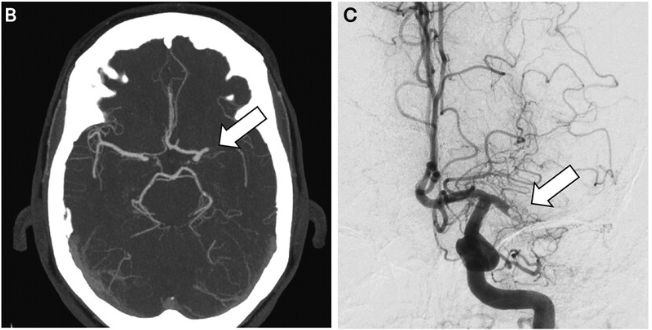
This image reveals a proximal L M1 MCA[…] occlusion, visible on both CTA and DSA.

Prehospital Bypass for EVT - RACECAT

The RACECAT[…] trial (Spain) tested prehospital triage β€” randomizing suspected LVO patients to direct transport to an EVT center vs nearest center for IV thrombolysis only.

Result: no difference[…] in 90-day disability. But this can't be cleanly extrapolated to the US β€” Spanish centers had faster IVT delivery AND US centers have faster EVT transport with newer technology, so the US tradeoff likely favors direct EVT-center transport more than the trial suggested.
Withholding IVT before EVT - Five Negative Trials

  • Five randomized trials tested whether EVT alone[…] (without prior IV thrombolysis) is noninferior to combined IVT + EVT for LVO acute ischemic stroke. None demonstrated noninferiority β€” bridging IVT remains standard when not contraindicated
  • SKIP (Japan), MR CLEAN NO-IV (Dutch), SWIFT-DIRECT (Europe/Canada), DIRECT-SAFE (Australia), DIRECT-MT (China)[…]
  • Practical takeaway: always give IVT[…] to eligible patients regardless of EVT plans
EVT for Posterior Circulation LVO - BAOCHE & ATTENTION
  • Two Chinese trials established EVT efficacy for posterior circulation LVOs (predominantly basilar[…] artery occlusions): BAOCHE and ATTENTION[…]. Both showed significant benefit over medical management, closing a major evidence gap, since the landmark anterior-circulation EVT trials had excluded basilar occlusions.
EVT for Low-NIHSS LVO

EVT trials largely excluded NIHSS <6; 2 RCTs now testing it, both pending as of 2026:
ENDOLOW (N. America): NIHSS <6 within 8[…] hrs; MOSTE (Europe): NIHSS <6, within 24[…] hrs. Until they report, individualize on: disabling deficit (aphasia, hand weakness), expected trajectory, vascular anatomy
EVT Time Window Extension - DEFUSE 3, DAWN, AURORA

The original 2015 EVT trials used a 6[…]-hour LKN window. Three trials extended this dramatically:

DEFUSE 3[…] (LKN 6-16 hr[…]): selected by perfusion imaging β€” eligible if ischemic core <70 cc AND core-to-penumbra mismatch >1.8x, with absolute mismatch volume >15 cc; DAWN[…] (LKN 6-24 hr[…]): no penumbra mismatch required; uses age-stratified clinical-radiographic criteria (younger patients can have larger cores); AURORA[…] (2022): meta-analysis of 6 late-window EVT studies β€” confirmed durable benefit in the 6-24 hr window.

The MR CLEAN LATE and RESILIENT Extend[…] trials are now testing late-window EVT selected WITHOUT relying on CTP.
HERMES Collaboration - Landmark LVO EVT Trials

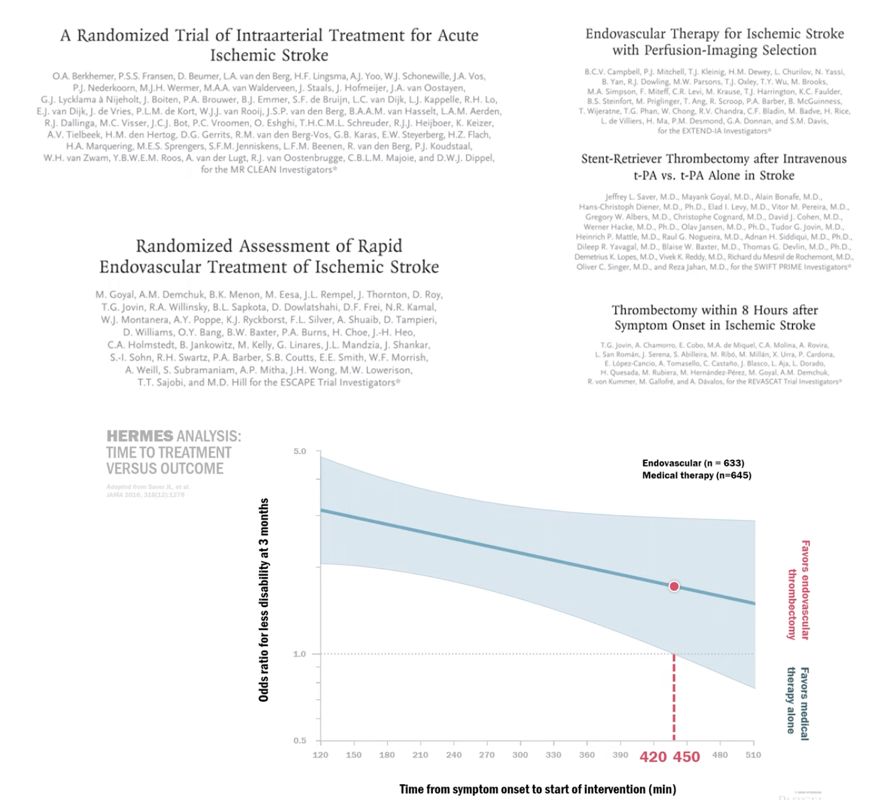
The HERMES[…] collaboration (2016) was a pooled analysis of the five 2015 landmark LVO EVT trials, all of which used a <6-hour LKN window.

Key finding: lower odds of favorable outcome the longer treatment was delayed β€” benefit dwindling around 7 hours[…] since LKN.

The five pooled trials: MR CLEAN, ESCAPE, SWIFT PRIME, EXTEND-IA, REVASCAT[…].

For more distal vessels (MeVO/DEVO), the DISTAL[…] trial is currently comparing EVT to medical management.
EVT for Large Core AIS
  • "Large core" stroke is conventionally defined as (2) ASPECTS <6 OR CTP infarct volume >70 mL[…] at >6 hr past LKN β€” historically considered too far gone for reperfusion. Three trials overturned this:
  • RESCUE-Japan LIMIT[…]: positive β€” EVT improved outcomes without increased sICH/mortality; ANGEL-ASPECT[…]: positive β€” ASPECTS 3-5 and CTP core 70-100 mL; SELECT 2[…]: positive β€” ASPECTS β‰₯6 and CTP core >50 mL. Ongoing: TENSION, LASTE, and TESLA β€” using MRI or NCCT ASPECTS to define subgroups and quantify sICH risk.
Intracranial Atherosclerotic Disease (ICAD) - Mechanisms & Trials
  • ICAD causes recurrent AIS or high-severity TIA through four mechanisms: artery-to-artery thromboembolism, in-situ parent vessel occlusion, perforator branch occlusion, and hypoperfusion[…]
  • The trial landscape: WASID[…]: Warfarin vs Aspirin for sICAD β€” no benefit to anticoagulation; SAMMPRIS[…]: elective PTAS (stenting) vs aggressive medical management β€” stenting[…] arm failed with worse outcomes; VISSIT: balloon-expandable stent vs medical therapy β€” increased stroke/TIA risk with stenting; CHOICE[…]: after successful EVT, adjunctive intra-arterial tPA to lyse residual microthrombi β€” improved outcomes. Bottom line: aggressive medical therapy (DAPT, statin, BP control) is first-line; stenting is reserved for refractory cases.
Cardioembolic Stroke - Valvular AFib

Cardioembolic stroke accounts for β‰₯30[…]% of all AIS. AFib is the most common etiology. Valvular AFib β€” AFib in the setting of moderate-severe mitral stenosis or a mechanical valve replacement.

Treatment is warfarin only[…]; DOACs are contraindicated.

Supported by the RE-ALIGN[…] trial, which compared dabigatran vs warfarin in AFib + mechanical heart valve patients and was stopped early due to worse bleeding AND embolic complications in the dabigatran arm.
Cardioembolic Stroke - Nonvalvular AFib 

Nonvalvular AFib is the dominant cardioembolic stroke etiology. Treatment is a DOAC[…] for most patients; LAA closure (e.g., WATCHMAN) is reserved for patients who cannot tolerate long-term anticoagulation.

Risk is quantified by the CHAβ‚‚DSβ‚‚-VASc[…] score: CHF / HTN / Aβ‚‚ Age β‰₯75 (2 pts) / DM / Sβ‚‚ prior Stroke or TIA (2 pts) / Vascular disease / A Age 65-74 / Sc Sex (female).

Anticoagulate if score β‰₯1 in men or β‰₯2 in women[…] β€” which captures essentially all patients with AFib + prior stroke.
Cardioembolic Stroke - Nonvalvular AFib - Biomarkers + DOAC vs Warfarin Trials

Beyond CHAβ‚‚DSβ‚‚-VASc, additional risk markers help stratify: Lab biomarkers: elevated (2) NT-proBNP or HS-troponin[…]; Cardiac biomarkers: AFib burden, fibrosis, LA enlargement, LAA morphology.

Four landmark trials established DOACs as noninferior (often superior) to warfarin for nonvalvular AFib: RE-LY[…]: Dabigatran vs warfarin; ROCKET-AF[…]: Rivaroxaban vs warfarin; ARISTOTLE and ENGAGE[…]: Apixaban / Edoxaban vs warfarin.
Cardioembolic Stroke - Nonvalvular AFib 

  • A trial called AVERROES[…] compared DOAC (Apixaban) vs ASA alone in nonvalvular AFib and showed that apixaban was superior.
  • For patients who can't tolerate long-term anticoagulation, mechanical LAA closure is an alternative: PREVAIL-AF / PROTECT-AF[…]: WATCHMAN vs warfarin β†’ beneficial; PRAGUE-17[…]: WATCHMAN vs DOACs β†’ noninferior; AMULET-IDE[…]: Amulet device vs WATCHMAN β†’ noninferior. Ongoing: CHAMPION-AF and CATALYST testing newer devices (WATCHMAN-FLEX, Amulet) vs DOACs as initial therapy.
Cardioembolic Stroke - Nonvalvular AFib 

A few nuances around anticoagulation in AFib + stroke: Parenteral AC bridging (heparin/LMWH): increases sICH[…] risk without reducing stroke risk β€” so don't bridge unless absolutely indicated. Recurrent stroke despite DOAC happens in ~1/4 to 1/3 of patients.

Switching DOACs does not[…] reduce this risk. Workup order: check anti-Xa levels for adherence β†’ noncardiac workup β†’ cardiac workup. Hypertensive Deep ICH + AFib is particularly tricky.

Ongoing trials: ASPIRE and ENRICH-AF[…] (DOAC vs ASA in these patients).
Cardioembolic Stroke - PFO - Mechanism + Diagnosis

  • A patent foramen ovale (PFO) is present in ~25[…]% of the general population.
  • The stroke mechanism is a paradoxical embolism[…] β€” a venous thrombus crosses R-to-L through the PFO, often facilitated by Valsalva maneuvers.
  • Diagnosis requires a positive bubble study[…], using TTE, TEE (best for anatomic structural detail), or TCD (best sensitivity for bubble detection).
  • Shunt size by bubble count: small 3-10[…], medium 10-20, large >20.
Cardioembolic Stroke - PFO - RoPE & PASCAL Causality Assessment

  • The interpretive challenge with PFO + stroke: PFOs are common (~25%), so finding one doesn't prove causation. Two scoring systems help: RoPE[…] score β€” points for absence of traditional vascular risk factors, cortical infarct pattern, and younger age. Higher score β†’ more likely PFO is causal suggesting a young healthy person w cortical stroke is more likely due to PFO
  • PASCAL[…] classification combines RoPE with high-risk anatomic features: atrial septal aneurysm, large shunt, straddling thrombus, or VTE preceding the stroke[…]. PASCAL stratifies as "unlikely / possible / probable" PFO causation.
Cardioembolic Stroke - PFO - Antithrombotic + Closure Trials

Antithrombotic strategy: PICSS[…]: warfarin vs ASA in PFO + stroke β†’ no benefit to AC over AP; Post-hoc analyses of NAVIGATE-ESUS and RESPECT-ESUS in PFO patients showed DOAC > ASA; Meta-analysis of 4 trials comparing AP vs AC in PFO stroke: no difference β†’ most patients treated with AP unless another AC indication.

PFO closure trials (a saga of negatives, then positives): Initial negative: CLOSURE I, PC, RESPECT (early version)[…]; Subsequent positive: CLOSE, GORE REDUCE, DEFENSE PFO[…]; Meta-analysis of patients with RoPE >7[…]: benefit of PFO closure confirmed. Practically: close PFOs in carefully selected high-RoPE patients with high-risk anatomic features.
Cardioembolic Stroke - Aortic Arch Atheromas

Aortic arch atheromas cause stroke through artery-to-artery embolism[…].

High-risk features: atheroma >4 mm[…], ascending aorta location, mobile or ulcerated morphology.

Diagnosis: TEE[…] > TTE; emerging modalities include cMRI and cardiac CT.

Treatment: the ARCH[…] trial showed warfarin had HIGHER stroke AND bleeding risk vs ASA+Plavix β†’ DAPT-based regimens preferred. Short-term DAPT (up to 30 days) per CHANCE/POINT/THALES criteria can be used in low-bleed-risk patients.
Cardioembolic Stroke - Ascending Aortic Dissection

Ascending aortic dissection causes stroke via direct extension into the great vessels or embolic showering. Particularly common in connective tissue disorders: Marfan, Ehlers-Danlos type IV, familial thoracic aortic aneurysm, bicuspid AV, Loeys-Dietz[…].

Diagnosis: CTA aorta[…] (hemodynamically stable) or TTE[…] (unstable, bedside).

Treatment: emergent surgical repair[…]. Critically, IV thrombolysis is contraindicated β€” would worsen the dissection.
Cardioembolic Stroke - HFrEF

HFrEF causes embolic stroke through two pathophysiologies: LV thrombus formation and paroxysmal AFib[…].

Treatment if LV thrombus is present: warfarin for at least 3 months[…], then reassess with cardiac imaging.

Trial landscape: WARCEF[…] (HFrEF + sinus rhythm, warfarin vs ASA): lower stroke risk but higher bleed risk with warfarin β€” net neutral; NAVIGATE-ESUS[…] HFrEF subgroup post-hoc: lower stroke risk with rivaroxaban > ASA.
Cardioembolic Stroke - Stroke After MI

Stroke risk after MI peaks in the first 12 weeks[…], similar in STEMI β‰ˆ NSTEMI.

Two settings warrant short-term anticoagulation: Anterior STEMI[…] (high LV thrombus risk from anterior wall akinesis): warfarin Γ— 3 months; MI + documented LV thrombus[…] (with or without stroke): AC Γ— 3 months minimum, with follow-up imaging.
Cardioembolic Stroke - Valvular Heart Disease

Valvular heart disease causes stroke through several mechanisms; treatment varies by valve type and rhythm. Mechanical/Bioprosthetic heart valves (no AFib): warfarin[…] for 3-6 months[…] at INR goal 2.0-3.0 (aortic) or 2.5-3.5 (mitral)[…], then transition to antiplatelet therapy alone. Rheumatic heart disease: treat only if AFib is present.

With AFib + moderate-severe mitral stenosis β†’ warfarin[…] (DOACs contraindicated; this is "valvular AFib").

Infective endocarditis (IE): stroke risk peaks between 4 mo before and 5 mo after diagnosis[…].: Diagnose with TTE; use modified Duke criteria[…]; Screen for mycotic aneurysms β€” may need DSA since CTA can miss small ones; Treatment: IV abx Γ— 6 weeks[…] + valve surgery for paravalvular extension, poor abx response, or valve dysfunction with CHF.

Noninfective endocarditis (NIE): SLE β†’ Libman-Sacks; Malignancy β†’ Marantic[…] endocarditis (classic disseminated punctate infarct pattern); Treatment: address the underlying disease + antithrombotic therapy.
Cardioembolic Stroke - Left-Sided Cardiac Tumors

Left-sided cardiac tumors are an uncommon but important cardioembolic source: Atrial myxomas[…] β€” most common primary cardiac tumor; usually in the LA, attached to the interatrial septum; Papillary fibroelastomas[…] β€” small AV/MV-associated tumors; paradoxically more thrombogenic per unit size despite being smaller. Treatment for both is surgical excision; ASA may be added perioperatively.
LAA - ICA Stenosis - Classification + Risk Management

Carotid (ICA) stenosis is classified as: Symptomatic[…]: stroke or TIA in the last <6 months attributable to that artery; Asymptomatic (symptoms >6 months ago, OR patient never had stroke/TIA).

Clinical pearl: nonlocalizing symptoms like dizziness, lightheadedness, syncope do NOT[…] count as symptomatic carotid stenosis.

Universal risk-factor management: BP control per SPRINT[…] trial: target <130/80; LDL control per TST[…] trial: target <70 (or <55 if DM or atherosclerosis in another bed); PCSK9[…] inhibitors as add-on if LDL still off goal; CREST-2 is refining BP/LDL targets.
LAA - ICA Stenosis - Antithrombotic Therapy

Historical baseline: NASCET and ECST used ASA alone[…] for ICA stenosis.

Current paradigm: DAPT short-term (~21 days), then ASA alone[…] long-term.

Supporting trials: THALES: ASA + ticagrelor > ASA alone; CHANCE-2[…] (Han Chinese with CYP2C19 loss-of-function): ASA + ticagrelor > ASA + clopidogrel; Current guidelines: ASA + clopidogrel preferred over ticagrelor in most populations due to lower bleeding risk.
LAA - Symptomatic Carotid Stenosis - Revascularization

Carotid Endarterectomy (CEA): NASCET and ECST[…] established CEA's benefit by stenosis severity: 70-99[…]% stenosis β†’ significant benefit; 50-69% β†’ modest benefit; <50% β†’ no benefit.

CEA vs Stenting (CAS): the CREST[…] trial found similar overall effectiveness but with increased periprocedural stroke risk in CAS.

CEA preferred for patients >70 years old[…] or revascularization within <1 week of stroke.

TCAR (TransCarotid Artery Revascularization)[…]: hybrid technique using CCA access with "flow reversal" to a femoral vein during stenting β€” reduces embolization. ROADSTER 2 Registry showed lower stroke/death rates than transfemoral CAS.
LAA - Asymptomatic Carotid + Complex Plaque

Asymptomatic carotid stenosis: the CREST-2[…] trial is comparing revascularization vs intensive medical therapy alone β€” results pending.

While awaiting CREST-2: Men[…] tend to benefit more from CEA than women (histologic differences: less collagen, more macrophage inflammation in male plaques); TCD can detect microemboli for risk stratification.

Complex carotid plaque imaging (newer MRI-based characterization): Lipid-rich necrotic core (LRNC); Fibrous cap morphology (FC); Calcification; Intraplaque hemorrhage[…] β€” confers very high stroke recurrence risk regardless of stenosis %.
LAA - Vertebral Stenosis + ICAD

Vertebral artery stenosis: no benefit[…] for stenting due to tortuosity[…] of the proximal vertebral artery. Treat medically. Intracranial Atherosclerotic Disease (ICAD): atherosclerosis in the distal ICA β†’ MCA/ACA, or intracranial vertebrobasilar system β†’ PCA.

Key trial: SAMMPRIS[…] showed stenting was inferior[…] to intensive medical management (DAPT Γ— 90 days β†’ ASA monotherapy indefinitely) in 70-99% ICAD. Stenting is now restricted to refractory cases.
CSVD - Risk Factors + Definition

Cerebral small vessel disease (CSVD) is dysfunction of small arteries, arterioles, venules, and capillaries[…] β€” producing lacunar strokes, white matter disease, microbleeds, and cognitive decline.

Risk factors: Modifiable: HTN, HLD, DM2, smoking; Less-emphasized but important: OSA and CKD[…] β€” both associated with more CMBs, WMHs, and silent infarcts; Non-modifiable[…]: older age.
CSVD - Pathophysiology

The dominant CSVD pathophysiology is "arteriolosclerosis[…]" β€” loss of smooth muscle cells from the tunica media[…], leading to lipohyalinosis, microatheroma formation, and segmental arterial disorganization.

In CAA specifically, the parallel process is accumulation of amyloid-Ξ²[…] in vessel walls (predominantly leptomeningeal).

Non-atherosclerotic CSVD etiologies: Genetic: CADASIL, CARASIL; Autoimmune: Primary CNS vasculitis; Infectious: meningovascular syphilis; Iatrogenic: post-radiation[…] vasculopathy.
CSVD - Cerebral Amyloid Angiopathy

CAA[…] is a small-vessel disease driven by amyloid-Ξ²[…] deposition in cortical and leptomeningeal vessels β€” making them fragile and prone to chronic microhemorrhage and eventual symptomatic ICH. Clinical presentation: Progressive cognitive impairment.

Transient Focal Neurologic Episodes ("amyloid spells")[…] β€” short (<30 min) episodes mimicking TIA or focal seizure. Can be positive (paresthesias that spread) or negative (sudden weakness/language deficit).

MRI signature: Lobar CMBs[…] (contrast with the deep CMBs of hypertensive microangiopathy); Cortical superficial siderosis; Possible lobar ICH; Increased WMHs in the centrum semiovale.

Diagnosis: the Boston Criteria v2.0[…] now allow a "probable CAA" diagnosis without prior ICH in patients >50. Trials enrolling CAA patients with AFib: ASPIRE (Apixaban) and ENRICH-AF (Edoxaban).
CSVD - CADASIL

CADASIL[…] is an autosomal dominant small-vessel disease driven by mutations in NOTCH3[…] on chromosome 19. Pathophysiology: NOTCH3 is normally expressed in vascular smooth muscle cells. The mutant protein causes BV wall thickening and luminal stenosis.

Smooth muscle cells degenerate with granular deposits that stain acid-Schiff(+) in the tunica media[…], plus collagen/fibrous accumulation in the adventitia.

Classic clinical triad: Migraine with aura[…] β€” often the first manifestation, typically in the 3rd decade; Recurrent subcortical strokes or TIAs; Progressive cognitive decline (often with acute confusional or psychiatric episodes).

MRI signature: WMHs classically in the external capsule and anterior temporal poles[…]; Silent lacunar strokes; CMBs in subcortical areas (>Β½ of patients). Diagnosis: Genetic testing for NOTCH3 (first-line).

If unavailable or negative, skin biopsy showing granular osmiophilic material (GOM)[…] in small vessels on electron microscopy.
CSVD - CARASIL

CARASIL[…] is the autosomal recessive counterpart to CADASIL, caused by mutation in HTRA1[…] gene. Two extra-neurologic clues that distinguish CARASIL from CADASIL: spondylosis deformans (degenerative spine changes) and alopecia (premature hair loss).
CVT - Classification

  • Cerebral venous thrombosis is divided by anatomic location 
  • Cerebral Venous Sinus Thrombosis (CVST) β€” clots in the large dural venous sinuses. Two drainage pathways: 
    • Primary (superficial)[…]: SSS β†’ transverse sinuses β†’ sigmoid sinuses β†’ bilateral IJ veins
    • Deep[…]: straight sinus which collects flow from the Great Cerebral Vein of Galen, Inferior Sagittal Sinus, and Internal Cerebral Veins (draining the thalami). 
  • Cortical Venous Thrombosis (CVT)[…] β€” clots in cortical veins. Two named cortical veins worth knowing: Vein of Trolard[…] β†’ drains into the superior sagittal sinus; Vein of LabbΓ©[…] β†’ drains into the transverse sinus.

CVT - Presentation

CVT presents very differently from arterial stroke. Five clinical patterns to recognize: Increased ICP symptoms: headache (often dominant), N/V, papilledema; Focal neurologic deficit β€” unlike arterial strokes (maximal at onset), CVT deficits are typically progressive and often bilateral[…] (reflecting bilateral territories drained by midline sinuses); Seizures[…] β€” markedly more common at initial presentation than with arterial strokes; Subacute AMS; Cavernous sinus[…] syndrome β€” multiple cranial neuropathies (CN III, IV, V₁, Vβ‚‚, VI). The "progressive + bilateral + headache + seizure" pattern should make you think venous rather than arterial.
CVT - Neuroimaging
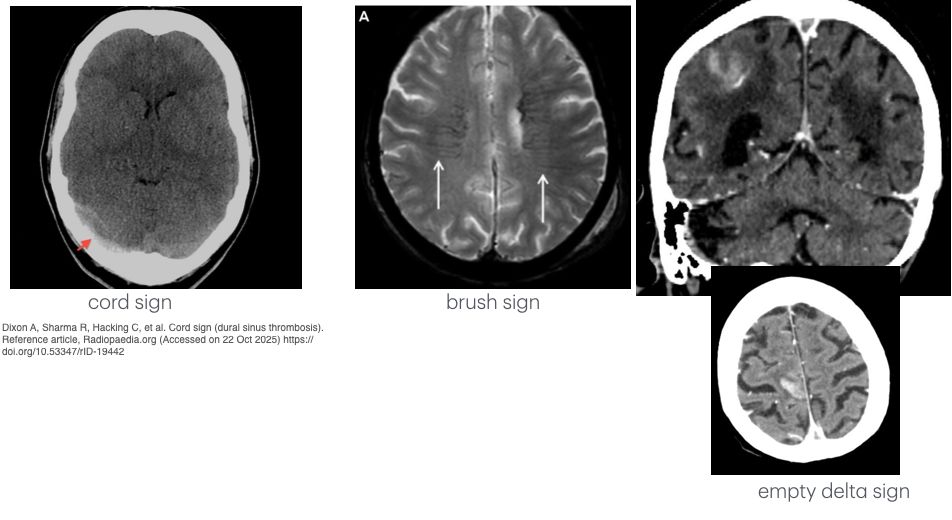
  • CTH (non-contrast): "Dense clot or cord sign[…]" β€” the thrombosed sinus appears hyperdense; After contrast: filling defect = the classic "empty delta sign[…]" in the SSS.
  • CTV[…]: similar sensitivity and specificity to MRV β€” and faster/more available in emergencies.
  • MRI: SWI sequence may show the "brush sign[…]" β€” prominent deep medullary veins forced to carry deoxygenated blood through collaterals due to elevated venous pressure.
CVT - Treatment

Anticoagulation is first-line, even in the presence of venous infarct/hemorrhage: Acute: UFH or LMWH[…]; Provoked CVT (clear precipitant β€” infection, OCP, pregnancy): 3-6 months[…]; Unprovoked CVT: 6-12 months.

DOAC vs warfarin landscape (DOACs increasingly used): RE-SPECT CVT, EINSTEIN-Jr, DOAC-CVT[…]: validated DOACs for CVT; Ongoing: SECRET (rivaroxaban) and RWCVT (rivaroxaban vs warfarin).

Endovascular therapy: the TO-ACT[…] study randomized EVT+AC vs AC alone β€” inconclusive. EVT reserved for refractory cases with neurologic deterioration despite AC.
CAD - Anatomic Locations

CAD occurs in the carotid or vertebral[…] arteries β€” predominantly in the extracranial segment, often precipitated by trauma.

Carotid: Traumatic[…]: a few cm above the carotid bifurcation, in the distal 2/3 of the extracranial ICA near the skull base; Spontaneous (typically more proximal in the ICA).

Vertebral: Traumatic[…]: typically affects the V3 segment[…] (between transverse process of C2 and the foramen magnum) β€” the most mobile, vulnerable segment; Some involve V2 (between transverse processes of C2-C6).
CAD - Pathophysiology (Two Tear Locations)

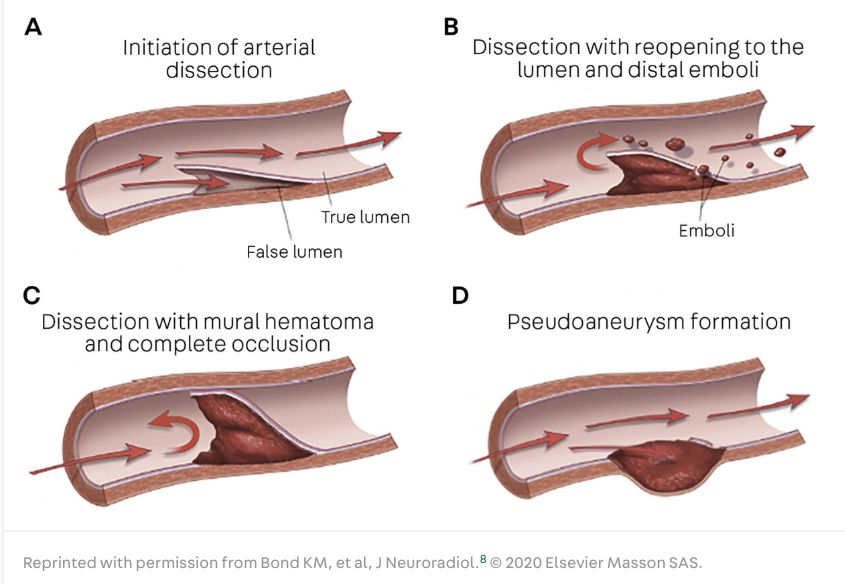
Cervical artery dissection happens when a tear in the BV wall lets blood enter the wall itself. The location of the tear determines the clinical consequences
  • Sub-intimal[…] tear (between intima and media) β†’ blood creates a false lumen β†’ intramural hematoma. Two stroke mechanisms: Artery-to-artery embolism; Complete narrowing of the true lumen β†’ vessel occlusion β†’ distal hypoperfusion.
  • Sub-adventitial[…] tear (between media and adventitia) β†’ blood spills outward β†’ creates a pseudoaneurysm[…] that compresses adjacent structures: Headache and neck pain from local pain receptors; Horner syndrome[…] (sympathetic plexus on the ICA); Other cranial neuropathies (lower CNs near skull base).
CAD - Etiologies
  • Trauma is the most common cause: typically from (3) chiropractic cervical manipulation, severe coughing/sneezing, or sudden neck movements (whiplash, sports)[…]
  • Connective tissue disorders predispose to "spontaneous" dissection: Fibromuscular dysplasia (FMD), Marfan, Ehlers-Danlos type IV (vascular EDS)[…]
  • Additional non-CTD risk factors (4): OCPs, migraine, recent infection, pregnancy/peripartum[…] β€” reflecting a multifactorial vascular vulnerability
CAD - Imaging Identification Case

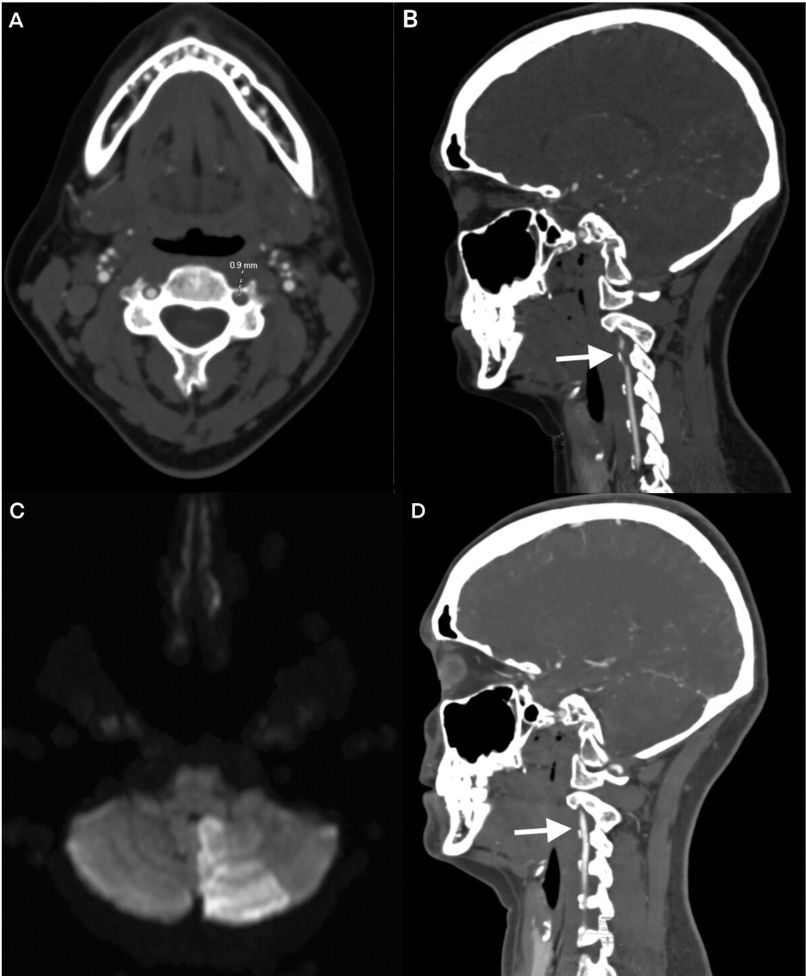
A, B (CTA head/neck) (Left vertebral[…] artery dissection with narrowing to 0.9 cm[…] at the level of vertebra C3 (artery segment V2) β€” resolved on); D (repeat CTA at 4 months) (vessel recanalized); C (MRI DWI axial) (diffusion restriction in the L PICA[…] territory β€” the acute infarct that resulted).

CAD - Clinical Presentation

CAD presentation can be nonspecific and sometimes mimics migraine[…] β€” high suspicion is required.

ICA dissection: Ipsilateral headache + partial Horner syndrome (ptosis + miosis, NO anhidrosis)[…] β€” because post-ganglionic sympathetic fibers to the face travel with the external carotid; Cranial neuropathies from local pseudoaneurysm compression; Stroke (when it happens) is in the anterior circulation[…], sometimes including the retina (CRAO).

Vertebral dissection: Ipsilateral neck pain β€” usually the dominant symptom; Stroke (when it happens) is in the posterior circulation[…]: brainstem, cerebellum, or rarely spinal cord; Rarely SAH[…] if the dissection extends or originates in the intracranial segment, where vessels lack the external elastic lamina + have a thinner tunica media/adventitia β†’ more prone to pseudoaneurysm formation. Either type: sometimes pulsatile tinnitus.
CAD - Treatment

Acutely: treat like any other stroke if appropriate: IV thrombolysis Β± EVT; For dissections involving the intracranial segment[…], IVT is investigated more cautiously due to potential SAH risk from pseudoaneurysm rupture.

Chronically: AP and AC are equipoise[…]. Either warfarin or ASA is acceptable per AHA guidelines.

Supporting trials: CADISS and TREAT-CAD[…]: AP vs AC in carotid artery dissection β€” no difference (both underpowered).

Short-term DAPT (21 days) can be added if POINT or CHANCE criteria met: High-risk TIA with ABCD2 score >4[…], started within 12 hr (POINT[…]) or 24 hr (CHANCE).
Pediatric Stroke - Definitions + Risk Factors

Pediatric stroke is divided by timing: 
  • Perinatal stroke β€” <28 days[…] of life.
    • Risk factors: Chorioamnionitis or other perinatal infection; Congenital heart disease[…]; Inherited thrombophilia. 
  • Childhood stroke> β€” >28 days. Risk factors: Congenital heart disease (~1/3 of cases); Cerebral inflammatory arteriopathy, including Moya-Moya[…] disease (~1/2 of cases) β€” in this subset, adjunctive steroids[…] may be considered alongside AP; Sickle cell disease.
Pediatric Stroke - Typical Symptoms

Stroke presentation in children often differs from adults β€” leading to delayed diagnosis. Seizures and altered mental status[…] (rather than focal weakness) dominate, because of heightened cortical excitability in the immature brain.

Perinatal stroke: Symptomatic seizure[…] (most common presentation); AMS with failure to meet developmental milestones.

Childhood stroke: Stuttering speech; Headache; Symptomatic seizure; Posterior circulation symptoms[…]: unsteady gait, N/V.
Pediatric Stroke - Hyperacute Treatment

The pediatric hyperacute stroke treatment window mirrors adult guidelines: IV thrombolysis: IVT[…] <4.5 hours[…]; Endovascular therapy: EVT <6 hours[…].

Sickle cell disease (SCD) carries unique additional treatment: Emergent exchange transfusion[…] β€” first achieve Hgb >10 g/dL, then reduce HbS to 15-20%. Supportive measures: IV fluids to maintain perfusion, supplemental Oβ‚‚ for goal SpOβ‚‚ >93%.
Pediatric Stroke - Chronic Treatment

For secondary stroke prevention in children: Antiplatelet (ASA[…] at 3-5 mg/kg/day[…] for typical arterial strokes (clopidogrel as alternative)); Anticoagulation (for cardioembolic etiologies or thrombophilic conditions).

In SCD children whose TCD velocities have normalized after transfusion and have no arteriopathy or silent infarcts, the TWiTCH[…] trial showed that chronic exchange transfusions can be replaced with maximally-tolerated hydroxyurea.
Unruptured Aneurysms - PHASES Score

Rupture risk for an unruptured intracranial aneurysm is quantified by the PHASES[…] score:

P Population: Japanese and Finnish[…] get extra points (genuinely higher rupture rates); H HTN; A Age >70; S Size >7 mm[…] β€” the strongest individual predictor; E Earlier SAH (prior SAH from another aneurysm); S Site β€” particularly MCA, ACA/Acomm, or Pcomm[…] territories. Higher score β†’ higher annual rupture risk β†’ stronger case for intervention.
Unruptured Aneurysms - Additional Variables + Symptomatic Lesions

Additional variables beyond PHASES that modify rupture risk: Daughter sac (irregular outpouching), documented growth, family history, or smoking[…]. Unruptured but symptomatic aneurysms behave differently.

Classic example: a Pcomm aneurysm compressing ipsilateral CN III[…] β†’ producing pupil-involving third nerve palsy with vision symptoms.

These symptomatic aneurysms are considered good candidates for endovascular treatment[…] regardless of PHASES score, because the symptoms portend imminent rupture or persistent neurologic morbidity.
Unruptured Aneurysms - Treatment of Asymptomatic Aneurysms

Treatment of truly asymptomatic unruptured aneurysms remains controversial β€” the procedural risk must be weighed against the very low annual rupture rate. The trial landscape: TEAM[…]: looked at coiling for asymptomatic aneurysms β€” halted early due to low recruitment; CURES[…]: comparing coiling vs clipping in asymptomatic aneurysms β€” showed no difference; CAM: comparing endovascular/surgical intervention vs conservative management. In current practice, asymptomatic aneurysms with high PHASES scores, family history, or documented growth get treated.
AVMs - Definition + Etiologies

A cerebral arteriovenous malformation (AVM) is a tangle of arteries and veins called a "nidus[…]" with no intervening capillaries[…] β€” so arterial pressure is transmitted directly into the venous system, producing high-flow lesions prone to rupture. Etiologies: most AVMs are sporadic.

Inherited causes: Hereditary Hemorrhagic Telangiectasia (HHT)[…], aka Osler-Weber-Rendu β€” AD with skin telangiectasias, recurrent epistaxis, and GI bleeding. Mutations in ENG, ALK1, or SMAD4.

Capillary Malformation–AVM (CM-AVM) syndrome (mutation in RASA1[…]).
AVMs - Presentation + Risk Stratification

Presentation: AVMs most commonly present with ICH (from rupture)[…], followed by seizures and focal neurologic deficits.

Risk stratification uses the Spetzler-Martin[…] grading scale (1-5) β€” higher scores mean higher surgical morbidity.

The three components: AVM nidus size >3 cm; Location in eloquent cortex (motor, language, sensory, visual); Pattern of venous drainage[…] β€” particularly deep venous drainage.
AVMs - Treatment

The goal of AVM treatment is to close the nidus[…] and stop AV shunting.

Conservative medical management: the ARUBA[…] trial randomized patients with unruptured AVMs to intervention vs medical management β€” controversially found that intervention produced worse[…] outcomes than medical management in asymptomatic AVMs.

Endovascular embolization via transarterial or transvenous approach using liquid embolics: Polyvinyl alcohol; n-BCA (n-butyl cyanoacrylate)[…]; Ethylene vinyl alcohol copolymer (Onyx); TATAM trial: testing transvenous vs transarterial embolization. Other modalities: microneurosurgical resection, stereotactic radiosurgery (photons/protons cause local thrombosis over months).
Practice Q - Brainstem Stroke + DWI Negative

Strokes in the brainstem (posterior circulation)[…] are more likely than supratentorial strokes to be DWI-negative[…] on initial MRI. The reasons: Small lesion volume in tightly packed brainstem nuclei; Imaging artifacts in the posterior fossa (susceptibility, motion). Clinical correlate: a negative MRI does NOT exclude brainstem stroke. Repeat imaging at 24-48 hours if clinical suspicion remains high.
Practice Q - Extracranial Carotid Imaging in Anterior Stroke

Imaging of the extracranial ICA[…] is a Class I AHA/ASA recommendation for any patient with symptomatic anterior circulation[…] ischemic stroke β€” because of the proven benefit of revascularization (CEA or CAS) in high-grade carotid stenosis. The corollary: an anterior-circulation stroke workup without carotid imaging is incomplete.
Practice Q - pAFib Detection Timing After Stroke

How soon must pAFib be detected after a cryptogenic stroke for anticoagulation to be beneficial? The honest answer: unknown[…] β€” the minimum AFib burden or detection window required to outweigh bleeding risk has not been definitively established.

Trials informing practice: CRYSTAL-AF[…]: prolonged monitoring (insertable loop recorders) detects more AFib post-cryptogenic stroke; ARTESIA: apixaban reduces stroke risk in device-detected AFib lasting 6 min to 24 hr. Practice is increasingly to initiate AC for any device-detected AFib regardless of when discovered.
Practice Q - Sickle Cell + TCD Screening in Children

Children with sickle cell disease[…] should undergo routine screening with transcranial Doppler (TCD)[…] to measure cerebral blood flow velocity. Elevated velocities identify children at high stroke risk who benefit from preventive exchange transfusions β€” the STOP trial paradigm.
Practice Q - NIHSS-Negative But Disabling Deficits

A deficit NOT captured by the NIHSS[…] but considered disabling enough to justify IVT is isolated hand weakness[…] β€” which can render someone unable to work or perform fine motor tasks despite an NIHSS of 0. The lesson: NIHSS is a screening tool but doesn't measure disability. Treat the patient, not the score.
Practice Q - Wake-Up Stroke + IVT

For patients with a wake-up stroke[…] (unknown LKN), IVT can still be given if MRI shows a favorable DWI-FLAIR mismatch[…] β€” DWI+ but FLAIR-, suggesting symptoms began <4.5 hr prior. This is the WAKE-UP trial paradigm.
Practice Q - Always Give IVT at Full Dose Before EVT

In acute ischemic stroke, IVT should be given at full dose[…] to all eligible patients β€” regardless of the feasibility or timing of planned EVT.

Because combined bridging therapy[…] (IVT + EVT) remains superior to thrombectomy alone β€” the five "withholding IVT" trials (SKIP, MR CLEAN NO-IV, SWIFT-DIRECT, DIRECT-SAFE, DIRECT-MT) all failed to show noninferiority of EVT-alone.
Practice Q - EVT in Low-NIHSS Stroke

The effectiveness of EVT for AIS in patients with NIHSS <6[…] is currently unknown[…], because the major LVO EVT trials excluded patients with mild deficits. Ongoing trials filling this gap: ENDOLOW (North American) and MOSTE (European).
Practice Q - AFib + Moderate-Severe MS = Warfarin

In patients with AFib + moderate-to-severe mitral stenosis, the indicated therapy is warfarin[…] β€” because this is "valvular AFib[…]" and DOACs are contraindicated. Supported by RE-ALIGN: worse bleeding AND embolic outcomes with dabigatran vs warfarin in mechanical valve patients.
Practice Q - NT-proBNP as Atrial Dysfunction Biomarker

NT-proBNP[…] is a biomarker of atrial dysfunction[…], associated with: Higher overall ischemic stroke risk; Higher AFib detection rates after cryptogenic stroke (suggesting subclinical atrial cardiopathy); Eligibility for trials in the atrial cardiopathy / ESUS space (e.g., ARCADIA).
Practice Q - PFO + High-Risk Anatomic Features β†’ Pathogenic

The presence of an atrial septal aneurysm[…] or a large R-to-L shunt[…] increases the likelihood that a PFO is pathogenic (causal) rather than incidental in ischemic stroke. These are the high-risk anatomic features incorporated into the PASCAL classification β€” and the population most likely to benefit from PFO closure.
Practice Q - LV Thrombus + Warfarin Γ— 3 mo

In patients with ischemic stroke and documented LV thrombus[…], short-term anticoagulation is indicated: Agent: typically warfarin[…] (vitamin K antagonist); Duration: 3 months minimum, with follow-up imaging to guide whether to extend. DOACs are increasingly used off-label here based on emerging data, but warfarin remains the trial-supported standard.
Practice Q - Marfan + Ascending Aortic Dissection

In a patient presenting with ischemic stroke due to acute ascending aortic dissection[…] without atherosclerotic risk factors, Marfan syndrome[…] should be considered β€” Marfan predisposes to aortic root dilation and dissection via cystic medial degeneration from FBN1 mutation. Other CTDs to consider: Ehlers-Danlos type IV, Loeys-Dietz, familial thoracic aortic aneurysm syndrome.
Practice Q - DAPT After High-Risk TIA / Minor Stroke

After a high-risk TIA[…] or minor ischemic stroke: Start DAPT with ASA + clopidogrel[…]; Initiate within 12-24 hours of symptom onset; Continue for 21-90 days[…]; Then transition to single antiplatelet (typically ASA) long-term.

This is the POINT / CHANCE[…]-era paradigm: short-term DAPT reduces recurrent stroke risk; long-term DAPT increases bleeding without further benefit.
Practice Q - CREST Trial Tradeoff (CEA vs CAS)

In the CREST[…] trial, CEA was associated with a higher rate of perioperative myocardial infarction[…], whereas CAS carried a higher risk of perioperative stroke[…]. Composite endpoint (stroke + MI + death) was similar overall. Clinical implication: choose modality based on patient profile β€” CEA for patients who tolerate surgical stress, CAS for patients at high cardiac risk. TCAR is emerging as a third option that mitigates both risks.
Practice Q - SWI Hypointensities β†’ CMBs

Small, round hypointense[…] lesions on GRE / SWI[…] (but isointense on T1, FLAIR, DWI) = cerebral microbleeds (CMBs).

Two distributions point to different etiologies: Deep CMBs (basal ganglia, thalamus, brainstem): chronic hypertensive microangiopathy; Lobar[…] CMBs (cortical/subcortical): CAA.
Practice Q - Lacunar Infarct Locations

Lacunar infarcts[…] most commonly occur in the putamen of the basal ganglia[…], followed by thalamus, pons, internal capsule, and subcortical white matter β€” all locations supplied by penetrating small perforating arteries. Mechanism: lipohyalinosis or microatheroma in these tiny end-vessels β†’ focal infarct β†’ classic lacunar syndromes.
Practice Q - Elderly TFNEs + Lobar Microbleeds β†’ CAA

In an elderly patient with transient focal neurologic symptoms ("amyloid spells") and MRI findings of cortical superficial siderosis or lobar microbleeds[…], the most likely diagnosis is CAA[…] (cerebral amyloid angiopathy). Pathology: amyloid-Ξ² deposition in cortical and leptomeningeal vessels β†’ vessel fragility β†’ recurrent lobar hemorrhage and microbleeds.
Practice Q - Arterial vs Venous Stroke Distinction

Two contrasting presentation patterns: Arterial stroke: focal deficits maximal at onset[…], typically unilateral.

Cerebral venous thrombosis: deficits typically progressive or fluctuating[…], with headache/seizures/AMS more common, often bilateral due to midline sinus involvement. Key teaching point: "progressive deficit + headache + seizure" should prompt venous workup, not just arterial.
Practice Q - VITT + CVT Treatment

Treatment of vaccine-induced immune thrombotic thrombocytopenia (VITT)[…] presenting with CVT: IVIg + non-heparin anticoagulation[…] (argatroban, bivalirudin, fondaparinux).

What to AVOID: Heparin and antiplatelet[…] agents β€” would worsen the immune-mediated thrombosis (shares mechanism with HIT). VITT was classically described after adenoviral-vector COVID-19 vaccines, mediated by anti-PF4 antibodies.
Practice Q - Traumatic Vertebral V3 Dissection

Traumatic vertebral artery dissections most commonly involve the V3 segment[…] (transverse process of C2 to foramen magnum). Why V3?

This is the most mobile[…] part of the vertebral artery, with sharp turns around C1-C2 β€” making it vulnerable to rotational and hyperextension forces from whiplash, chiropractic manipulation, or sports trauma.
Practice Q - CAD + Subtle Connective Tissue

Most patients with cervical artery dissection[…] have subtle connective tissue[…] alterations on biopsy β€” but lack a defined hereditary connective tissue disease. This reflects a multifactorial vascular vulnerability that predisposes to dissection after minor trauma or even spontaneously β€” explaining why most CAD patients don't have a recognizable Marfan or EDS phenotype.
Practice Q - Spontaneous CAD Risk Factors (OCPs and More)

A key predisposing factor for spontaneous CAD is oral contraceptive[…] use.

Other contributors: migraine, recent infection, and pregnancy/peripartum[…] period. This reflects a non-atherosclerotic vascular vulnerability β€” many "spontaneous" CADs have a triggering exposure that wouldn't dissect a normal artery.
Practice Q - CADISS + TREAT-CAD Equipoise

The CADISS[…] and TREAT-CAD[…] trials both demonstrated no significant difference[…] between antiplatelet therapy and anticoagulation for preventing recurrent stroke in spontaneous cervical artery dissection. Both approaches show similarly low event rates. In practice, AP vs AC is individualized based on bleeding risk, patient preference, and any concurrent indications.
Practice Q - Pediatric Stroke + Seizures

Seizures[…] are a more common presenting feature of ischemic stroke in children[…] than in adults β€” due to heightened cortical excitability in the immature brain. This often leads to delayed stroke diagnosis in children, since seizures point clinicians toward primary epilepsy workup rather than vascular imaging.
Practice Q - Focal Cerebral Arteriopathy in Healthy Children

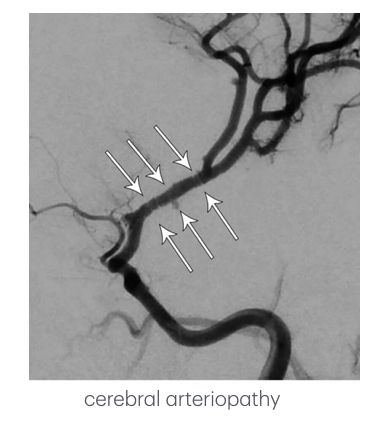
In a previously healthy child, the most common cause of ischemic stroke is focal cerebral arteriopathy β€” an acute, unilateral inflammatory arteriopathy[…] often affecting the MCA and following a recent viral infection[…]. Distinct from chronic vasculopathies (moyamoya, sickle cell) β€” typically self-limited but can cause significant stroke during the active inflammatory phase.
Practice Q - TWiTCH Trial (SCD Pediatric Chronic Therapy)

In SCD children whose TCD velocities have normalized after a course of transfusions AND who have no arteriopathy or silent infarcts, the TWiTCH[…] trial showed that chronic exchange transfusions can be safely transitioned to maximally-tolerated hydroxyurea[…]. This is a meaningful QoL upgrade β€” hydroxyurea is oral, doesn't require iron chelation, and avoids the burden of chronic transfusions.
Practice Q - Pediatric Stroke Secondary Prevention

For children with arterial ischemic stroke who do NOT have sickle cell disease or a cardioembolic source: First-line: aspirin[…] at 3-5 mg/kg/day[…]; Alternative if ASA contraindicated: clopidogrel. The mechanism in these cases is most often focal cerebral arteriopathy or other post-infectious vasculopathy β€” antiplatelet therapy is the appropriate response.
Practice Q - Perinatal Arterial Ischemic Stroke

The most common presentation of perinatal arterial ischemic stroke[…] is focal motor seizures[…], typically appearing within the first week of life β€” often clonic movements of one limb in an otherwise clinically stable neonate. Because the baby may seem otherwise well between seizures, perinatal stroke is often diagnosed only when imaging is obtained for the seizures themselves.
Practice Q - Aneurysm Size and Rupture Risk

The size of the aneurysm[…] shows the strongest positive correlation with risk of rupture in unruptured intracranial aneurysms.

Rupture risk rises sharply for aneurysms larger than 7 mm[…], and is highest for posterior circulation[…] aneurysms or those with irregular morphology (e.g., daughter sacs, lobulation). Together, size + location + irregularity dominate the rupture-risk calculation β€” and are explicitly weighted in the PHASES score.
Practice Q - ARUBA Trial (Unruptured AVMs)

The ARUBA[…] trial randomized patients with unruptured AVMs to conservative medical management vs interventional treatment (surgery, embolization, or radiosurgery).

Counterintuitive result: the lowest incidence of death or symptomatic stroke occurred in the conservative medical[…] arm β€” interventional approaches were associated with a ~threefold higher risk during early follow-up. Caveats: short follow-up, AVMs that bled later may catch up, asymptomatic AVMs may behave differently from symptomatic ones. ARUBA changed but didn't end the debate.
Practice Q - Phenytoin Impairs Stroke Recovery

The antiepileptic medication phenytoin[…] impairs neuroplasticity and motor recovery when given early after stroke, and is associated with poorer functional outcomes. For seizure prophylaxis or treatment in poststroke patients, prefer agents like levetiracetam or lamotrigine β€” which don't share this anti-plasticity effect.
Practice Q - Stroke Rehab Outcomes (Gait Dominates)

During inpatient stroke rehabilitation, most improvement and independence are achieved in gait and mobility[…] β€” because intensive task-specific training and early mobilization drive faster recovery for these domains compared with self-care activities like bathing or dressing. Implication: prioritize early aggressive ambulation training in the rehab plan.
Practice Q - VNS for Stroke Motor Recovery

The intervention best supported by evidence to enhance motor recovery after stroke (in conjunction with standard exercise therapy) is implanted vagus nerve stimulation (VNS)[…], which promotes neuroplasticity. VNS pairs stimulation with movement tasks β€” driving Hebbian strengthening of motor circuits.

The VNS-REHAB[…] trial showed improved upper-limb motor function in chronic stroke patients.
Case - 67yo, L MCA Syndrome, NIHSS 20 β€” DEFUSE 3?

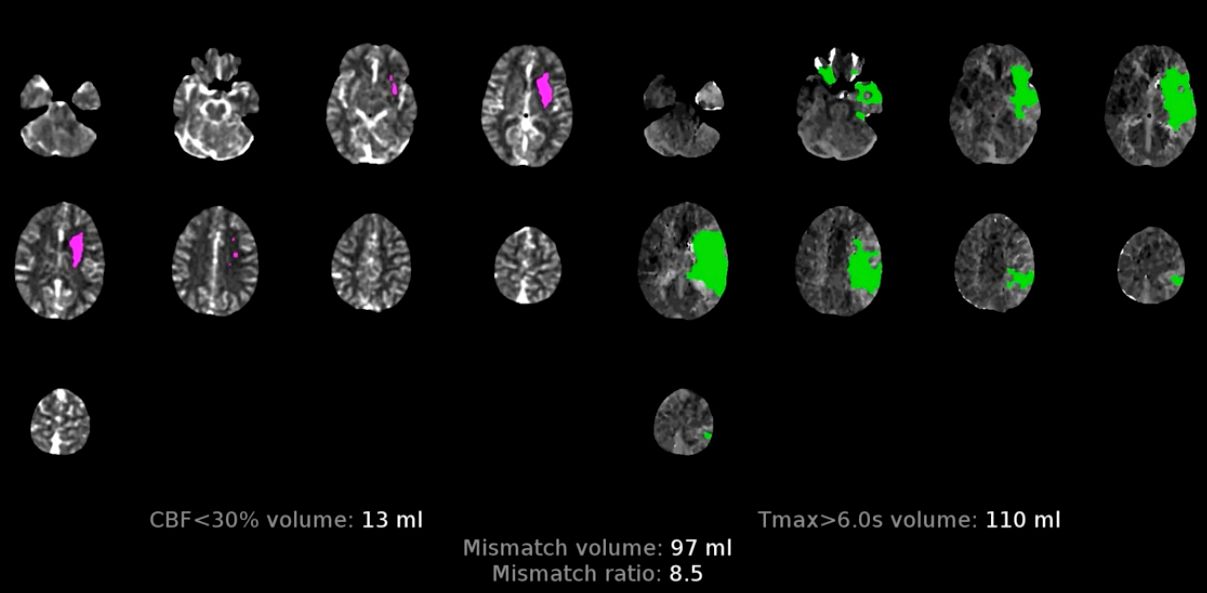
Case: 67yo, L MCA syndrome, NIHSS 20. CTP: core 13 mL, mismatch ratio 8.5x, mismatch volume 97 mL. Would you offer EVT per DEFUSE 3?. Yes β€” meets all DEFUSE 3 thresholds: core 13 < 70 cc, mismatch ratio 8.5 > 1.8x, absolute mismatch volume 97 > 15 cc.[…]

Case - 74M, LKN 7hr, R A2, NIHSS 11 β€” EXTEND?

Case: 74M, LKN 7 hr, R A2 stroke, NIHSS 11. CTP: core 4 mL, mismatch ratio 8.3x, mismatch volume 29 mL. Would you offer IVT per EXTEND?. Yes β€” meets EXTEND criteria: core 4 < 70 cc, mismatch ratio 8.3 > 1.2x, absolute mismatch volume 29 > 10 cc. Extended-window IVT (4.5-9 hr) appropriate.[…]
Case - 94M, LKN 12hr, L MCA, NIHSS 18 β€” DEFUSE 3?

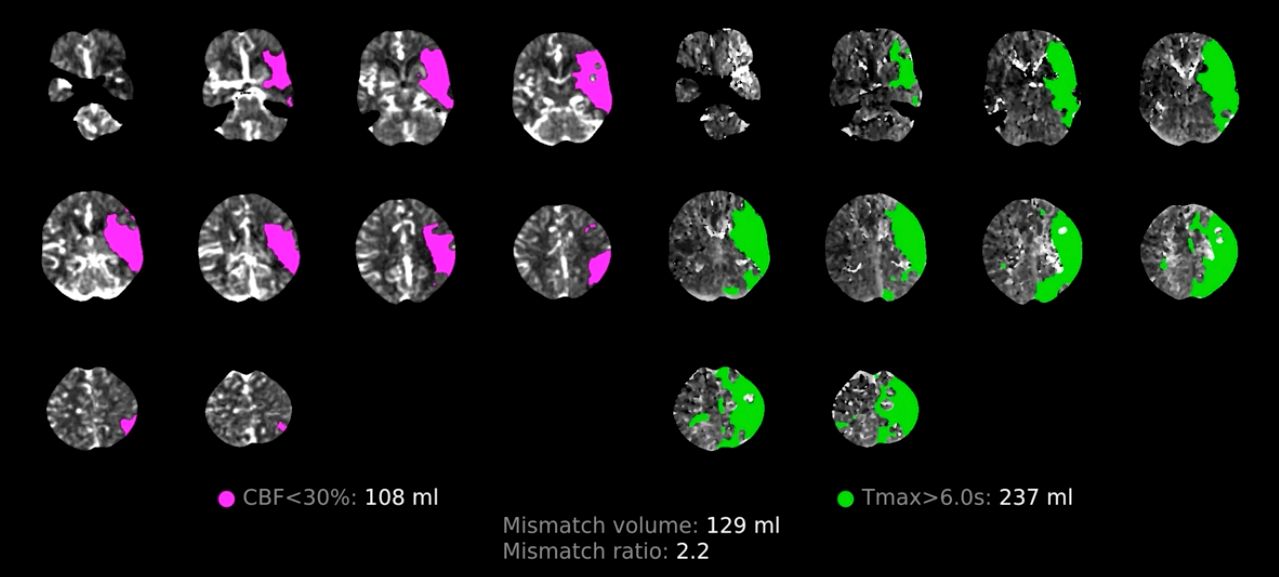
Case: 94M, LKN 12 hr, L MCA syndrome, NIHSS 18. CTP: core 108 mL, mismatch ratio 2.2x, mismatch volume 129 mL. Would you offer EVT per DEFUSE 3?. No β€” even though mismatch ratio (2.2x) and volume (129 cc) exceed thresholds, the core is too large (108 > 70 cc). DEFUSE 3 excludes core >70 cc.[…]. (In current practice, you might consider EVT under expanded large-core criteria β€” SELECT 2 / ANGEL-ASPECT β€” but DEFUSE 3 strictly says no.)

Case - 48M, LKN 6.5hr, R MCA β€” EVT?

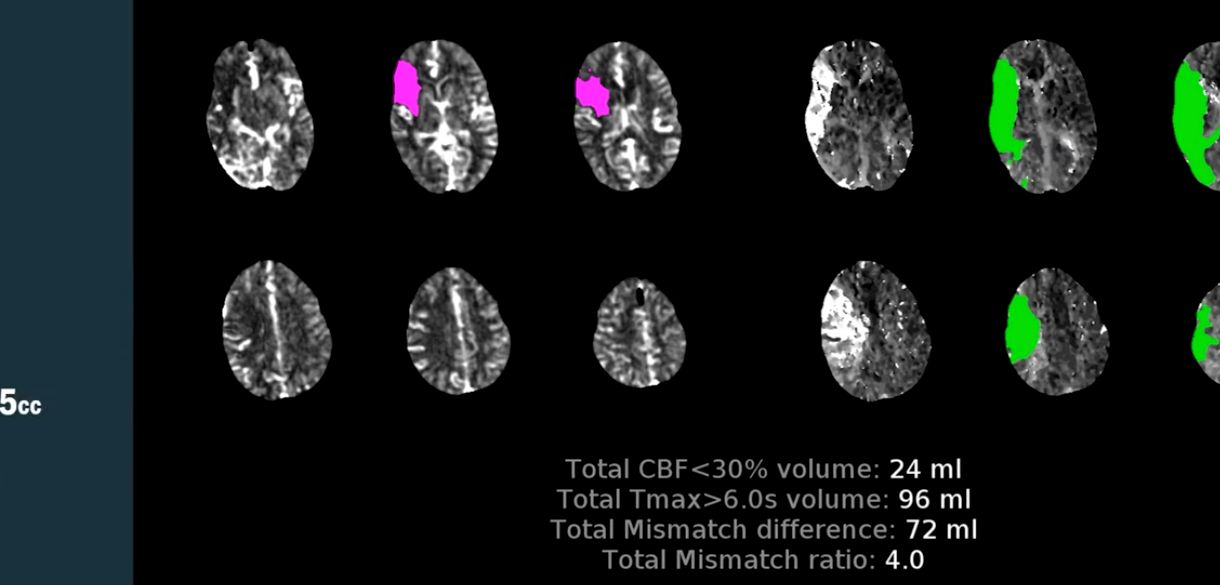
Case: 48M, LKN 6.5 hr, R MCA syndrome, NIHSS 19. CTP: core 24 mL, mismatch ratio 4.0x, mismatch volume 72 mL. Would you offer EVT?. Yes β€” within the DEFUSE 3 window (6-16 hr) and meets all criteria: core 24 < 70 cc, mismatch ratio 4.0 > 1.8x, mismatch volume 72 > 15 cc.[…]


Adjunctive MMA Embolization for Chronic SDH

A 2025 meta-analysis of four RCTs evaluated whether adjunctive MMA embolization[…] after surgery reduces chronic SDH recurrence: EMBOLISE, STEM, MAGIC-MT, EMPROTECT[…].

Result: combined recurrence/progression/reoperation rate 7.5% vs 15.5%[…] (NNT ~13) β€” favoring embolization.

Important nuance: three trials used liquid embolic agents[…] (Onyx, NBCA) and showed benefit.

The EMPROTECT[…] trial used microparticles and didn't reach significance β€” suggesting the embolic material itself matters.
PATCH Trial - Platelet Transfusion for ICH

For ICH in patients on antiplatelet therapy, the PATCH[…] trial showed that platelet transfusion in non-surgical patients led to worse[…] functional outcomes without reducing hematoma expansion or mortality β€” so transfusion is generally contraindicated.

The AHA/ASA[…] synthesis: avoid platelet transfusion in non-surgical antiplatelet-associated ICH, but consider it for patients undergoing neurosurgery (where a separate Chinese RCT suggested benefit).
Neuro Cx of Cardiac Disease - Overview

The brain receives ~15[…]% of cardiac output, making it acutely vulnerable to cardiac dysfunction. Cardiac disease causes neurologic injury via two pathway families:

Embolic (structural defects or arrhythmias β†’ blood stasis + endothelial injury β†’ thrombus via Virchow's triad[…] (stasis + endothelial injury + hypercoagulability) β†’ embolization to brain β†’ silent infarcts or symptomatic strokes); Hypoperfusion (decreased CO β†’ watershed infarcts[…] or global hypoxic-ischemic injury (e.g., after arrest)).
Neuro Cx - PFO Mechanism

Fetal circulation: the L and R atria are normally connected via the foramen ovale[…] to shunt placental blood to the L heart, bypassing the lungs. After birth: lung pressure rises β†’ LA pressure rises β†’ foramen closes.

In 15-24[…]% of adults this closure is incomplete = persistent PFO.

Stroke mechanism: paradoxical embolism[…] β€” a venous thrombus (often DVT) crosses through the PFO RA β†’ LA β†’ LV β†’ cerebral circulation, bypassing the lungs.
Neuro Cx - PFO Diagnostic Workup

Step 1: rule out venous source β€” BLE venous Dopplers[…] for DVT.

Step 2: quantify likelihood with the RoPE score[…] (10-point scale). Points for absence of traditional vascular RFs, cortical infarct pattern, and younger age.

Interpretation: RoPE 0-3[…] β†’ ~0% causal probability; RoPE 9-10[…] β†’ ~88% causal probability.

Step 3: add anatomic features via PASCAL classification[…] β€” combines RoPE with high-risk PFO features (large shunt >20-30 bubbles, atrial septal aneurysm). Stratifies as unlikely / possible / probable using RoPE β‰₯7 + high-risk features for "probable."
Neuro Cx - PFO Treatment + Post-Closure AFib

Treatment: PFO closure[…]. Three early RCTs were negative (CLOSURE I, PC, RESPECT).

Three later RCTs and a meta-analysis showed benefit in high-risk patients: RESPECT Extended Follow-Up, GORE REDUCE, and CLOSE[…] (all 2017).

Consensus: close the PFO + give DAPT (ASA + clopidogrel) for 3-6 months[…] in high-RoPE, "probable" PASCAL patients.

Post-closure AFib: Early (<45 days)[…]: short-term DOAC; if no NSR conversion within 48 hr, switch to long-term AC; Late (>45 days): treat as primary AFib with long-term AC.
Neuro Cx - Atrial Septal Defect

An ASD is a congenital defect with absent tissue in the interatrial septum causing bidirectional atrial blood flow. Types: ostium secundum (most common, fossa ovalis, predominantly female, highest paradoxical embolism risk), ostium primum, sinus venosus[…].

ASDs are usually larger[…] than PFOs and more likely to cause hemodynamic effects. With Valsalva β†’ transient R-to-L shunting β†’ paradoxical embolism.

Eventually, chronic L-to-R shunting β†’ RV overload + reduced LV preload β†’ atrial remodeling β†’ increased AFib[…] risk β†’ cardioembolic stroke.

Diagnosis: TEE[…] is required (TTE can't reliably distinguish ASD from PFO). Treatment: ASD closure + arrhythmia management.
Neuro Cx - Cardiomyopathy / HFrEF

In ischemic or non-ischemic cardiomyopathy leading to HFrEF[…], stroke risk is elevated through LV stasis and undetected pAFib.

Key trials: WARCEF[…]: HFrEF + sinus rhythm, ASA vs warfarin β€” no primary difference, but time-varying analysis suggested some warfarin benefit; COMMANDER-HF[…]: ischemic cardiomyopathy with EF <40%, low-dose rivaroxaban (2.5 mg BID)[…] + AP vs placebo + AP β€” no overall difference but 2021 post-hoc suggested benefit.
Neuro Cx - Cardiac Encephalopathy

Cardiac encephalopathy[…] is a CHF complication producing decreased alertness, asterixis, and diffuse EEG slowing.

Mechanism is multifactorial: decreased cerebral perfusion, concurrent renal and hepatic[…] dysfunction (uremic/hepatic encephalopathy overlap), and chronic microembolism + hypoperfusion eventually leading to cognitive impairment / dementia in chronic CHF.
Neuro Cx - LV Thrombus

LV thrombus[…] forms via Virchow's triad in dysfunctional ventricles: stasis from reduced contractility, endocardial injury, and hypercoagulability/inflammation.

Diagnosis: TTE with bubble study β€” sensitivity is poor (~23%); TEE β€” useful adjunct but poorly visualizes the LV apex; Cardiac MRI (cMRI)[…] β€” highest sensitivity and specificity (gold standard).

Treatment: warfarin or DOAC (off-label) for at least 3 months[…]. Repeat imaging β†’ if persistent thrombus, continue AC.
Neuro Cx - LVAD

LVADs[…] are mechanical circulatory assist devices used in severe HFrEF β€” bridge to heart transplant or destination therapy.

Stroke mechanism: device pumping creates contact-induced clotting[…] (platelet activation/adhesion/aggregation + coagulation cascade activation from artificial surfaces) β†’ embolization to brain.

Treatment: lifelong warfarin + antiplatelet therapy (regimen depends on subtype), targeting INR 2-3[…].
Neuro Cx - Valvular Heart Disease Treatment Framework

Valvular heart disease drives stroke risk through atrial remodeling that increases AFib risk. Treatment depends on valve type AND rhythm. Without AFib: Native valvular disease (non-rheumatic): antiplatelet[…] alone is sufficient; Surgical bioprosthetic: warfarin Γ— 3-6 months[…] β†’ then AP alone; TAVR/TAVI: DAPT or warfarin for at least 3 months[…]; Mechanical valve: lifelong warfarin (INR 2.0-3.0 AV, 2.5-3.5 MV); DOACs contraindicated.

With AFib: Native valvular disease: DOAC[…] first-line; Surgical bioprosthetic: warfarin Γ— 3-6 months β†’ long-term DOAC; Mechanical valve + AFib[…]: lifelong warfarin (INR 2.5-3.5 if MV).
Neuro Cx - Mechanical Valves + RE-ALIGN

Mechanical heart valves increase stroke risk through blood flow stagnation and platelet activation from shearing forces[…].

Anticoagulation: lifelong warfarin is required.: INR 2.0-3.0 for aortic, 2.5-3.5 for mitral[…]; DOACs contraindicated[…]. If thromboembolic event on therapeutic warfarin: intensify to INR 2.5-3.5, or add ASA. Bridge with heparin if INR drops below therapeutic range.

Why DOACs are out: the RE-ALIGN[…] trial randomized dabigatran vs warfarin in mechanical valve patients and was stopped early due to worse both bleeding AND embolic events with dabigatran.
Neuro Cx - Cardiac Tumors

Two cardiac tumors cause embolic stroke: Atrial myxomas[…] β€” most commonly arise from the interatrial septum. Two embolic mechanisms: surface thrombus formation OR direct tumor fragment embolization.

Neurologic complications: stroke, ICH (from BV walls weakened by tumor deposits) or SAH (from aneurysms formed at arterial walls)[…], syncope from LV outflow obstruction, seizures from cortical mets, AMS, spinal cord embolism.

Treatment: AC to prevent surface thrombus + surgical excision[…] β€” especially for left-sided tumors.

Papillary fibroelastomas[…] are benign/rare AV or MV tumors that can embolize β†’ treat with surgical excision.
Infective Endocarditis (IE): Diagnosis

  • Neuro Complications of IE (3): AIS from septic emboli, ICH from mycotic aneurysm rupture, or meningitis / brain abscess[…]
  • When to suspect IE: Left-sided valvular disease[…] (especially bioprosthetic valves or cardiac implantable electronic devices); Staph aureus[…] infection; Vegetation size >1 cm; IV drug use; Any patient with AIS + positive blood culture[…]; Any ICH with distal aneurysms on imaging
  • Diagnosis: TTE first; if negative but suspicion remains high, escalate to TEE or cardiac CT[…]
Neuro Cx - IE Treatment

Acute management: Early antibiotics[…]; Valve surgery for severe valvular dysfunction, severe HF, recurrent systemic embolization, or persistent bacteremia despite abx; Timing pearl (delay surgery by at least 4 weeks[…] if the patient has had a large AIS or ICH; otherwise sooner is better).

Antithrombotic therapy: Avoid antithrombotic therapy[…] due to high hemorrhage risk; Even mechanical valve patients should have AC held for at least 2 weeks after endocarditis-related stroke; IV thrombolysis is contraindicated for AIS from endocarditis.

Mycotic aneurysms: Typically small β†’ can escape CTA/MRA detection (pooled sens ~0.71); Use DSA[…] to diagnose, even after blood cultures clear; Preferred treatment: endovascular embolization > surgical clipping[…] (lower mortality, better access, fewer hemorrhagic complications).
Neuro Cx - AFib Pathophysiology

AFib[…] is the most common arrhythmia.

Stroke mechanism: Loss of the atrial kick[…] β†’ blood stasis in the LAA[…] (left atrial appendage); The LAA's complex trabeculated structure promotes thrombus formation when flow stagnates. Stroke risk magnitude: Nonvalvular AFib: ~5-fold increase; Valvular AFib: ~20-fold increase.

Treatment is rhythm-status-dependent: Nonvalvular AFib β†’ DOAC; Valvular AFib (mechanical valve or mod-severe MS) β†’ warfarin; Factor XIa inhibitors[…] are emerging as next-generation agents under investigation.
Neuro Cx - AFib Treatment Advanced Trials

Detecting AFib after cryptogenic stroke: CRYSTAL-AF[…]: insertable cardiac monitor or loop recorder vs standard monitoring β€” significantly higher AFib detection; ARTESIA[…]: apixaban reduced stroke/embolism risk in device-detected AFib lasting 6 min to 24 hr.

Other key trials: LAAOS-4[…]: testing LAA closure in high-risk AFib patients already on AC; EAST-AFNET 4[…]: early rhythm control (catheter ablation or antiarrhythmics) + AC reduced death/stroke/CHF hospitalization vs rate control alone in newly diagnosed AFib.
Neuro Cx - Atrial Flutter

Atrial flutter[…] is created by a macroreentrant circuit around the tricuspid annulus[…].

ECG signature: the classic "sawtooth[…]" pattern in the inferior leads (II, III, aVF). Atrial flutter often co-exists with AFib and shares the same stroke mechanism β€” loss of organized atrial contraction β†’ stasis. Treatment: AC with same indications as AFib + catheter ablation of the cavo-tricuspid isthmus for rhythm control.
Neuro Cx - Cardiac Arrest Pathophysiology

Cardiac arrest[…] (PEA, asystole, VFib, pulseless VTach) causes brain injury in three temporal phases: **1.

No-flow[…] phase (zero CO during arrest): mitochondrial failure β†’ ion pumps fail β†’ loss of membrane potential β†’ voltage-gated channels open β†’ intracellular Ca²⁺[…] accumulates β†’ activates destructive proteases. 2.

Low-flow[…] phase (during CPR): partially restored CO causes secondary injury via free radical formation and neuronal apoptosis. 3.

Reperfusion[…] phase** (after ROSC): additional secondary injury, worsened by seizures and hyperthermia. This three-phase model is why treatment focuses on preventing secondary injury after ROSC β€” the primary insult is already done.
Neuro Cx - Cardiac Arrest MRI + TTM

MRI imaging timing: delay until >48 hours[…] from arrest, because ischemic changes on ADC peak at 3-5 days post-arrest.

Classic MRI findings (diffusion restriction) involve the most metabolically active structures: cortex (occipital and medial prefrontal), basal ganglia, thalami, hippocampi, cerebellum[…].

Targeted Temperature Management: TTM at 32-37.5Β°C Γ— 24 hours[…] after arrest; Avoid TTM if (ICH, hemorrhagic shock, GCS >8, or hemodynamic instability despite pressors[…]); ICECAP[…] trial is evaluating the optimal duration of TTM.
Neuro Cx - Cardiac Arrest Neuroprognostication

Per Neurocritical Care Society recommendations: Sequence: Initial: EEG with TTM initiation; ~48 hours: wean sedation, obtain MRI brain + SSEPs; ~72 hours from ROSC/rewarming: motor exam + quantitative pupillometry[…], without confounding sedation.

Most reliable predictors of poor outcome: Absent pupillary light reflex[…] on pupillometry; Bilateral absence of the N20 cortical response[…] on SSEPs. Decently reliable predictor: MRI showing diffuse diffusion restriction across cortex and deep gray matter.

Other supportive poor predictors: burst-suppression or suppression on EEG, elevated NSE blood biomarker, absent motor exam or extensor posturing[…].
Neuro Cx - Carotid Stenosis Screening Pre-CABG

In preop screening for CABG, many patients have undiagnosed carotid stenosis. Screen with carotid duplex US[…] in high-risk patients (recent stroke/TIA, age >70, multivessel CAD, PAD, carotid bruits).

If significant stenosis is found: Symptomatic 70-99% β†’ revascularize before CABG (do carotid procedure first[…] unless CABG is urgent); CEA preferred over CAS for symptomatic stenosis before CABG.

Important pearl: patients undergoing carotid stenting before CABG who maintained DAPT[…] through CABG (without discontinuation) had the worst outcomes due to perioperative bleeding.
Neuro Cx - Intra/Perioperative Stroke

The main driver of intraoperative stroke during cardiac surgery is manipulation of the aorta[…] during cannulation/cross-clamping β†’ dislodges atherosclerotic plaque.

Avoidance strategy: anaortic off-pump "no-touch"[…] technique eliminates manipulation of the ascending aorta and avoids cardiopulmonary bypass. Watershed infarcts result from intraoperative hypoperfusion.

Maintain MAP 60-65[…] (or higher with prior stroke history). Risk factors: higher Cr, preop AFib, prior stroke, older age, longer surgery.

Adjunctive intraop LAA closure: LAAOS III[…] trial showed benefit during cardiac surgery in patients on AC. Neuromonitoring options: NIRS (brain tissue Oβ‚‚), TCD (microemboli), EEG (ischemia signs).
Neuro Cx - Postoperative Stroke

New-onset AFib[…] is the most common arrhythmia after cardiac surgery β€” peaking on postoperative day 2[…], usually resolving spontaneously before discharge. Pre/postop ASA has been investigated to reduce stroke risk even without AFib.

Initiate AC if: AFib persists or recurs >2 days[…] after surgery, OR perioperative stroke occurred.
Neuro Cx - Cognitive Impairment Post-Cardiac Surgery

Three temporal patterns of post-cardiac-surgery cognitive impairment: Delirium[…] β€” first week post-op; Delayed neurocognitive recovery β€” improvement over the next 30 days; Postop neurocognitive disorder[…] β€” persists beyond 30 days, may be permanent. Higher risk: older age, baseline cognitive impairment, comorbidities, longer/more complex surgery, intraoperative hypotension.
Neuro Cx - Catheterization (PCI) Stroke

Catheterization (e.g., PCI) causes stroke through: Embolization of atherosclerotic plaque while traversing the aortic arch[…]; Potential air microemboli[…] from saline/contrast injection. Treatment of cath-related stroke: consider IVT or EVT for eligible patients β€” same hyperacute paradigm as community-onset stroke.
Neuro Cx - TAVR/TAVI Stroke Risk

TAVR/TAVI[…] has ~3[…]% periprocedural stroke risk β€” comparable to surgical AVR. Mechanism is similar to PCI: plaque dislodgement during catheter passage through the aortic arch and across the diseased valve. Embolic protection devices (cerebral filters) are increasingly used to capture debris.
Neuro Cx - Contrast-Induced Encephalopathy

Contrast-induced encephalopathy[…] can mimic stroke after catheterization β€” presenting with AMS, seizures, cortical blindness, or focal deficits.

Pathophysiology: neurotoxicity from iodinated contrast[…] that disrupts the BBB β†’ cortical irritation.

Treatment: self-resolves[…] as the kidneys clear the contrast (hours to a few days). Supportive care; consider IV fluids to accelerate clearance. Key distinguisher from real stroke: rapid spontaneous improvement is the rule.
Image Panel - Cardioembolic Stroke

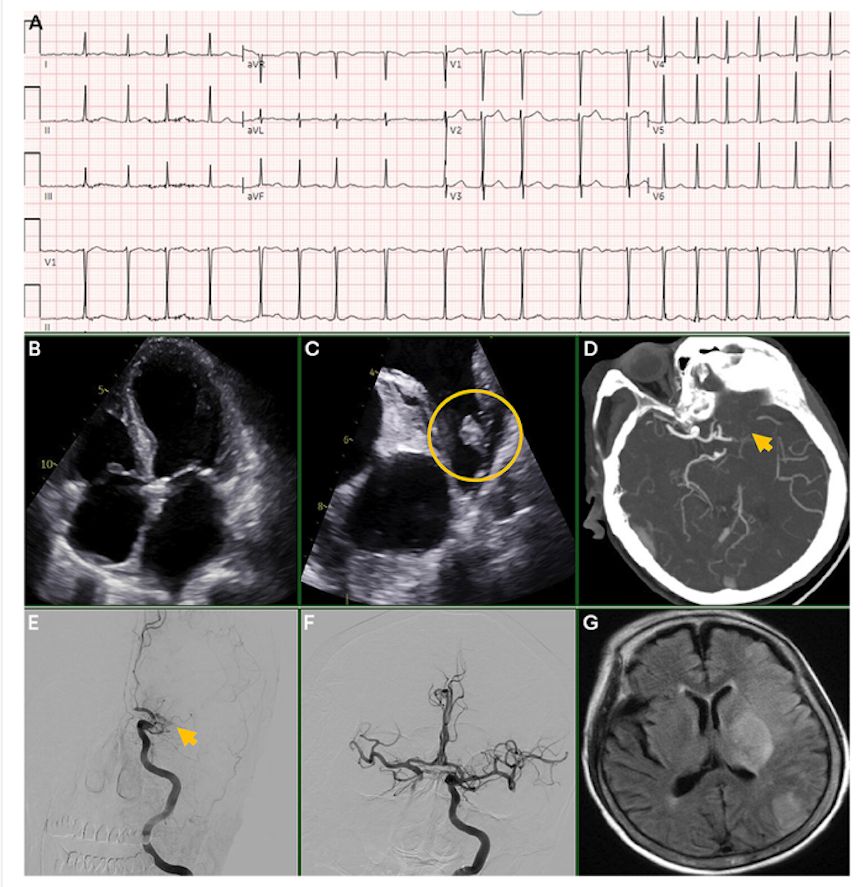
A patient with cardioembolic stroke β€” the imaging story: A (EKG) (AFib with RVR[…]); B (TTE) (biventricular systolic dysfunction with LA enlargement[…]); C (TEE) (thrombus within the LAA[…]); D (CTA head) (terminal ICA occlusion extending into L MCA[…]); E (DSA) (confirms tICA occlusion); F (DSA) (recanalization of the ICA after EVT); G (MRI brain T2 FLAIR) (L MCA territory infarct[…]).

Image Panel - Infective Endocarditis

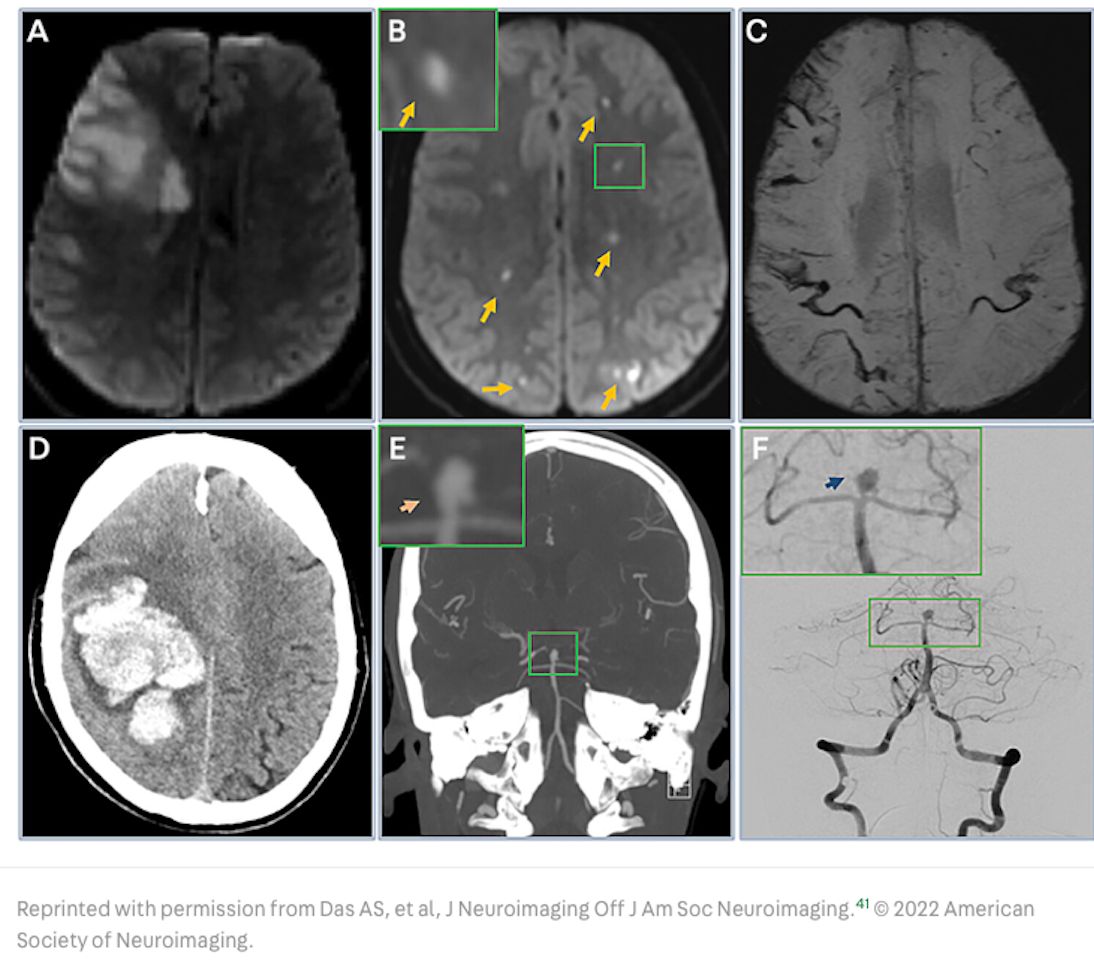
A patient with IE showing both ischemic and hemorrhagic complications: A (MRI DWI) (R MCA territory infarct[…]); B (MRI DWI) (cortical/subcortical septic emboli[…] (scattered punctate pattern)); C (MRI SWI) (sulcal hypointensities concerning for SAH[…]); D (CTH) (R intraparenchymal hemorrhage); E (CTH coronal) (basilar artery mycotic aneurysm[…]); F (DSA) (confirms basilar tip mycotic aneurysm).

Image Panel - Mycotic Aneurysm + IPH

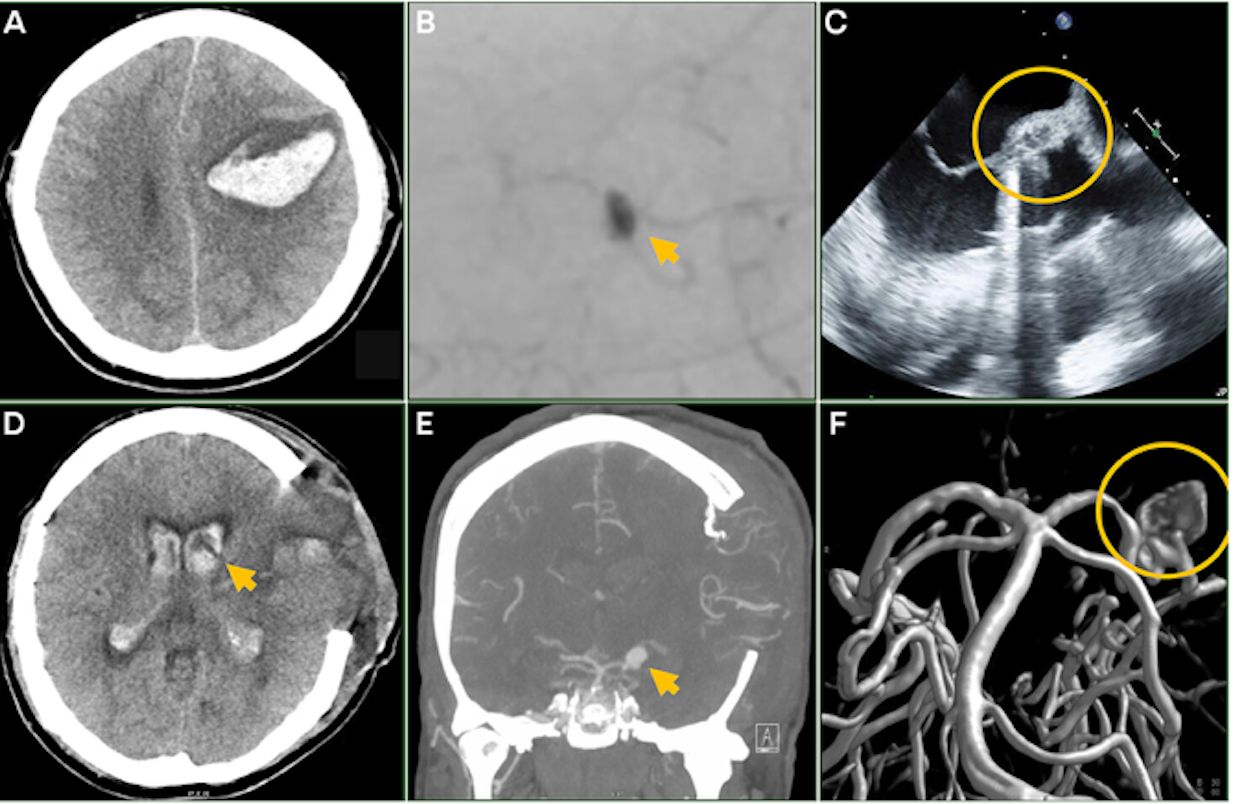
A patient with IE complications including ICH from mycotic aneurysm rupture: A (CTH) (L frontal IPH[…]); B (DSA) (L MCA mycotic aneurysm[…]); C (TEE) (posterior perivalvular abscess[…]); D (CTH) (IVH); E (CTA coronal) (L PCA aneurysm); F (3D angiography) (confirms L PCA aneurysm)

Image Panel - LVO with Penumbra-Core Mismatch + EVT

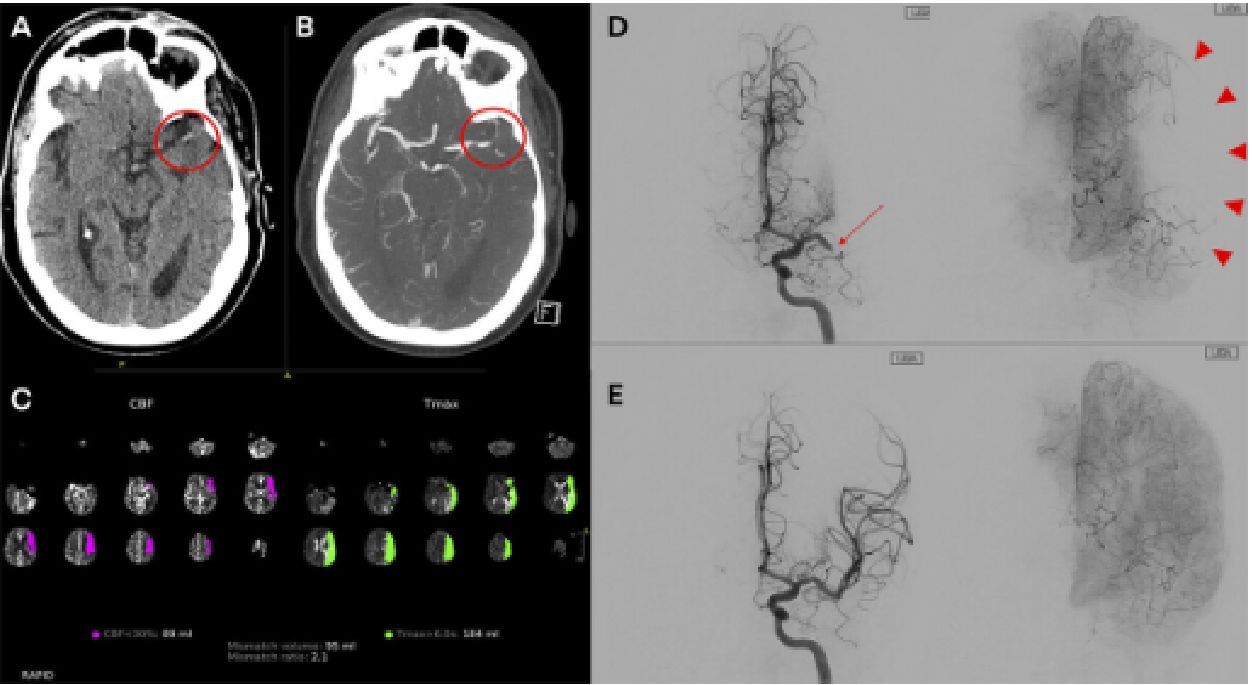
An LVO stroke from initial imaging through reperfusion: A (CTA) (hyperdense MCA sign[…] (clot in the vessel)); B (CTA) (L MCA occlusion (the cut-off)); C (CTP) (penumbra (green) vs core (purple) mismatch[…] ratio β€” qualifies for late-window EVT); D (pre-EVT angio) (L MCA occlusion with arrowheads pointing to a large parenchymal defect); E (post-EVT angio) (recanalization[…] of the vessel).

Image Panel - HT After EVT

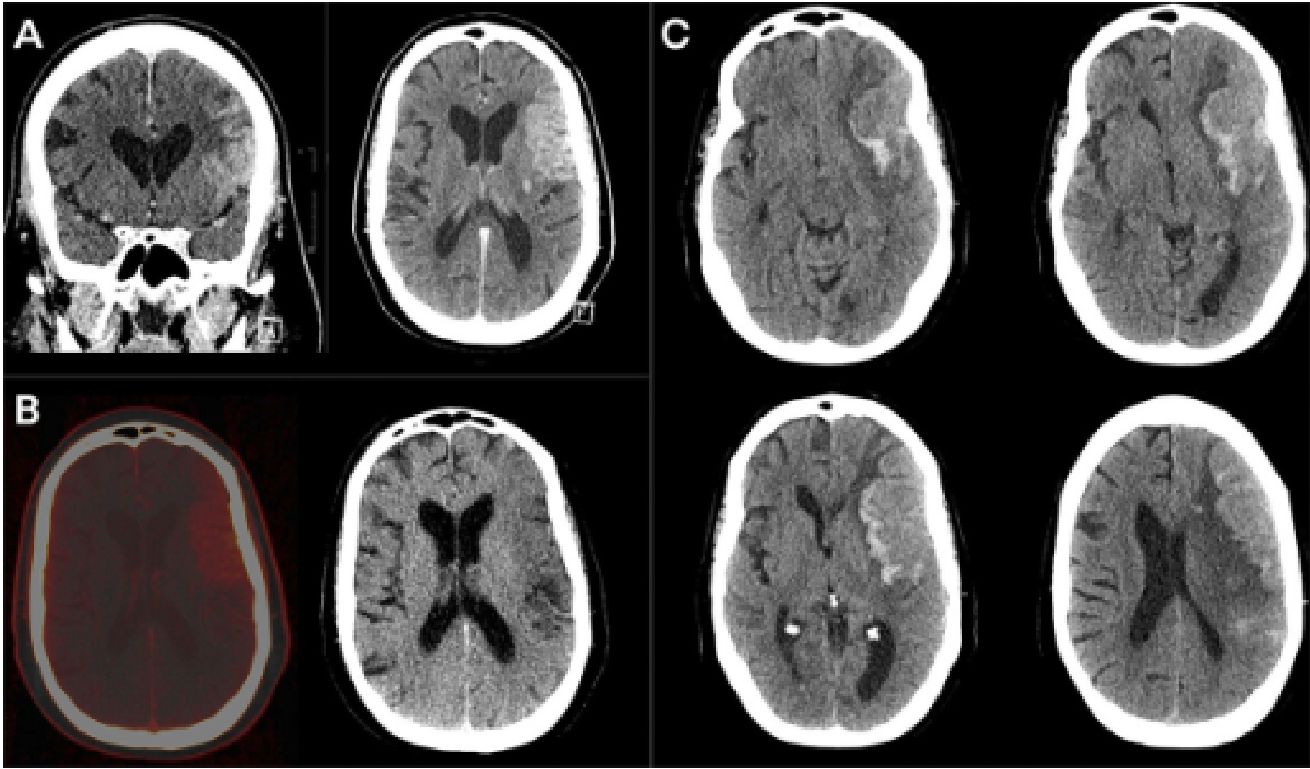
A patient developing hemorrhagic transformation after EVT: A (CTH coronal/axial, post-EVT) (hyperdensity in the area of prior stroke β€” could be contrast staining OR hemorrhage); B (CTH Dual Energy) (contrast extravasation[…] (iodine suppresses on dual energy)); C (CTH non-contrast 24hr post-EVT) (new hyperdensity consistent with hemorrhagic transformation, Heidelberg Classification PH2[…] (parenchymal hematoma type 2 β€” most severe form))

Image Panel - Cerebellar Edema After LVO

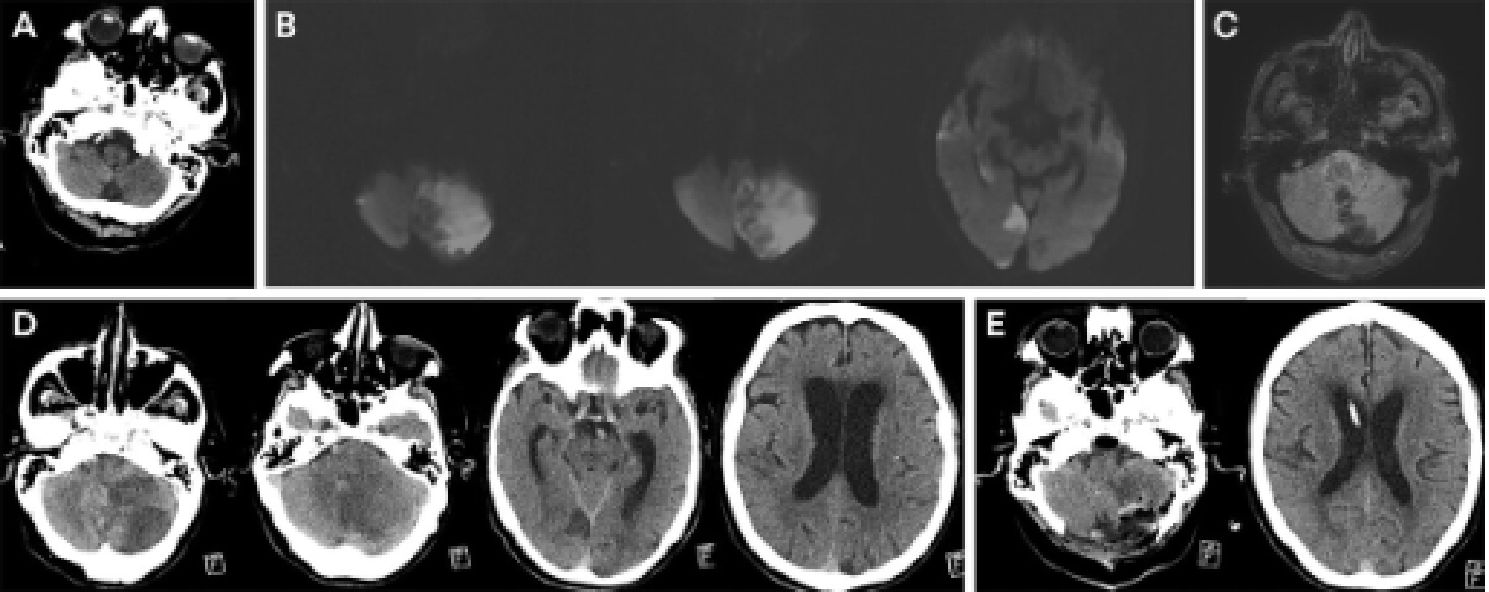
A patient with malignant cerebellar edema after posterior circulation LVO: A (CTH) (L cerebellar hypodensity); B (MRI DWI) (L cerebellar infarct with suspected hemorrhagic conversion and mass effect on the 4th ventricle[…]; scattered bilateral occipital infarcts consistent with embolic etiology); C (MRI SWI) (confirms hemorrhagic transformation); D (CTH 24hr) (new effacement of the 4th ventricle and obstructive hydrocephalus[…]); E (post-decompression CTH) (suboccipital craniectomy + L cerebellectomy + R EVD[…] placement). This pattern β€” posterior fossa stroke + obstructive hydrocephalus β†’ surgical decompression β€” is the classic indication for posterior fossa surgery